Article
Best Motion Design Agencies in 2026: Ranking and Guide
Branding22 min read
Guillaume SchluppConsultant SEO
Discover the best motion design agencies in 2026: ranking, advice, trends and criteria for choosing the right creative partner
Explore this post with…
In a digital landscape saturated with information, a brand's ability to capture attention in a few seconds has become its most valuable asset. In 2026, video and animation are no longer options: they are the central pillars of any high-performing communication strategy. Synqro, a leading Webflow agency in digital marketing, supports companies in this shift toward ever more immersive content. Thanks to our in-depth expertise in technology and creative trends, we help our clients navigate the complex ecosystem of visual production. Finding and working with the best motion design agencies is essential to guarantee a memorable impact and a measurable return on investment.
Understanding motion design in 2026
Motion design, or animated graphic design, has evolved considerably since its purely advertising beginnings. In 2026, it defines the art of bringing design to life through movement, by integrating typography, illustration, photography and 3D modeling into a time-based environment.
Definition and principles of motion design
Motion design is not just simple animated images. It is a hybrid discipline that draws on graphic design, cinema and traditional animation. Its fundamental principles rest on visual storytelling and the psychology of movement. In 2026, Disney's principles of animation (squash and stretch, anticipation, timing) are now complemented by concepts of interactivity and generative design. The goal is to turn static, complex information into a message that is fluid, intelligible and visually appealing.
Why motion design is growing in importance
The omnipresence of screens, whether mobile, urban or in augmented reality, demands dynamic communication. Motion design can increase the retention rate of a message by nearly 50% compared with text or static content. As average attention spans shrink, animation provides a narrative structure that guides the user's eye. It has become indispensable for product marketing, corporate communication and user experience (UX motion), where it makes navigation smoother on complex interfaces.
How to choose a motion design agency in France
The French motion design market is recognized worldwide for its “French touch”, which blends technical rigor and artistic boldness. However, selecting the ideal partner requires a methodical analysis of your needs and of the agency's capabilities.
Key criteria for selecting the right agency
The first selection criterion is the portfolio. It should not only look good, it should show a diversity of styles and an ability to adapt to different industries. Examine the fluidity of the animations and the consistency of the art direction. The second criterion is technical expertise: does the agency master 2D, 3D, or a mix of both? Finally, the project management methodology is crucial. A good agency must offer structured support, from the script phase to final delivery, while guaranteeing that deadlines are met.
Questions to ask during a first contact
During your first conversations, ask precise questions to assess the fit:
What is your methodology for understanding our brand identity?
How do you manage revision and feedback cycles?
Do you have an in-house team or do you work with freelancers?
What types of rights are assigned at the end of the project?
How do you take distribution constraints into account (social media formats, vertical screens, etc.)?
The advantages of working with a French agency
Working with an agency based in France offers major strategic advantages. Geographic proximity makes exchanges and co-creation sessions easier. In addition, French visual culture is steeped in a strong artistic heritage, which results in productions that are often more elegant and less standardized than mass international productions. A fine understanding of the local market and of the French language also helps avoid mistakes of tone in scripts and voice-overs.
Ranking of the best motion design agencies in 2026
This ranking was established by Synqro on the basis of rigorous analysis of the creative performance, client satisfaction and capacity for technological innovation of the players in the market.
Our ranking methodology
To establish this list of the best motion design agencies, we used several performance indicators: the technical quality of the renders, the originality of the art direction, the complexity of the projects delivered in 2025 and early 2026, and the agencies' ability to integrate emerging technologies such as real-time 3D and artificial intelligence.
Comparative analysis of the recommended agencies
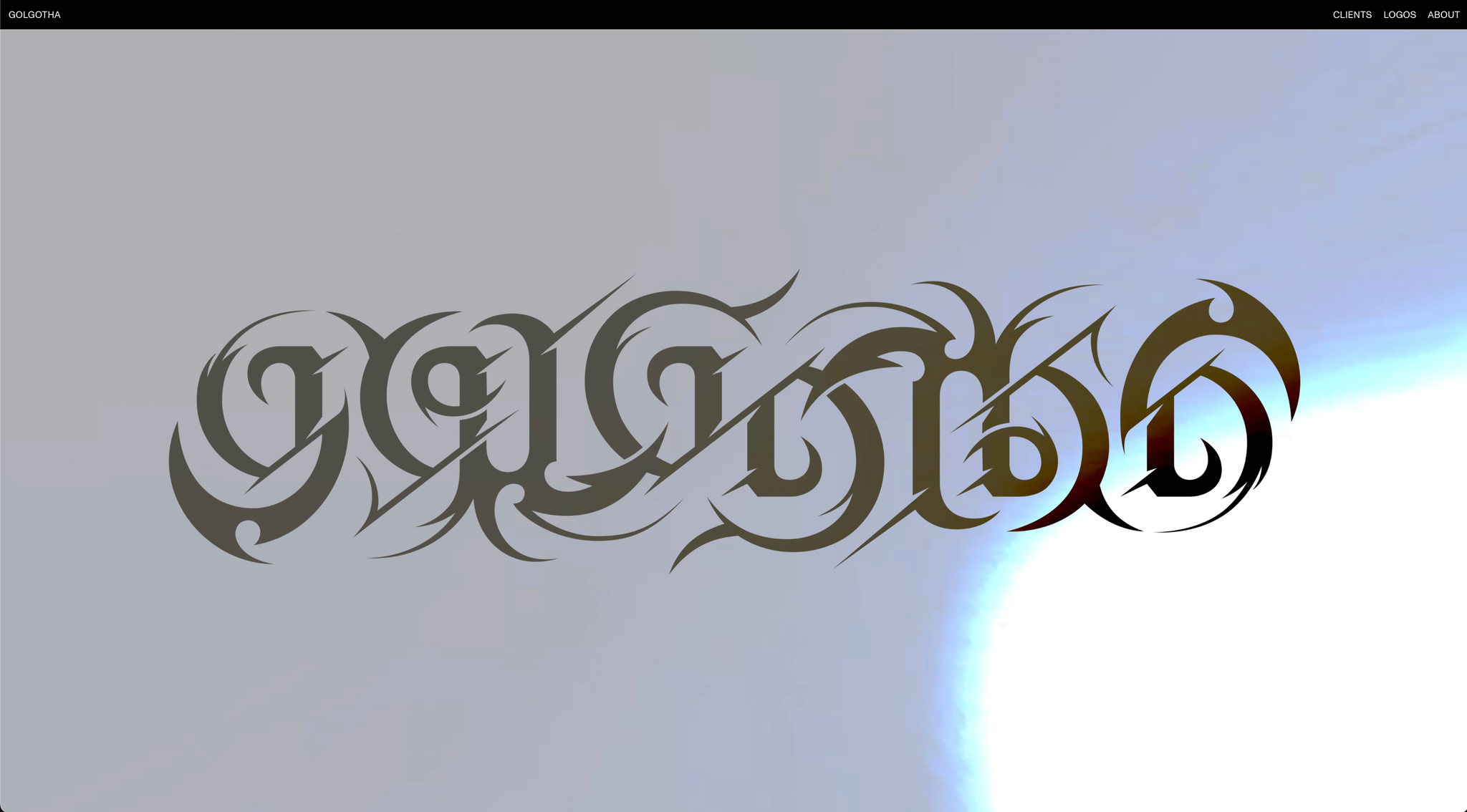
1. Golgotha
DNA / promise
A Paris creative studio driven by art direction, at the crossroads of graphic design / video / 3D / set & experimental. Their strength is doing “fashion/culture” without falling into cliché, with very premium standards of finish.
Visual signature (often)
- A very “editorial” image: typography, rhythm, texture, composed shots.
- A mix of design and techniques (2D/3D, compositing, experimentation) in service of a statement rather than a demonstration.
When to choose them
- Luxury / fashion / culture: campaign films, brand films, launches, content where aura matters as much as the message.
- When you want a “concept + execution” answer (not just production). Their approach is very studio and art direction led.
Ideal brief
- A clear creative intent (one strong idea), references for the territory (editorial, art, photography, music), and real room for visual exploration.
- A scope where craft is a KPI (quality of finish, animated design system, attention to detail).
Watch out for
- If your main challenge is to “explain everything” (educational, tutorial, complex product), you need to lock down the script and the UX of the story: their natural ground is more image & desirability.
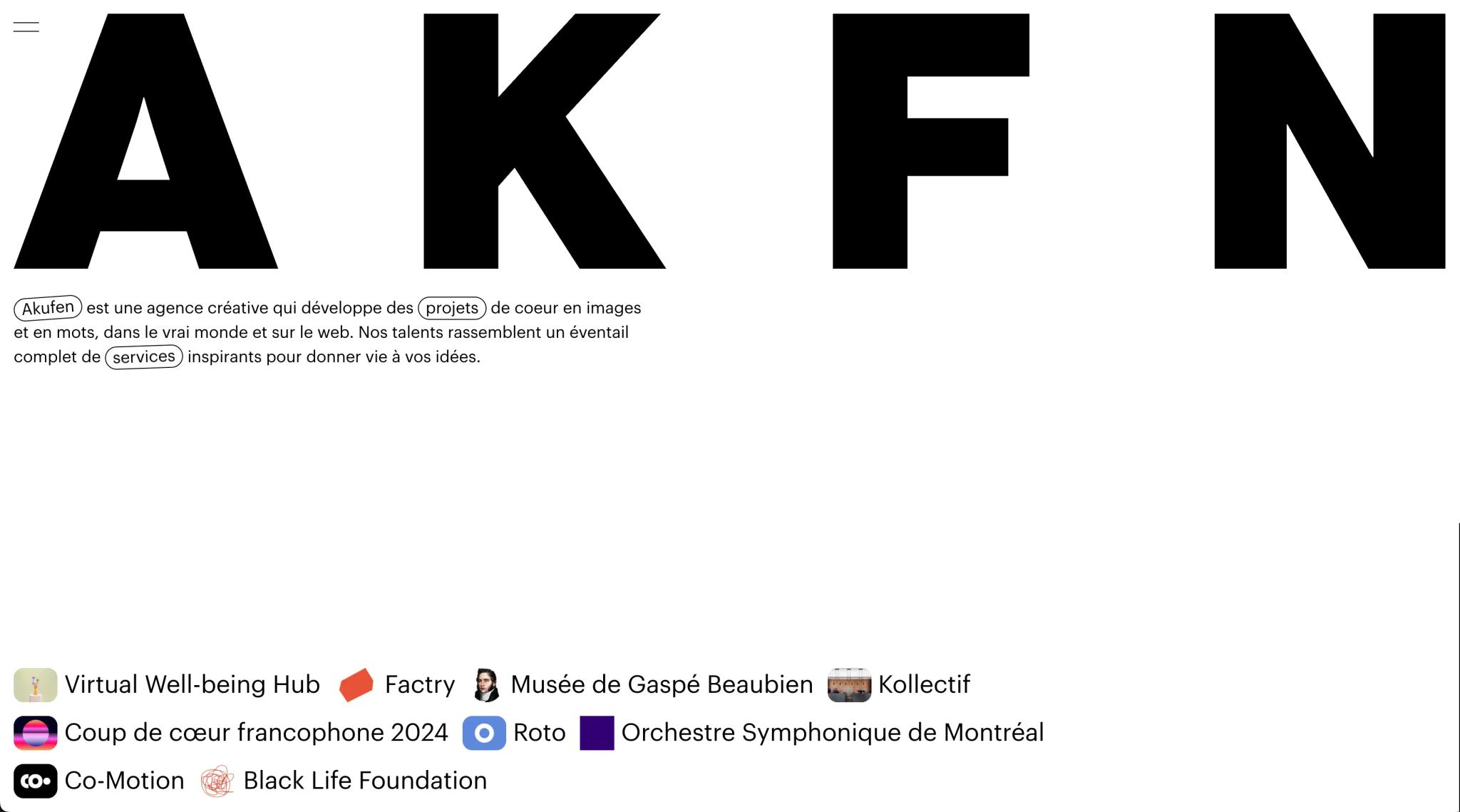
2. Akufen
DNA / promise
A studio born in Montreal, known for digital projects where creative work (design/motion) is conceived as an experience: UX, interactions, storytelling, creative tech.
Signature
- “Web-native” motion: micro-interactions, meaningful transitions, UI rhythm.
- An ability to make emotion and performance coexist (which is rare).
When to choose them
- Event sites, brand experiences, platforms, interactive storytelling.
- When your motion design has to be a product component (animated design system, states, guidelines, dev handoff).
Ideal brief
- User goal + journey (what the user should understand, do and feel).
- Technical constraints (CMS, framework, performance, accessibility) set early: this avoids “effects that are impossible to ship”.
Watch out for
- If you only want “a motion film” with no product or experience dimension, you may be paying for part of their value (strategy + UX) that you won't fully use.
3. Blackmeal
DNA / promise
A Paris/Nantes studio focused on storytelling: turning sometimes dry topics into clear stories, with a feel for the “homemade” and the tailor-made.
Signature
- Elegant teaching: a narrative that unfolds, accessible visual metaphors.
- A 2D/mixed media style that is often warm and “endearing”, which quickly humanizes a message.
When to choose them
- Brands and services that need clarification: corporate, tech, education, prevention, premium “explainers”.
- When the script and the staging have to make people forget the complexity.
Ideal brief
- A “problem → solution → benefit” brief + the level of language (general public / insiders).
- Source content (technical docs) + an expert contact available to validate quickly.
Watch out for
- If your ambition is a cold, highly conceptual, ultra fashion/luxury aesthetic, you will need to align very early on the level of stylization and the degree of narration.
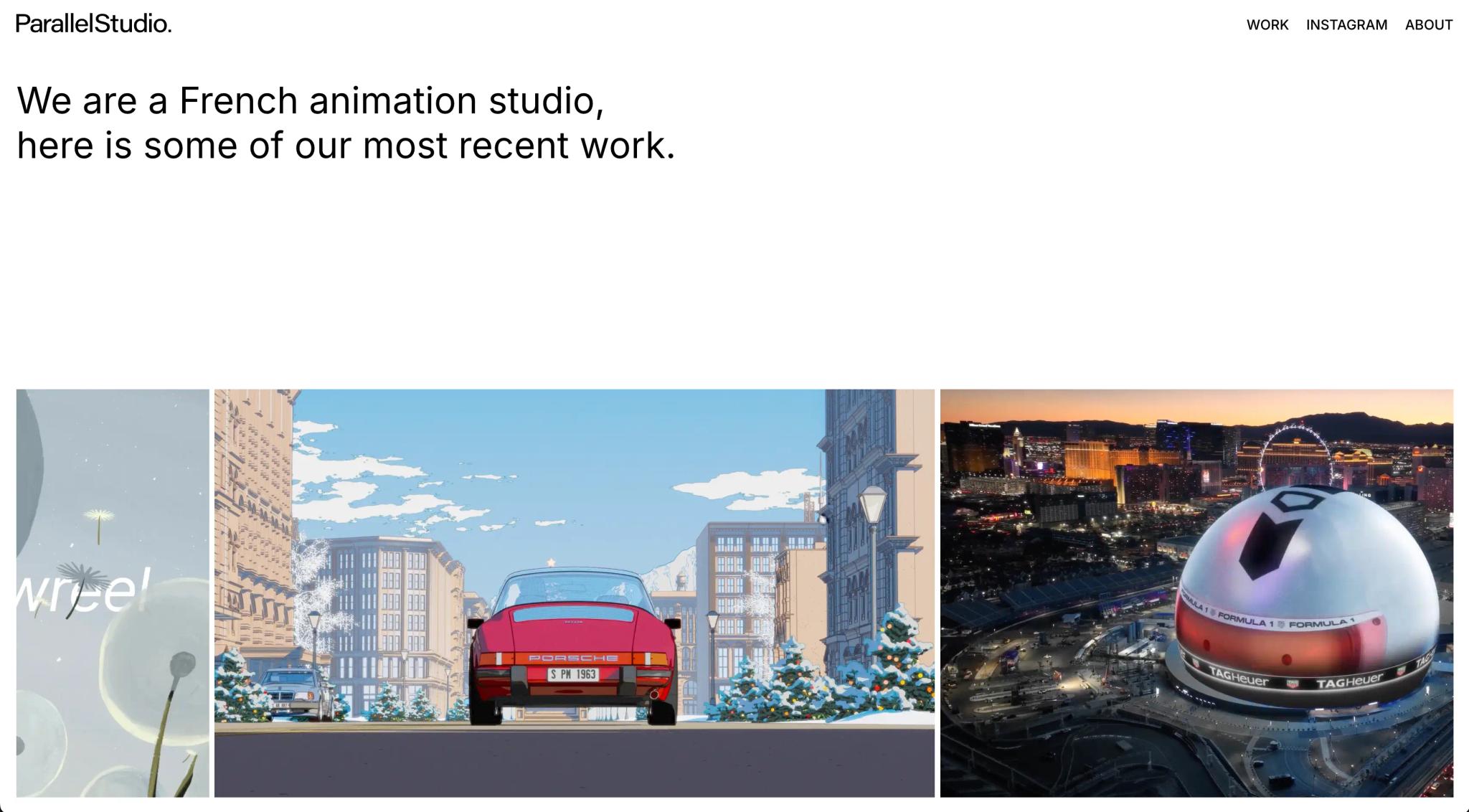
4. Parallel
DNA / promise
A Paris animation and illustration studio, very “design-driven”, with a minimalist / polished / high-end sensibility (they also work in luxury).
Signature
- Composition tuned to the millimeter, clean animation, “invisible” details that make the difference.
- Visual poetry: even when it is simple, it is never empty.
When to choose them
- Animated identities, elegant films, animated packshots, campaigns where you want: calm, control, prestige.
- When the brand wants “modern premium” rather than “too showy”.
Ideal brief
- A solid brand guide (type, grids, photography, materials) + a few animation rules (rhythm, easing, density).
- A short message: they excel when every shot has an intention.
Watch out for
- If you need a very talkative, very explanatory or very “fun chaos” film, it is not their most natural posture (but it can be worked on).
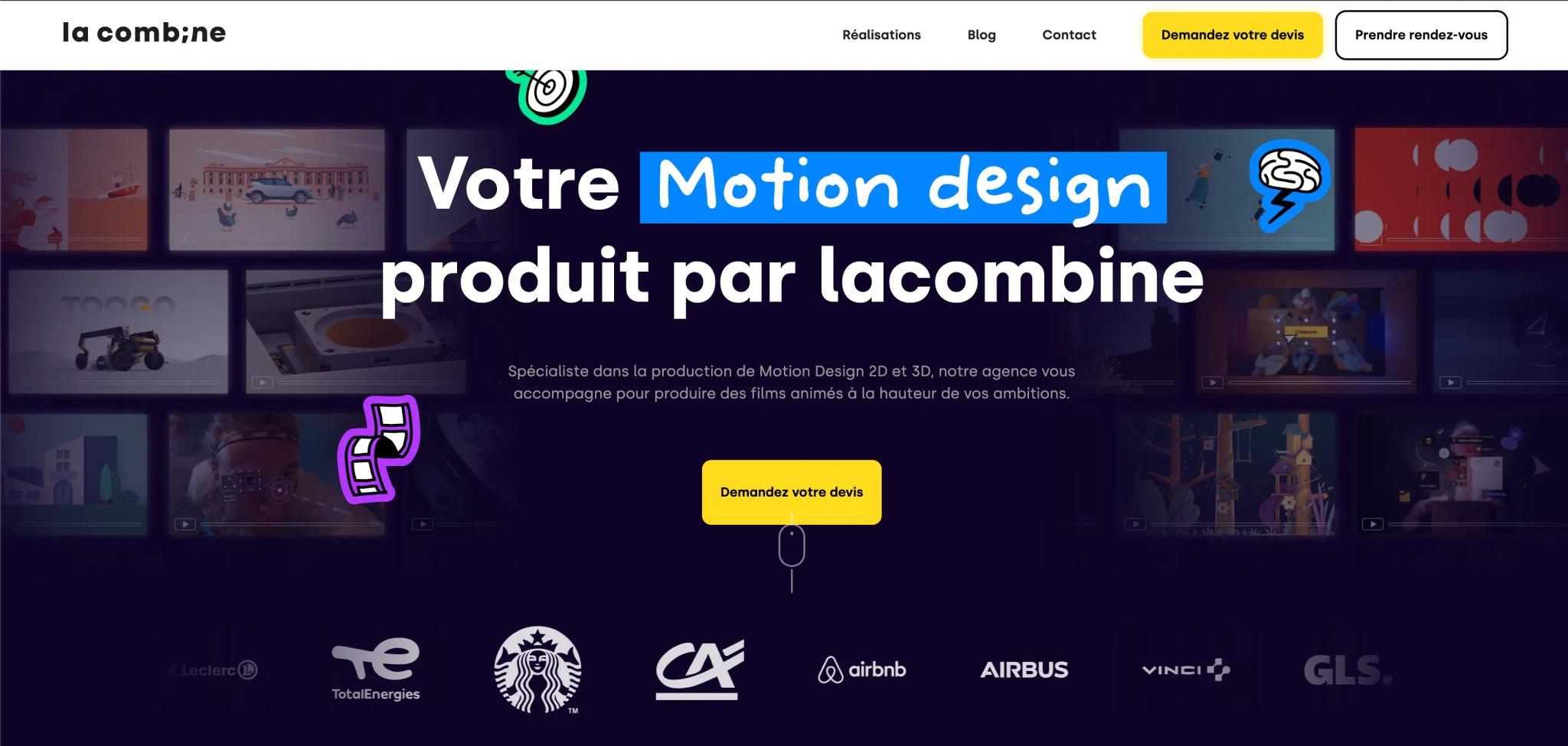
5. Lacombine
DNA / promise
Studio La Combine is a motion design and video animation agency specialized in creating educational, advertising and narrative films. The studio supports companies and organizations in producing clear, attractive and effective content, aligned with communication goals (corporate, product, advertising, social).
Signature
- An ability to simplify technical and complex topics into accessible, engaging stories.
- Production in 2D and 3D with visual storytelling geared toward understanding + attention.
- Content designed for different distribution contexts: web, events, digital advertising, internal communication, etc.
When to choose them
- Corporate films, product presentations, explainer videos, digital campaigns, social media content.
- B2B, institutional and public interest projects where you need to make things understandable without losing impact.
- Contexts with schedule and deliverable constraints (multiple formats, adaptations).
Method / way of working
- A collaborative and structured process: clear validation milestones at each stage (brief → graphic research → production → finalization).
- An organization that secures deadlines and mutual understanding, while keeping room for visual and narrative experimentation.
Strengths
- Motion design expertise in 2D + 3D suited to corporate, marketing and digital uses.
- A project process that is tightly framed (validations, transparency, deadline control).
- A multidisciplinary team able to absorb constraints of budget / schedule / art direction.
Watch out for
- Because the approach is very much about “message efficiency”, you need to define early the level of teaching vs. emotion (and the density of information) to avoid an overloaded film.
6. Cube Creative
DNA / promise
A well-established structure: an animation studio covering 2D/3D + VFX with real industrial capacity (pipeline, supervision, volume, multiple deliverables).
Signature
- Production robustness: stable quality, the ability to hold heavy schedules, broadcast and platform requirements.
- Strong 3D and effects skills, and experience with long formats (series, etc.).
When to choose them
- Multi-format campaigns, large volumes, heavy technical constraints.
- When you want a partner that “absorbs” complexity (3D assets, adaptations, versioning, languages).
Ideal brief
- A very clear list of deliverables (durations, ratios, cutdowns, languages, versions).
- A structured validation process (animatic/previz → lookdev → shots): that is how you get the most out of their machine.
Watch out for
- On very “auteur”, highly experimental projects, the value lies less in the infrastructure than in singularity: you need to choose the right director or lead within the structure.
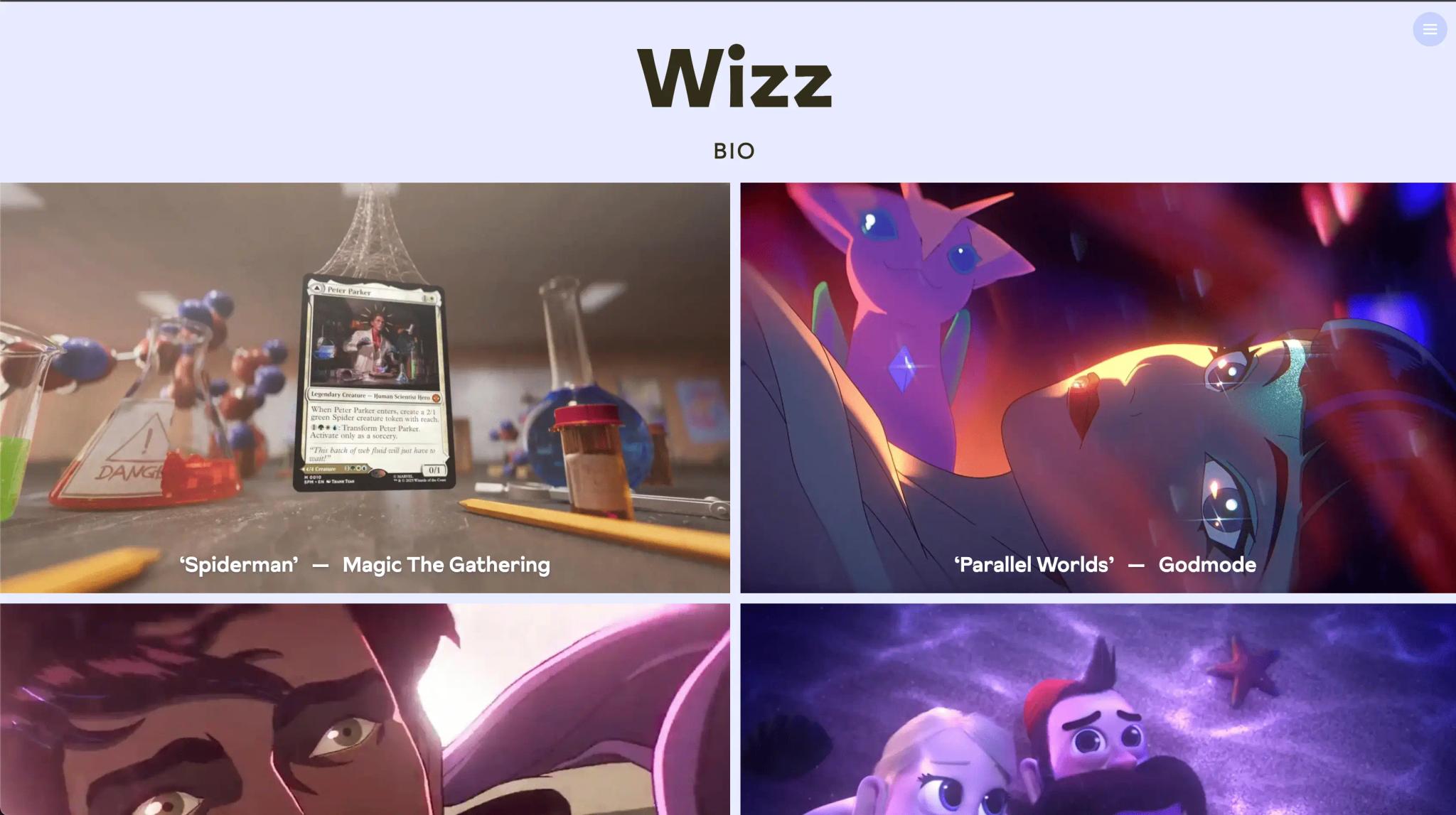
7. Wizz
DNA / promise
An animation studio backed by a production group (QUAD), with a model built around directors: you choose a style, and you build the campaign around it.
Signature
- A variety of styles (2D, 3D, stop-motion, mixed), in service of campaign concepts.
- A “film” approach: treatment, staging, intention.
When to choose them
- When you want a distinctive piece (ad, brand film, launch) where direction is at the center.
- When the brand accepts a share of creative risk.
Ideal brief
- A territory + a creative tension (“we want to surprise in this particular way”).
- Leave room for the director's proposal (moodboards, treatment, style tests).
Watch out for
- Because it is very “auteur”, success depends a lot on the match with the director: creative casting is a critical step.
8. Paname
DNA / promise (in your context)
Motion design that is technical/educational and geared toward industry and B2B: making processes, machines, flows and systems readable and “desirable”.
Signature
- Living diagrams, exploded views, data visualization, teaching by levels (from simple to precise).
- A “premium engineering” aesthetic: clean, credible, never gimmicky.
When to choose them
- Industry, energy, infrastructure, SaaS and complex products in a professional context.
- Internal communication, onboarding, trade shows, sales enablement.
Ideal brief
- The level of accuracy expected (illustrative vs. technically exact).
- The steps to “anchor” (three key messages at most) + a subject matter expert available.
Watch out for
- The number one risk is the “too exhaustive” film: you have to defend a narrative (and sometimes accept simplifying).
9. Golden Wolf (representation in France / “local office”)
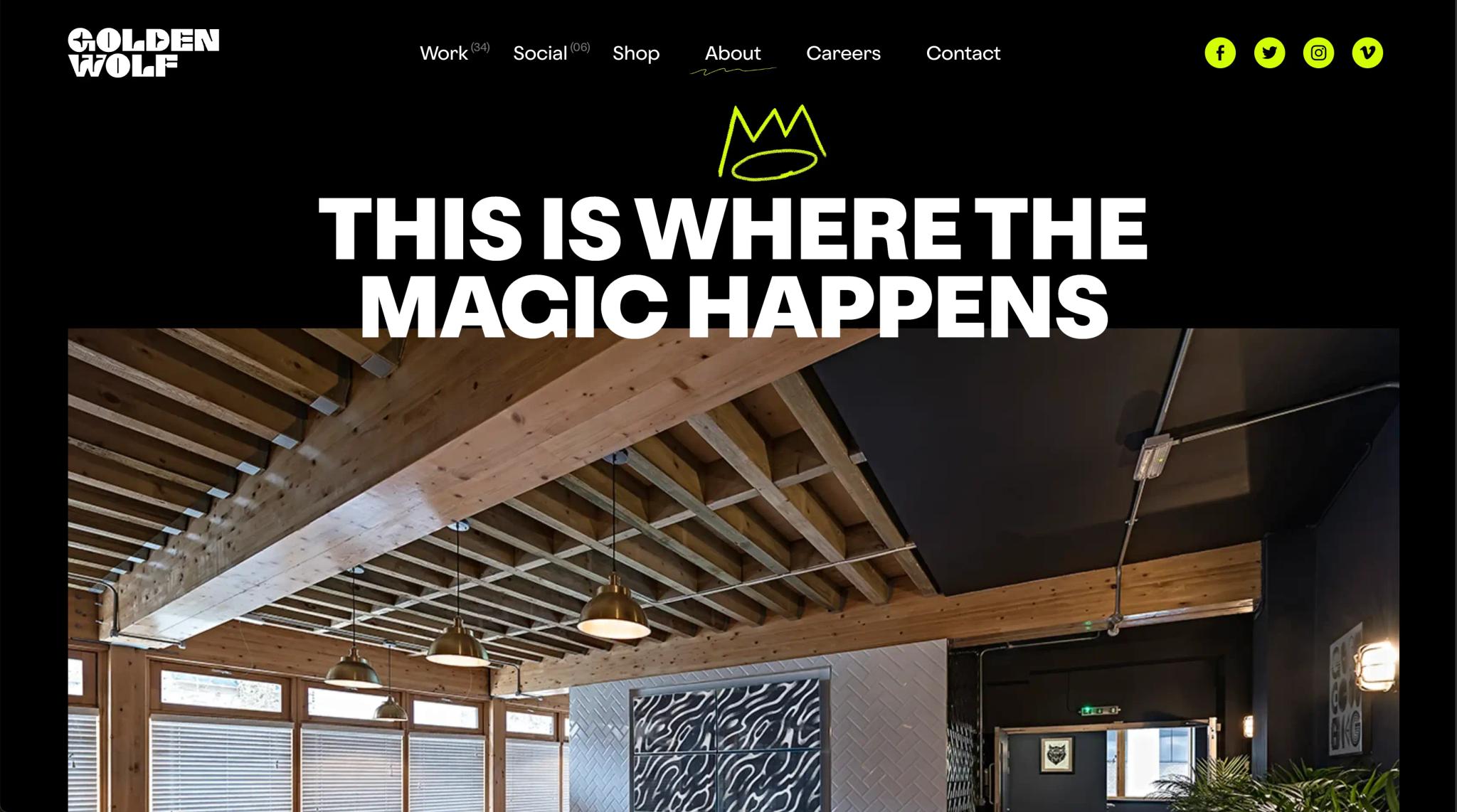
DNA / promise
An international studio with a bold, playful, pop style, steeped in web culture and youthful energy (humor, dynamism, visuals that pop).
In France, they list a representation (Eddy) rather than a “full” Paris studio in the sense of a permanent local team.
Signature
- Explosive designs, comic timing, a sense of the “shareable”.
- A pop culture tone (often a great fit for music, sports, street and collabs).
When to choose them
- Social-first campaigns, music videos, title sequences, “loud” content for young, urban audiences.
- When you want the brand to feel alive and contemporary.
Ideal brief
- A simple concept + freedom in execution (they outperform when the idea is clear).
- A format strategy (6s/15s/30s + cutdowns + stickers/loops).
Watch out for
- If your brand is ultra institutional (banking, insurance) and “zero risk”, you need to calibrate the tone very finely to avoid creating dissonance.
10. Studio Miam Miam
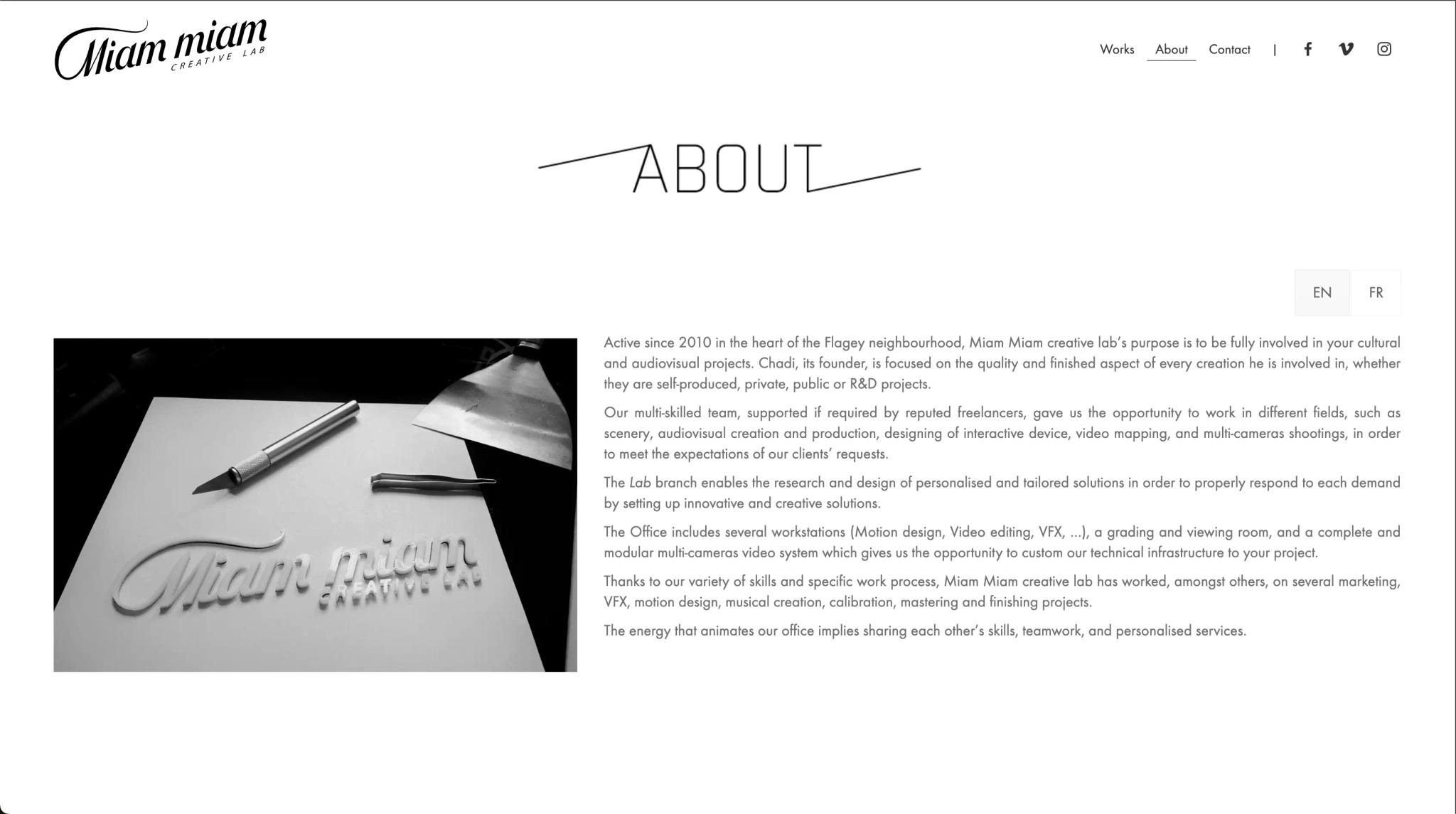
There are several “Miam Miam” studios (illustration/print, production, etc.). In the “poetic boutique” spirit you describe, the closest one on the audiovisual side is a studio of the creative lab type, focused on cultural projects and short forms, active since 2010.
DNA / promise (in this vein)
- A craft approach: a feel for materials, illustration and the small “human” detail.
- A gentle poetry, perfect for education, culture, nonprofits, ecology and childhood.
Signature
- A contemplative rhythm, sensitive transitions, “handmade” design (or design that looks it).
- Motion serves emotion and understanding, not advertising performance.
When to choose them
- Educational films that need to stay warm, content with a strong values dimension.
- When you want a “kind + beautiful” tone (not “loud + commercial”).
Ideal brief
- An editorial intent (what you want people to feel) + an illustration style guide.
- Texture references (paper, ink, engraving, collage, light stop-motion, etc.).
Watch out for
- On very “hard-sell” campaigns or ultra compressed schedules, handmade craft can suffer: it is better to plan the time to get it right.
Specialized agencies by industry
The choice of your partner will also depend on your industry. Some agencies have developed workflows and artistic sensibilities specific to particular industries.
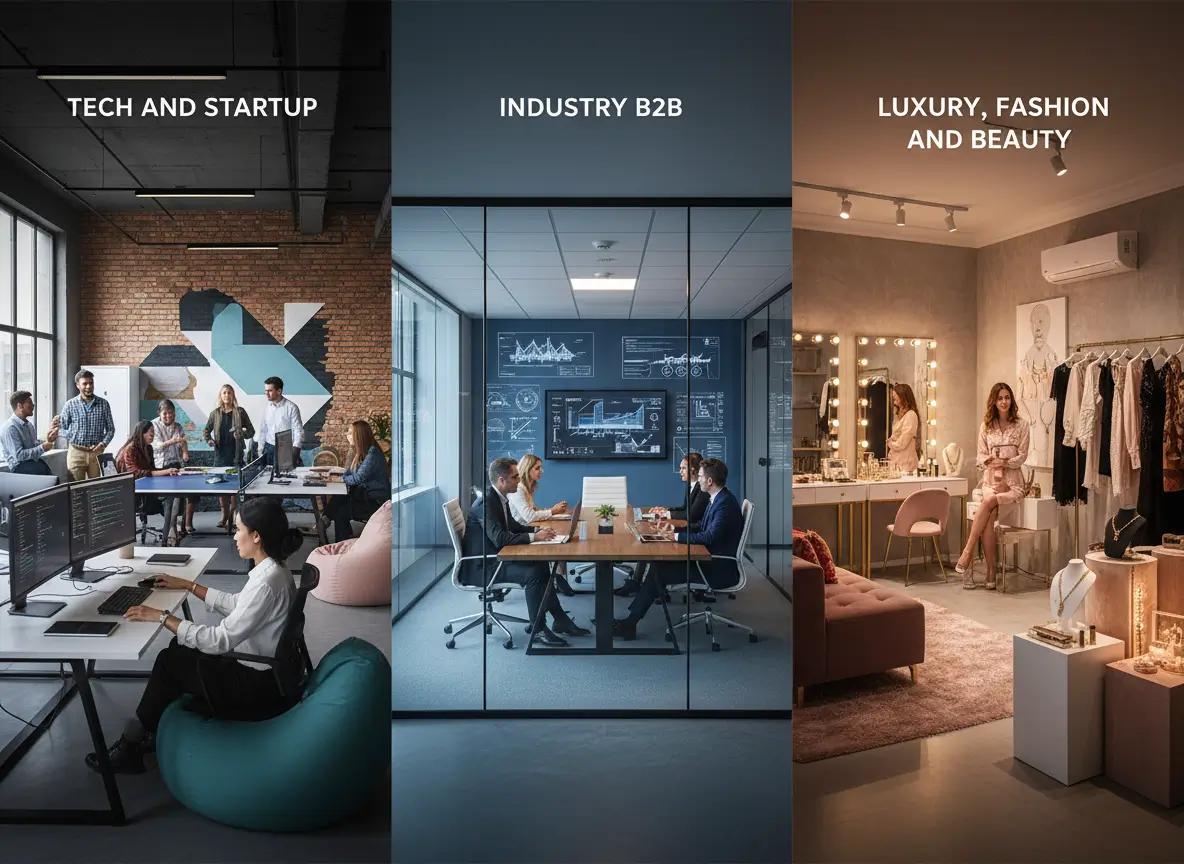
Motion design agencies for tech and startups
In tech, the challenge is often to make abstract concepts accessible (SaaS, blockchain, AI). The agencies recommended for this sector are those that master isometric design, advanced flat design and interface animation (UI motion). They must be able to produce quickly to keep up with the pace of product launches.
Agencies specialized in industry and B2B
For industry, motion design often serves to show the invisible: the inside of a machine, a data flow or an infrastructure project. Specialized agencies use technical 3D and photorealistic rendering to make the message credible. Documentary precision matters as much as aesthetics here.
Motion design for luxury, fashion and beauty
Here, emotion and aesthetics take priority over teaching. Agencies working for luxury brands use sophisticated textures, complex lighting and slow, elegant editing rhythms. Abstract 3D is frequently used to evoke sensations rather than product features.
The most innovative creative agencies
In 2026, innovation is no longer limited to graphic style. It also concerns production tools and distribution media.
Focus on the integration of 3D and advanced animation
The barrier between 2D and 3D has become porous. The best agencies now use real-time rendering engines (such as Unreal Engine) to allow immediate creative iterations. This brings unprecedented visual depth, where light and materials react physically, offering the viewer total immersion.
Using artificial intelligence in motion design
Leading agencies integrate artificial intelligence in an ethical and productive way. It is not used to replace the creator, but to automate repetitive tasks (rotoscoping, colorization, texture generation) or to explore endless style variations during the research phase. Innovative agencies use generative AI to create hybrid visual elements that would be impossible to animate by hand.
Trends and changes in the motion design market
The motion design market in 2026 is marked by a search for authenticity and hyper-personalization. Brands are moving away from generic stock video in favor of custom creations.
The most popular techniques and styles in 2026
Neumorphism: a style that plays on shadows and relief to give digital elements a tactile look.
Mixed media: combining stop-motion, live-action video and 3D in the same composition for a “handmade” look.
Kinetic typography: using text as the main graphic element, where the letter becomes movement.
Motion design for mobile and social media
The vertical format (9:16) is now the default starting point for production. Motion design must be designed for “sound-off” viewing, meaning it can be understood without sound thanks to strong visual storytelling and built-in dynamic subtitles. Getting to the point in the very first seconds is vital to avoid the scroll.
The impact of immersive content and VR
With mixed reality headsets and augmented reality glasses becoming mainstream, motion design is moving beyond the frame of the screen. Agencies now design spatial animations that surround the user. Motion design then becomes environmental, turning physical space into a communication medium.
How to work with a motion design agency
The success of a motion design project depends 50% on the quality of the collaboration between the advertiser and the agency.
Key stages of a motion design project
The brief: defining the goals, the target audience and the constraints.
The script: writing the narrative structure and the voice-over.
The storyboard: laying out each scene in static images to validate the narrative.
The moodboard and styleframes: defining the graphic universe and the colors.
Animation (production): setting the elements in motion.
Sound design: adding music and sound effects.
Rendering and export: technical finalization for each distribution medium.
Tips for a successful creative brief
An effective brief must be precise while leaving room for creative interpretation. Be sure to mention your conversion goals, your brand tone and examples of work you like (or hate). Also state the technical constraints from the start: formats, languages for adaptation, accessibility. If that tone is not defined yet, start with a branding agency.
Managing follow-up and exchanges with the agency
Use video review tools (such as Frame.io) to annotate the frames directly. This avoids the confusion that comes with written descriptions of movement. Limit the number of decision-makers during validation phases to avoid watering down the original creative concept.
Motion design costs and quotes
The price of a motion design video can range from a few thousand to several tens of thousands of euros. Understanding what makes up the price is essential to compare quotes properly.
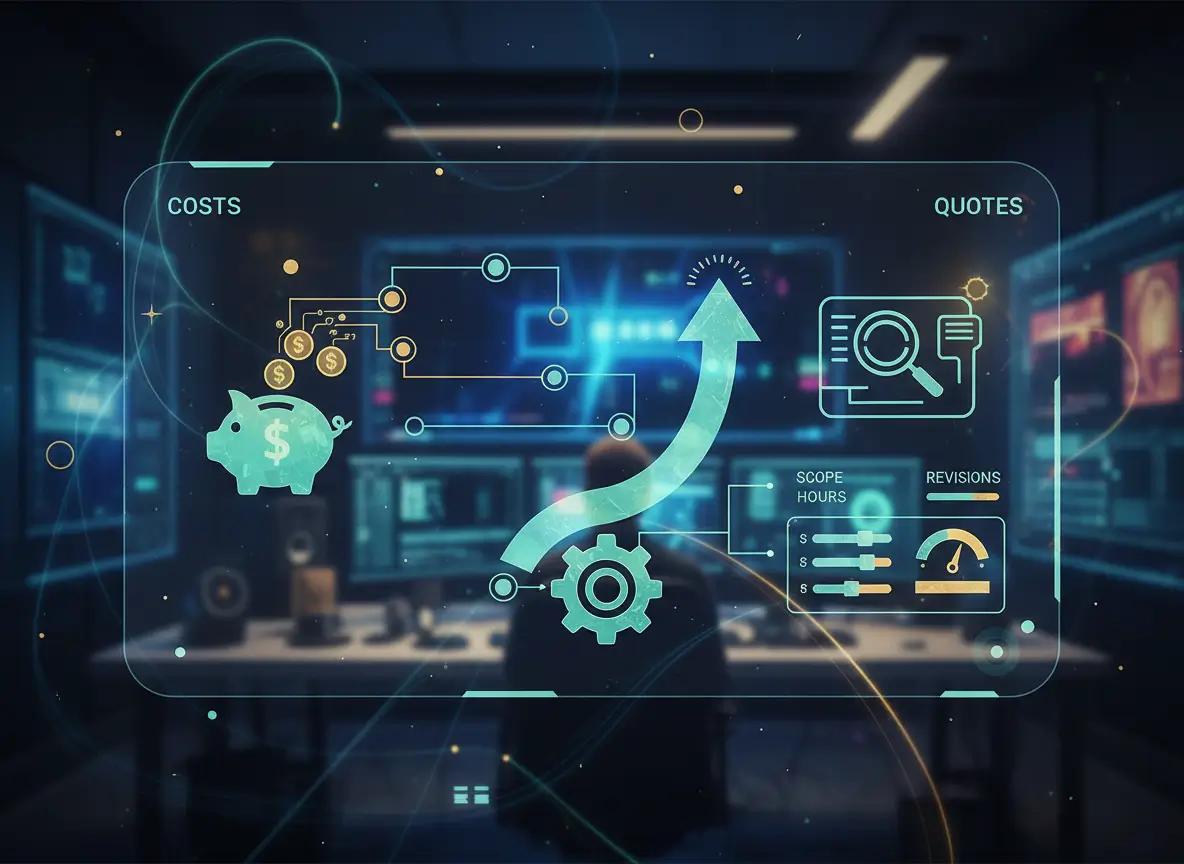
Factors that influence the price of a project
Duration: a 30-second video can cost more than a 2-minute one if it requires a higher density of animation.
Technique: 3D is generally more expensive than 2D because of rendering and modeling time.
Graphic complexity: the level of detail of the illustrations and textures.
Rights: TV broadcast or paid digital media involves higher rights assignment costs.
Comparing quotes between agencies
Do not compare the final price alone. Look at the number of working days allocated to each phase (art direction vs. production). A quote that is too low often hides the use of pre-made templates or a drastic cut in the number of feedback rounds allowed.
Average costs in 2026 and price ranges
Entry level (€2,500 to €5,000): simple motion design, often based on existing graphic elements, ideal for social media.
Mid-range (€5,000 to €15,000): full custom creation, original art direction, advanced 2D or light 3D.
Premium (above €20,000): complex productions, high-end 3D, original sound design, international campaigns.
Case studies: successful projects with French agencies
Looking at concrete cases helps you see the real impact of motion design on a company's performance.
Use cases in internal communication
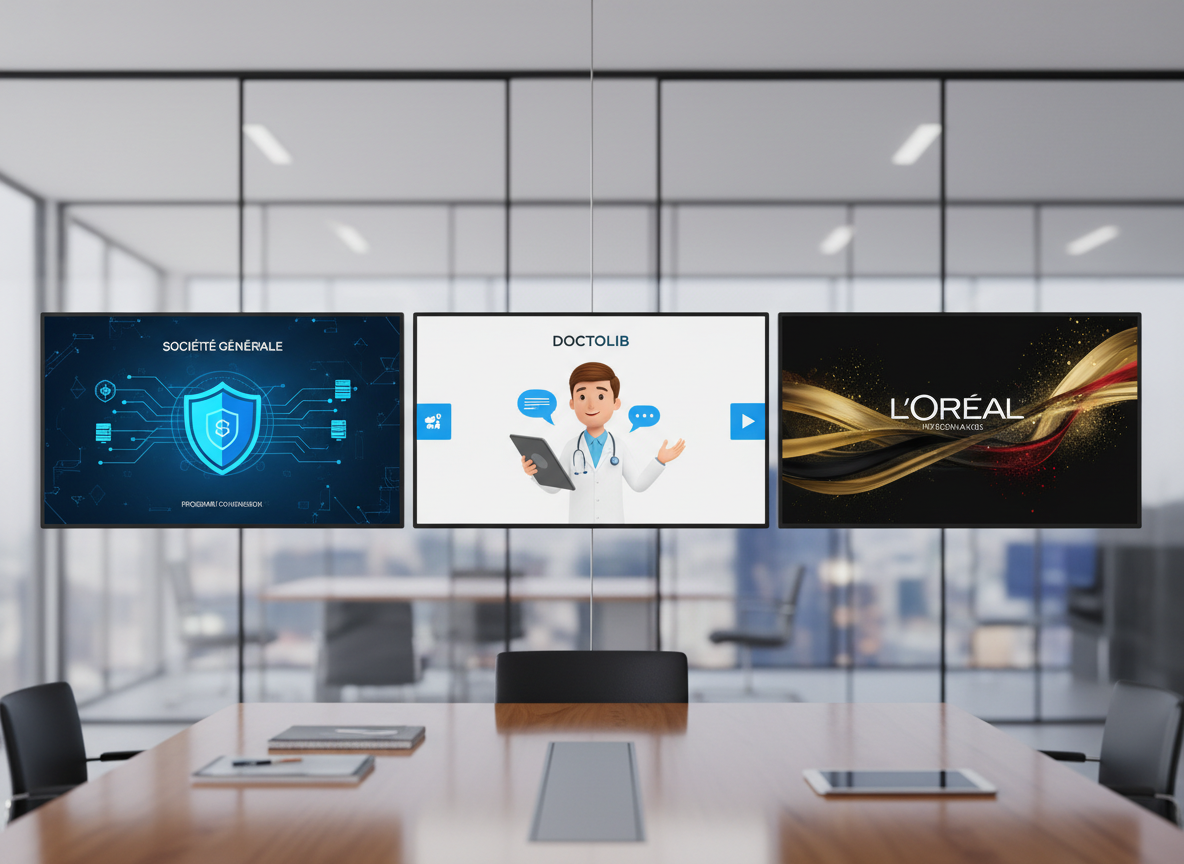
Société Générale: internal cybersecurity program
Société Générale used motion design to support the rollout of new cybersecurity rules to its employees. A series of short animated videos made complex technical notions accessible and improved team buy-in. Motion design was chosen for its teaching effectiveness and its ability to hold attention on topics seen as restrictive.
Motion design projects for product marketing
Doctolib: product explainer videos
Doctolib regularly uses motion design to explain how new features for healthcare professionals work. These videos are built into onboarding campaigns and product pages. Motion design makes it easier to adopt complex digital tools while keeping a clear and reassuring tone.
Added value of motion design:
- functional clarification
- less friction in use
- support for conversion
Event campaigns and motion design
L’Oréal: motion design animations for international events
At trade shows and internal events, L’Oréal shows motion design content on giant screens and immersive installations. These animations showcase product innovation, scientific data and the brand universe without always relying on live-action video.
Strategic value:
- international visual consistency
- adaptability across markets
- strong impact at events
Summary and tips for choosing your agency in 2026
Choosing among the best motion design agencies should not rest on aesthetic appeal alone. It should rest on the fit between your strategic vision and the partner's technical expertise. In 2026, the ideal agency is the one that understands your business challenges as much as your creative requirements.
Synqro recommends that you favor transparency and dialogue. An agency that challenges your brief is often a sign of solid expertise. Motion design is a lasting investment: a well-designed video can be adapted, recycled and used for several years, which maximizes its return. By following the criteria and the ranking presented in this article, you now have everything you need to start a fruitful collaboration and take your visual communication to a new dimension.
Frequently asked questions
For a professional-quality video of 60 to 90 seconds, you should generally allow 4 to 8 weeks. This timeline includes every validation phase, from script to post-production. Shorter timelines are possible, but they often come at the expense of graphic originality or require extra resources, which affects the budget.