Article
Do Large Companies Use Webflow? Examples, Benefits, Limits
Webflow14 min read

James BrunettoCo-fondateur & CEO
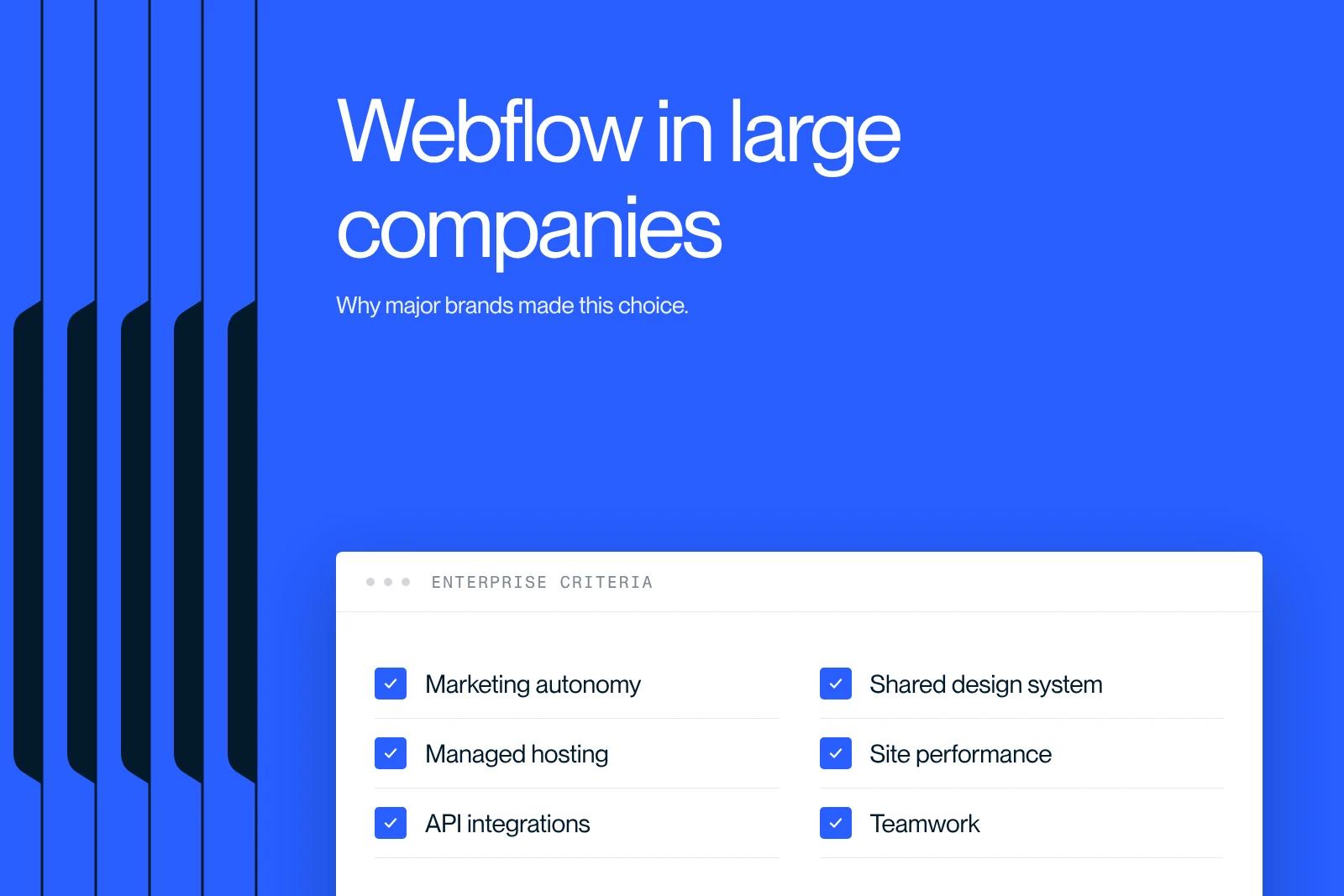
Yes. Many large companies around the world, including in demanding markets like the UK and London, now use the Webflow CMS to build and manage their websites. This content management system offers a level of flexibility and design power that attracts more and more businesses going through digital transformation, from international brands like Michael Kors to ambitious local players.
Explore this post with…
With Webflow, these companies can manage their presence on Google and LLM agents freely, while delivering an excellent user experience and keeping full control over design and content management.
What is Webflow and how is it different?
Webflow defined
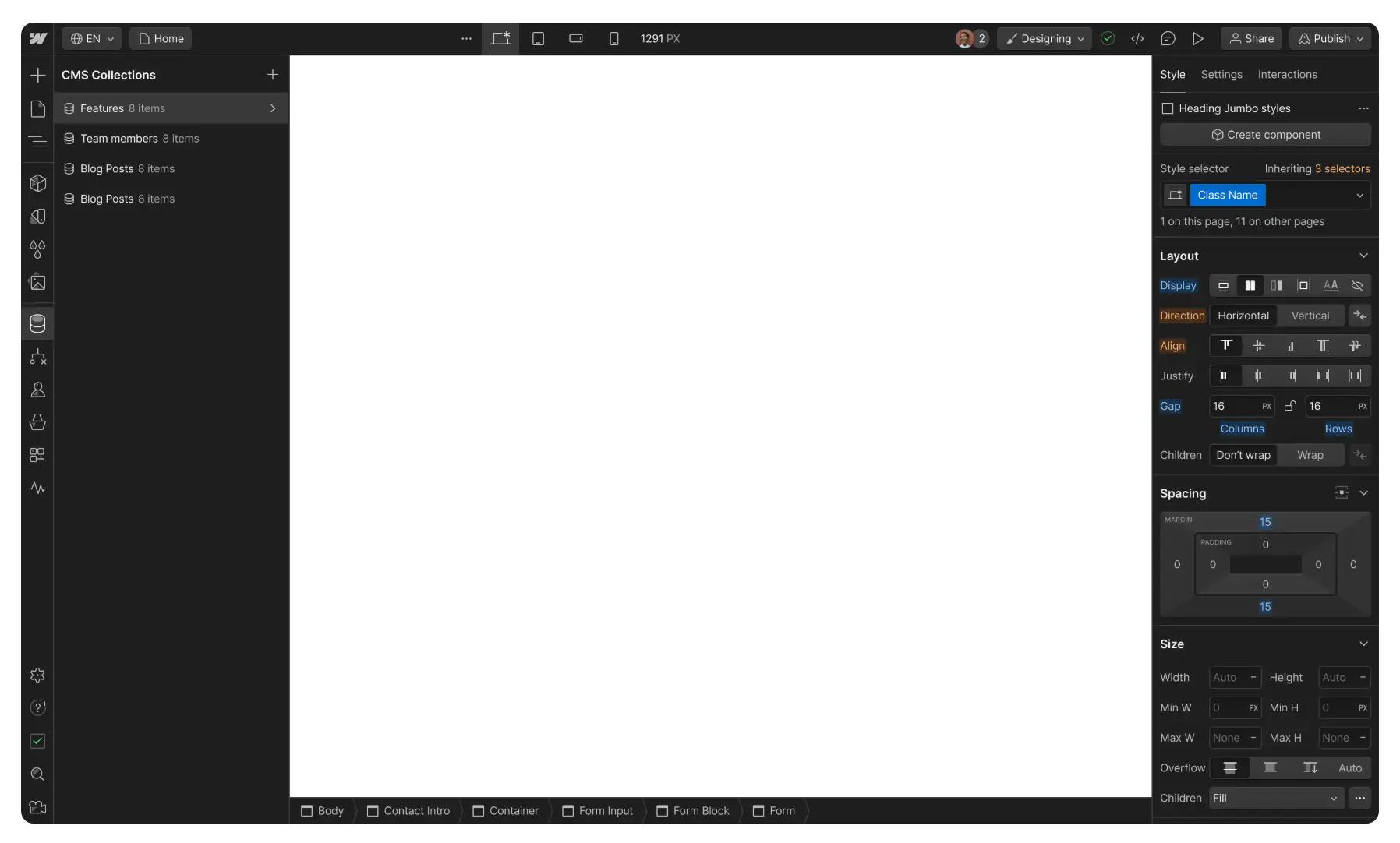
Webflow is an all-in-one platform that changes the way websites are built and managed. Unlike traditional solutions, it combines a visual design tool, a content management system (CMS) and hosting, all in a single interface. With its drag-and-drop editor, you can build visually appealing websites without writing a single line of code.
With Webflow, you can run your entire project, from design to publishing, including content management. All of this happens in a secure and optimized environment.
How it compares with other popular CMSs
Compare Webflow with other CMSs like WordPress and the differences are striking. WordPress relies on themes and plugins that can limit creative freedom and make technical management harder. Webflow offers complete flexibility. There is no fixed theme to follow: every site is built from scratch, pixel by pixel, around the company's specific needs.
On top of that, the Webflow CMS generates clean and optimized HTML, CSS and JavaScript, which means responsive, high-performing websites. Finally, built-in hosting and stronger security make Webflow an ideal solution for companies that want to combine design, performance and easy management.
Why Webflow appeals to large companies
Flexibility and customization
Compared with WordPress, Webflow offers exceptional flexibility that wins over large companies. Unlike other CMS solutions, it allows full customization of the design, without necessarily requiring coding skills.
Every element of the site can be fine-tuned to reflect the company's visual identity perfectly. The ability to create visually appealing websites with sophisticated interactions is a major advantage for companies trying to stand out in a competitive digital world.
Ease of use and time savings
One of Webflow's big strengths is its intuitive interface, which combines a powerful drag-and-drop editor with a capable content management system. This makes complex web projects, which often involve many stakeholders, easier to manage, while significantly reducing technical requirements.
For marketing teams and agencies like Synqro, this means valuable time savings in Webflow development and site updates, while removing excessive dependence on developers. If you are looking for the right offer, Synqro's Webflow website pricing includes flexible options that are ideal for optimizing digital projects.
Hosting and security options
Large companies also benefit from robust, secure hosting with Webflow. Hosted on fast, reliable servers such as AWS, Webflow sites deliver high availability and fast load times, both essential for a great user experience.
Built-in hosting simplifies updates, backups and security, so companies can focus on their business instead of technical details.
Responsiveness and accessibility
Webflow excels at building responsive websites that work on every type of device. The platform produces sites that meet modern usability and accessibility standards, with a smooth user experience on mobile, tablet or desktop.
Handling accessibility well is a key criterion for large companies that want maximum visibility and want to meet the expectations of their international audiences.
Examples of large companies that use Webflow
Case studies and feedback
Many well-known large companies have adopted Webflow for their digital projects, which shows how effective and versatile the platform is. For example, Upwork adopted the Webflow CMS to speed up the creation of new pages and simplify content management, without relying on the development team. This autonomy made their marketing teams more agile and improved their online presence.
Likewise, Fivetran ran into difficulties with other CMSs and migrated to Webflow Enterprise. This strategic choice let them quickly launch about thirty new pages while freeing up valuable technical resources. Giants like Dropbox also use Webflow for specific projects, such as managing their brand guidelines, which keeps their design resources consistent and accessible.
Impact on their online presence and success
These examples show that adopting Webflow brings large companies a significant improvement in content management, better visual consistency and faster digital communications. By choosing this solution, they align their website with their digital transformation strategy and get a platform that can handle complex, varied content.
The result? Shorter time to market, an optimized user experience and stronger SEO. These factors are essential to keep a competitive advantage in their industries.
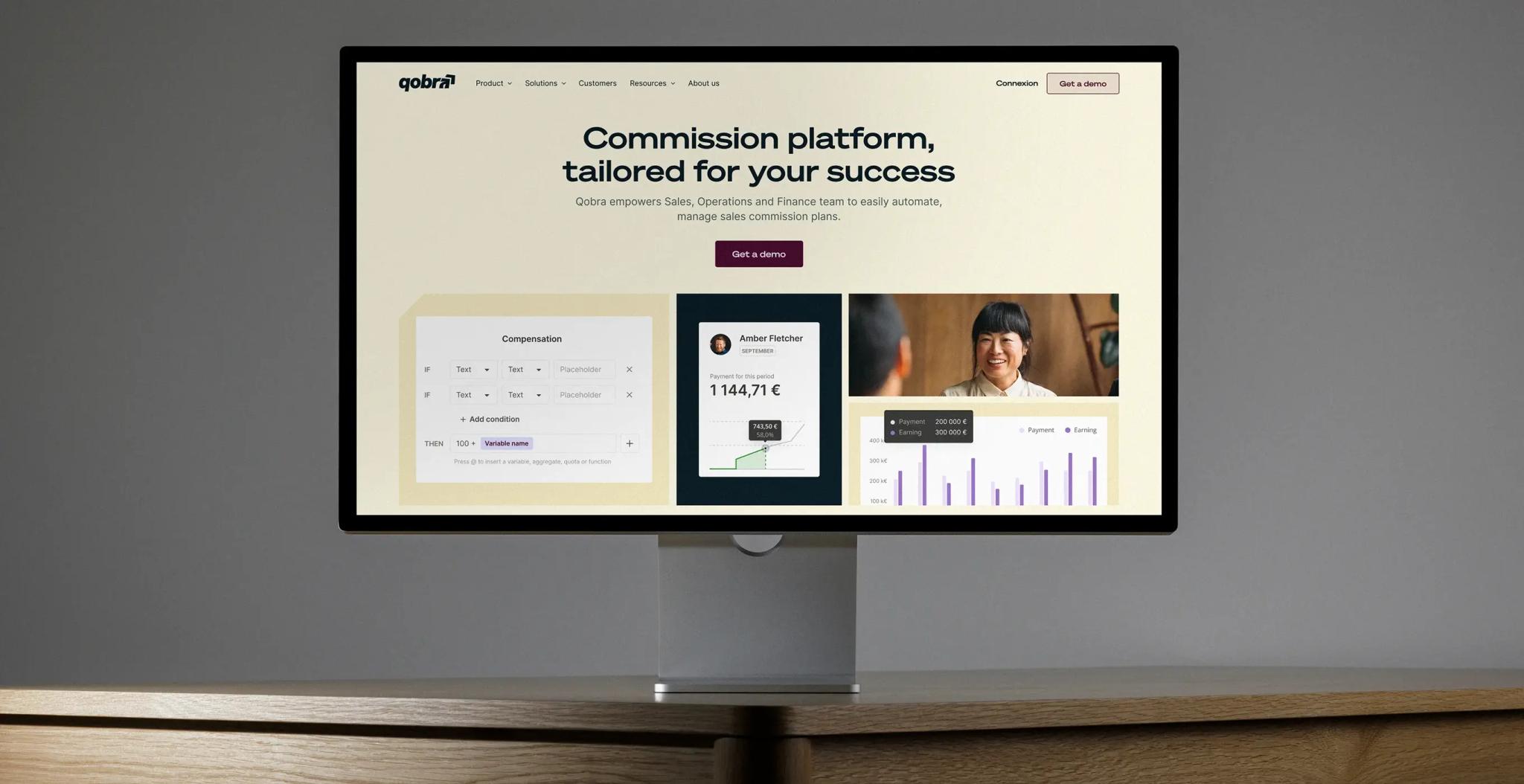
Example: Qobra's Webflow website
Top 3 large companies that use Webflow
1. Lattice
Lattice, an HR platform used worldwide for performance management and employee engagement, uses Webflow for several of its marketing pages and resources.
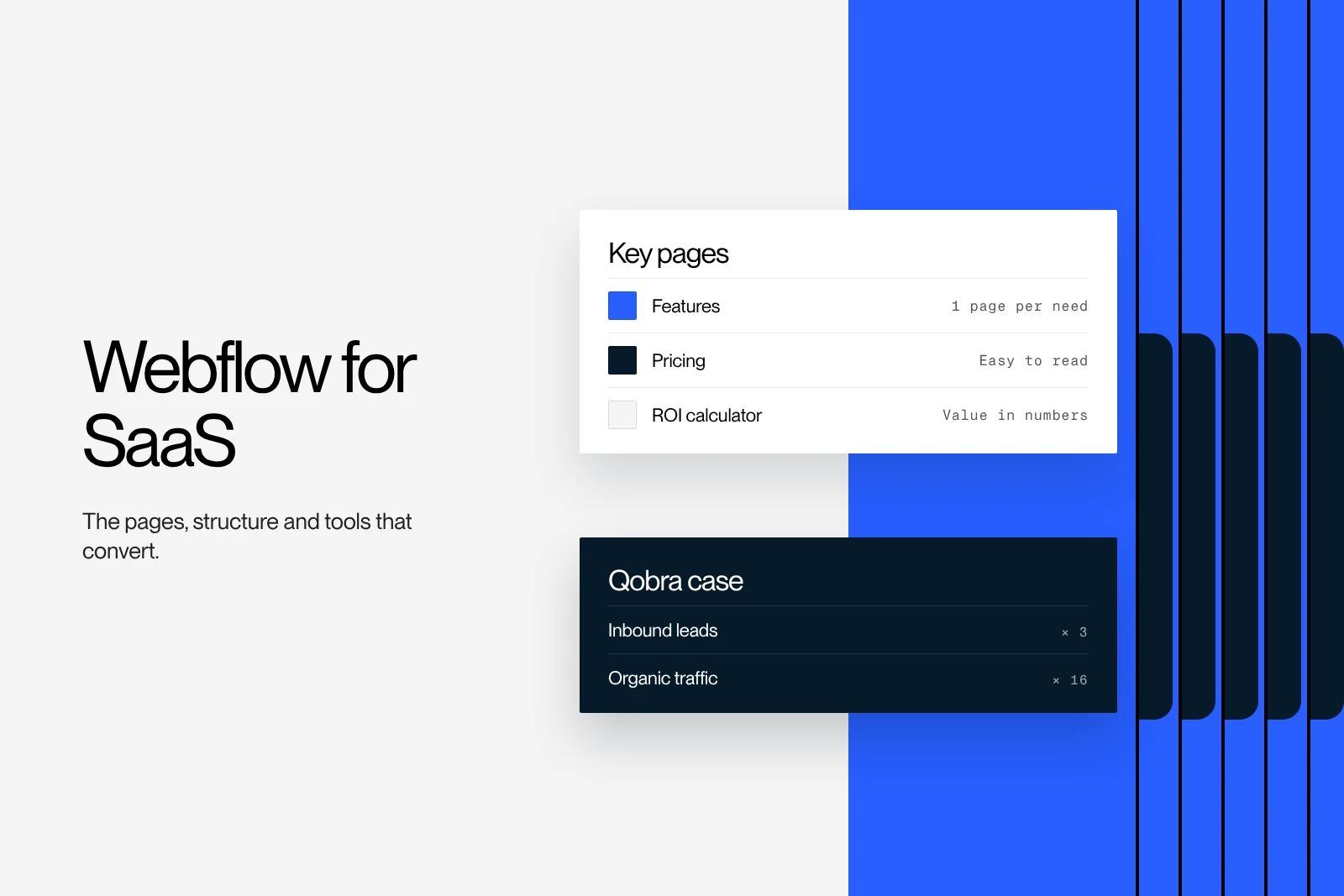
With Webflow, their teams can publish content quickly, test landing pages and stay fully consistent with their visual identity. Choosing Webflow helped them speed up time to market and rely less on technical teams. This pattern is common among software companies, as our guide to Webflow for SaaS explains.
2. Zendesk
Zendesk uses Webflow for some of its marketing initiatives, including event pages and customer-facing resources.
The company wanted a flexible tool to design polished digital experiences without always calling on engineering. Webflow gives them a lot of creative freedom, full control over the front end and smooth integration with their existing systems.
3. Rakuten
The Rakuten group uses Webflow for its digital communication projects, including microsites and dedicated promotional pages.
By adopting Webflow Enterprise, Rakuten gets a secure infrastructure, granular access control and a strong collaborative environment, which is essential to coordinate marketing teams spread across several regions of the world.
Challenges and limits of Webflow for large companies
Technical and functional limitations
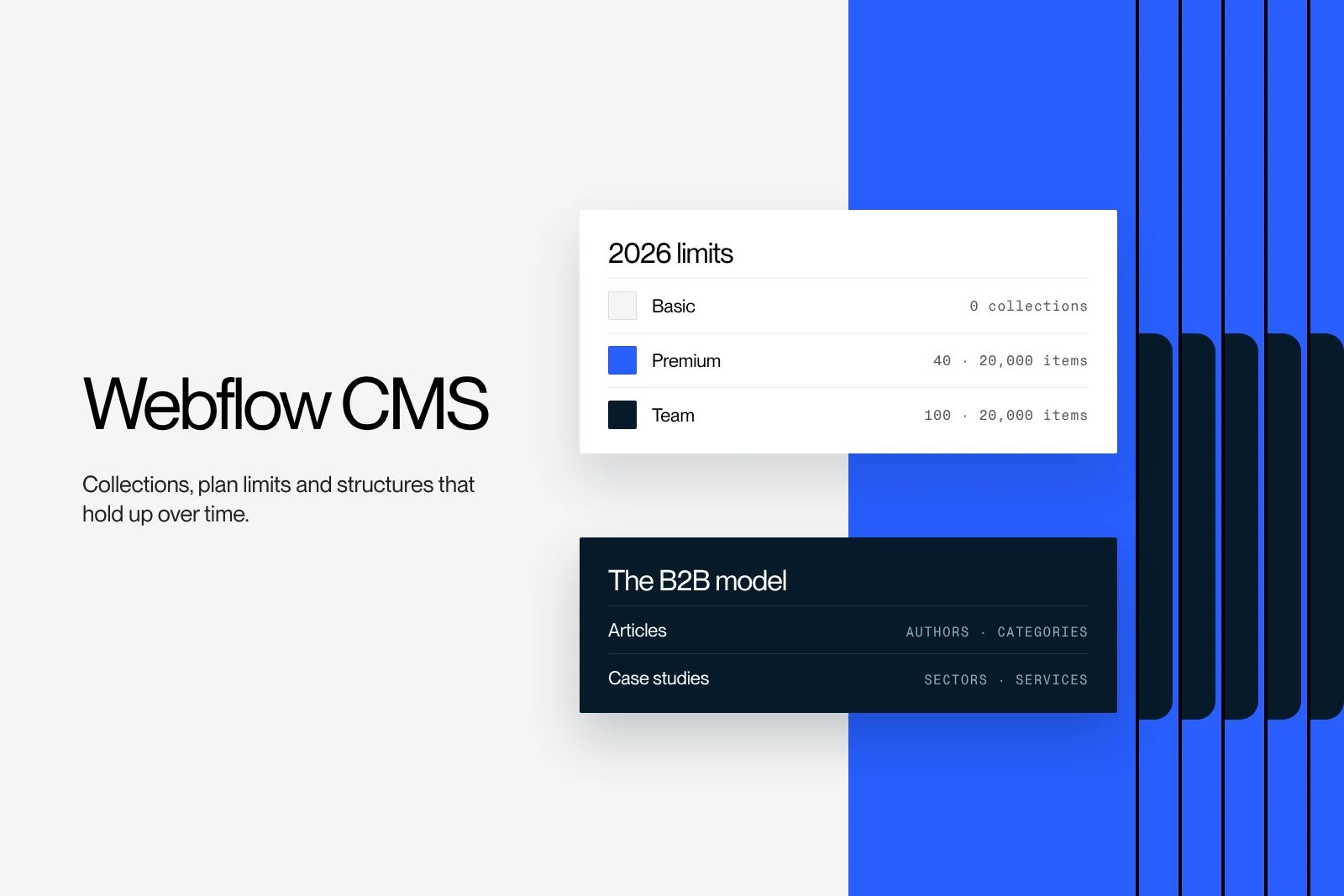
Although Webflow is a powerful solution, it has some constraints that can be a problem for large companies. One of the main limits is the number of items in the CMS: even on the highest plans, items are capped at 10,000 per site. That can quickly fall short for projects that need a high volume of content.
Complex content management, such as relationships between collections or advanced dynamic filters, is also limited. It often requires custom code or third-party integrations. Finally, the e-commerce system keeps improving but does not always meet the expectations of big brands. It still lacks some essential features, such as subscriptions or ERP integration.
| Company | How it uses Webflow | Impact |
|---|---|---|
| Lattice | Marketing pages + resources | Fast publishing & brand consistency |
| Zendesk | Microsites + event pages | More creative freedom + less dev time |
| Rakuten | Promotional microsites | Global collaboration & Enterprise security |
Scalability and advanced customization challenges
Scalability is another important point for large companies. Webflow Enterprise plans raise some limits, but the cost can quickly become prohibitive for very large needs.
In addition, advanced customization, needed for projects with complex architectures or specific workflows, often runs into technical limits. Challenges such as managing several languages, versioning, or security and compliance with strict corporate standards remain weak points. Webflow does not always handle them in the best way.
For these reasons, some development firms or Webflow specialists, such as Synqro, which works with companies in Paris as a Webflow agency in Paris, prefer to combine Webflow with other tools or move to solutions better suited to the growth and complexity of their projects.
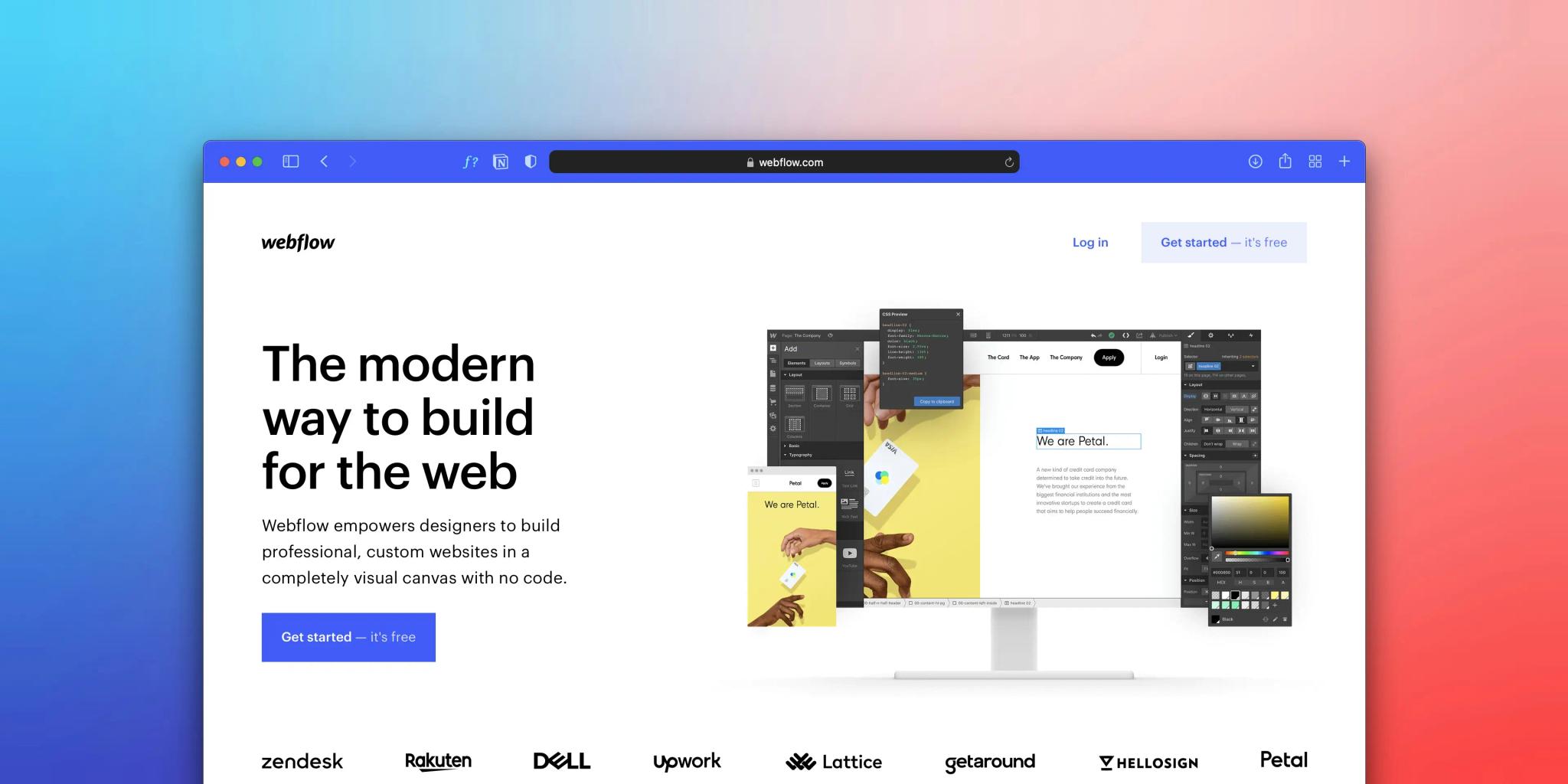
Webflow vs. WordPress: why large companies may choose Webflow
Feature comparison
When choosing between Webflow and WordPress, large companies need to assess their specific needs to make the best decision. WordPress, as an open-source CMS, offers maximum flexibility thanks to its huge ecosystem of plugins and themes. However, that flexibility often comes with complex management and regular maintenance.
Webflow, on the other hand, offers an all-in-one solution that brings hosting, security and content management into a single interface. This reduces the risks tied to third-party plugins and simplifies day-to-day site management. It is a key advantage for marketing teams and Webflow agencies like Synqro, which want more autonomy and better efficiency.
| Criterion | Webflow | WordPress |
|---|---|---|
| Design | 100% custom, no theme | Themes + plugins → limits |
| Maintenance | Low (native hosting) | High (plugins, security…) |
| Performance | Clean code, very fast | Depends on theme and plugins |
| Security | Built in (CDN, SSL, backups) | Up to you |
| Content editing | Visual, intuitive | Less intuitive |
Impact on SEO and user experience
For SEO, Webflow stands out with built-in features that make optimization easier: automatic sitemap generation, structured data management and full control over HTML tags. These native tools deliver fast, solid results without relying on third-party plugins.
The code Webflow generates is also clean and optimized, which supports fast load times and a smooth user experience. These are essential for large companies looking for high performance and better online visibility. WordPress does have powerful SEO plugins, but their effectiveness often depends on configuration and maintenance, which can add to the team's workload.
Webflow integrations with other business tools
Marketing and CRM tools
Webflow stands out for its ability to integrate easily with the main marketing and CRM tools used by large companies. With native integrations for tools such as Marketo, Mailchimp and HubSpot, you can easily connect your website to your email marketing campaigns and automate your nurturing. For specific or less common needs, the automation platform Zapier connects Webflow to more than 5,000 apps, giving you exceptional flexibility to sync data and orchestrate your marketing workflows.
A concrete example is Sendingflow, which integrates seamlessly with Webflow to turn your forms into automated email campaigns in a few clicks. This makes managing your communications much simpler. Keep in mind, though, that if your company needs complex integrations with ERPs, advanced CRMs or specialized business tools, native integrations alone may not be enough. In that case, you will need external tools to fully automate these processes.
Project management and collaboration systems
Webflow also improves team collaboration through its integration with leading project management systems. Webflow's native collaboration tools let designers, developers and writers work together on the same project. These workflows include robust features such as reviews, approvals and branching.
To automate recurring tasks, Make (formerly Integromat) offers almost unlimited scenarios that connect Webflow to tools such as Slack, Trello, Airtable and Gmail. This lets you automatically handle incoming applications, notifications and data syncs.
Airtable, with its full suite of tools and intuitive drag-and-drop interface, also lets you build custom workflows without programming. This smooth integration is ideal for organizing and sharing data across your organization while meeting your specific needs.
Is Webflow the future for large companies?
Current trends and direction
Webflow is a platform in step with the major web trends of 2025. The rise of smart personalization powered by AI, the use of immersive 3D elements and the focus on ultra-minimalist designs with bold typography are all directions Webflow supports very well. These changes let companies offer visually appealing websites with a richer user experience through advanced animations and sophisticated scrolling.
This ability to easily adopt new technologies and follow SEO best practices makes Webflow especially well suited to the digital transformation goals of large companies.
Outlook for Webflow in large organizations
Statistics show that Webflow is steadily gaining ground in the CMS market, with estimated annual growth of about 10% and a market share of 1.2% in 2025. This growth is modest next to giants like WordPress, but it reflects strong interest in no-code solutions and the desire of large companies to free up their marketing and design teams.
The outlook points to stronger collaboration features, better integrations with business tools and a greater focus on performance. Webflow therefore looks like a strategic platform that can drive the digital transformation of large companies thanks to its balance of power, simplicity and innovation.
Conclusion
Webflow has become an essential solution for large companies that want their digital transformation to succeed. With its unique mix of creative flexibility, intuitive content management and built-in SEO performance, it is a strategic choice for modern organizations. Leaders like Dropbox, Slack and Michael Kors have already shown that Webflow can handle the most ambitious projects, while giving marketing teams more freedom and shortening time to market.
A few limits remain, especially for ultra-complex projects, but Webflow keeps evolving with new features such as AI and CMS improvements. If you plan to modernize your digital presence and use a scalable and innovative platform, now is the right time to try Webflow or bring in a specialized Webflow agency to turn your vision into reality.
Frequently asked questions
Many large companies trust Webflow for their websites. They include Discord, Dropbox Sign, Slack, Upwork, Rakuten, Fivetran, Jasper AI, Dell Technologies, Zendesk, Lattice and IDEO. These companies chose Webflow for its advanced design capabilities, its scalable CMS and its automation features. These strengths give their marketing teams greater autonomy.