Article
Duplicate content in SEO: how to detect and avoid it
SEO6 min read

Guillaume SchluppConsultant SEO
Duplicate content in SEO: how to detect and avoid it. Learn how to find duplicate content on your website and improve your organic search rankings.
Explore this post with…
Duplicate content is a major challenge in SEO, often underestimated by website owners, and at Synqro, a Webflow agency, we see it in every audit. Duplicated content confuses search engines, hurts organic rankings and costs you key positions. That is why understanding how to detect duplicate content and how to remove it is essential to optimize a website. In this article, we explain how duplicate content arises, how search engines interpret it and how to fix it effectively.
How to avoid duplicate content, and what counts as duplicate content
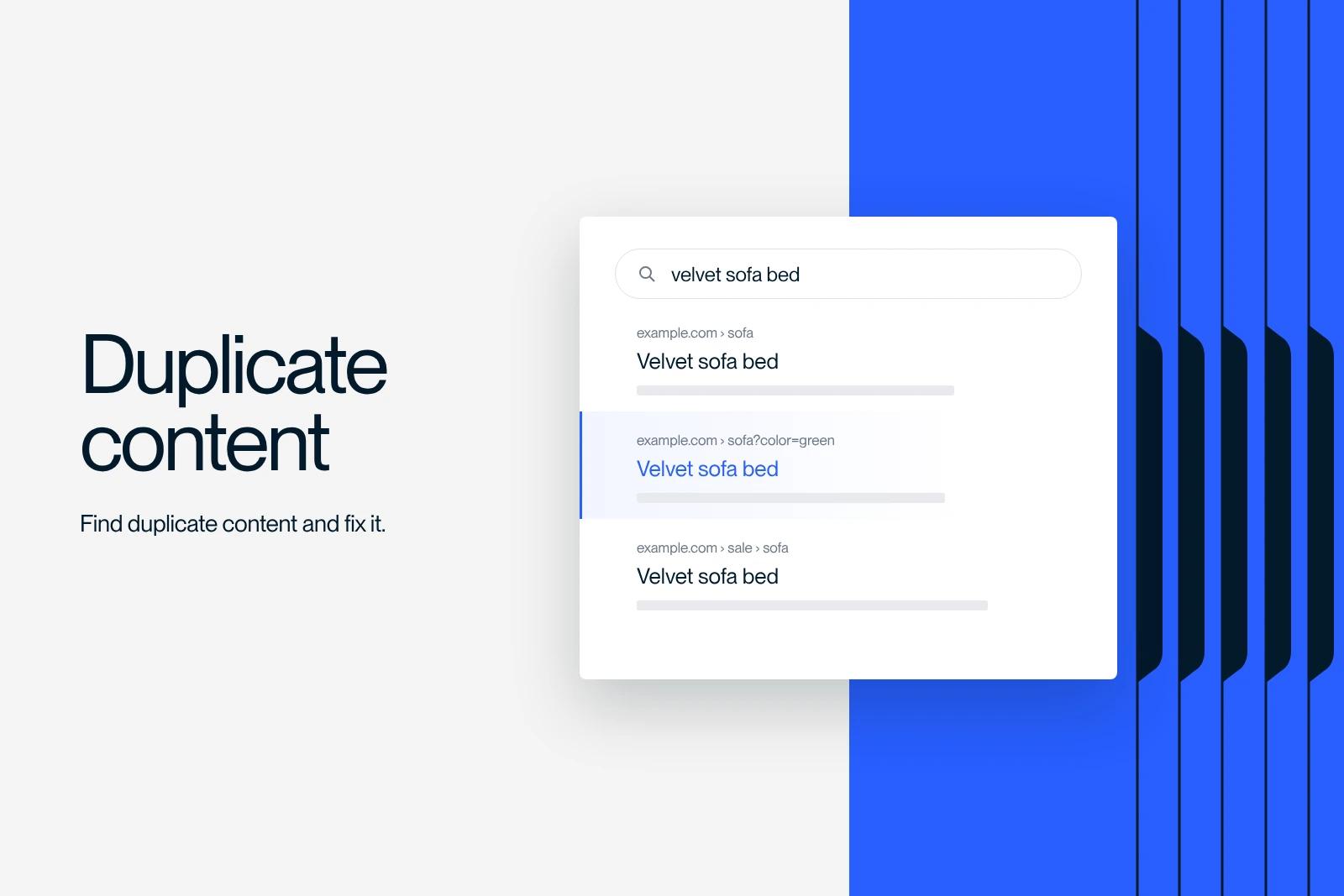
To go further, we need to go back to basics: duplicate content refers to any situation where content that is identical or very similar appears on several pages. In other words, when a text has been copied and pasted or duplicated, search engines struggle to know which version is the legitimate one. A search engine can read these duplicates as a lack of editorial consistency.
Duplicate content can come from several sources:
- Copying and pasting existing text onto another page
- Duplicating a URL because of poor technical management
- Repeating entire blocks with no added value
- Reusing content from one site on another without adapting it
These cases often end up considered duplicate content by Google. And if Google hesitates over which page to index, your visibility drops. That is why at Synqro we insist on creating unique, high-value content for effective site optimization.

The SEO impact of duplicate content: how search engines penalize your rankings
Once duplication is defined in an SEO context, you need to understand its consequence: it can penalize a site. In practice, search engines do not like duplicate content, because it hurts the quality of results. When several pages with the same content appear, Google no longer knows which page to index. As a result, the page you care about may rank poorly.
The risks are clear:
- Losing positions in search results
- Diluting the relevance of your content
- Degrading your site's rankings
- Suffering an algorithmic penalty, notably with Panda
Note that if your content has been copied elsewhere on the web, the confusion is even greater. This explains why, if Google detects another site reusing your text, it may penalize your original page when the content was copied as part of a malicious SEO strategy.
SEO tools to detect duplicate content: identify and analyze duplicated content
Next, it is essential to know how to detect duplicate content through a thorough SEO audit. Several tools can identify duplicate content and flag problematic URLs. An SEO audit remains the foundation, but some online tools make detection easier.
Here are the most reliable tools:
- Copyscape, ideal for checking whether another site is reusing your content
- Siteliner, which detects internal duplicates
- Duplichecker, a simple, fast free tool
- Kill Duplicate, a tool specialized in plagiarism protection
All of them can help you detect content issues and take action to optimize your strategy. However, only a complete SEO analysis can identify the real cause of the content duplication. That is what we do at Synqro in our audit engagements.
Avoiding duplicate content with technical best practices: canonical tags, 301 redirects and URL management
After detection comes the fix, following SEO best practices. The technical solutions to avoid duplicate content are simple, but they must be carried out correctly. Managing URLs, tags and redirects plays an essential role in maintaining optimal SEO performance.
Main actions to take:
- Use the canonical tag, which tells Google which version is the right one
- Redirect with a 301 when two URLs contain identical content
- Clean up parameterized URLs that create duplicates
- Regularly check your site's pages in Search Console
Here is a summary table:
This approach is essential for good organic rankings, because it keeps content unique across a site.
How to avoid editorial duplication with optimized web writing
Once the technical side is under control, you need to work on the writing as part of an SEO content strategy. A site can contain duplicate content even without copying an existing text. This is often the case when page titles or descriptions lack added value.
To avoid this:
- Write clear, well-structured original content
- Avoid duplicating blocks of text across several pages
- Create unique content designed for the user
- Optimize each page for its own intent
In other words, to keep content from being considered duplicate, you need to produce text that precisely answers the target query, backed by a rigorous content audit. At Synqro, we support site owners in this process by combining editorial and technical strategy.
How to protect your site and stop others from stealing your content
Finally, one last crucial point concerns plagiarism, from an SEO protection standpoint. When a site has copied your text, you need to react quickly. If your content appears on another site, Google may get the original author wrong.
To protect your texts:
- Monitor your content with Copyscape or Duplichecker
- File proof of prior authorship if your content is critical
- Contact the offending site if it has stolen your content and the plagiarism is obvious
- Redirect to a new URL if necessary
In other words, the goal is to avoid any uncontrolled duplication and to guarantee original content across the entire site.
To improve your SEO or check whether your site contains duplicate content, contact Synqro: we analyze, fix and optimize your online presence.
Frequently asked questions
Duplicate content can penalize a site and reduce its visibility. When identical content appears on several pages, Google hesitates over which version to index. This limits organic rankings, undermines the site's consistency and can cost you positions in search results. To avoid it, fix the duplicates, optimize your URLs and strengthen editorial quality.