Article
Webflow e-commerce: pros and cons
Webflow13 min read

James BrunettoCo-fondateur & CEO
Considering Webflow for your online store? Here are the strengths and the limits, so you can save time and make the right choice.
Explore this post with…
Webflow E-commerce is an extension of the Webflow platform that lets you build your own online store. As with brochure sites, the tool offers an intuitive, highly customizable interface for designing an e-commerce site that reflects your brand.
Webflow E-commerce has become a serious alternative to the market giants. Why? Because it combines design freedom, ease of use and performance.
At Synqro, within our agency, we see it every day: Webflow makes it possible to build online stores that are unique, modern and fully aligned with our clients' brand image.
So, is Webflow E-commerce right for you?
Here is everything you need to know.
A CMS built for brands that want to stand out
Webflow is much more than a simple CMS.
It is a true visual design studio that lets you build a 100% custom site without coding.
And the e-commerce version?
It follows the same philosophy: total design freedom, while including the essential features of an online store.
No rigid template. No imposed sales funnel.
You imagine it, you build it.
What exactly is Webflow E-commerce?
It is the Webflow feature dedicated to selling online.
You can:
- Add your products in a few clicks
- Create custom product pages
- Manage your inventory
- Set up shipping
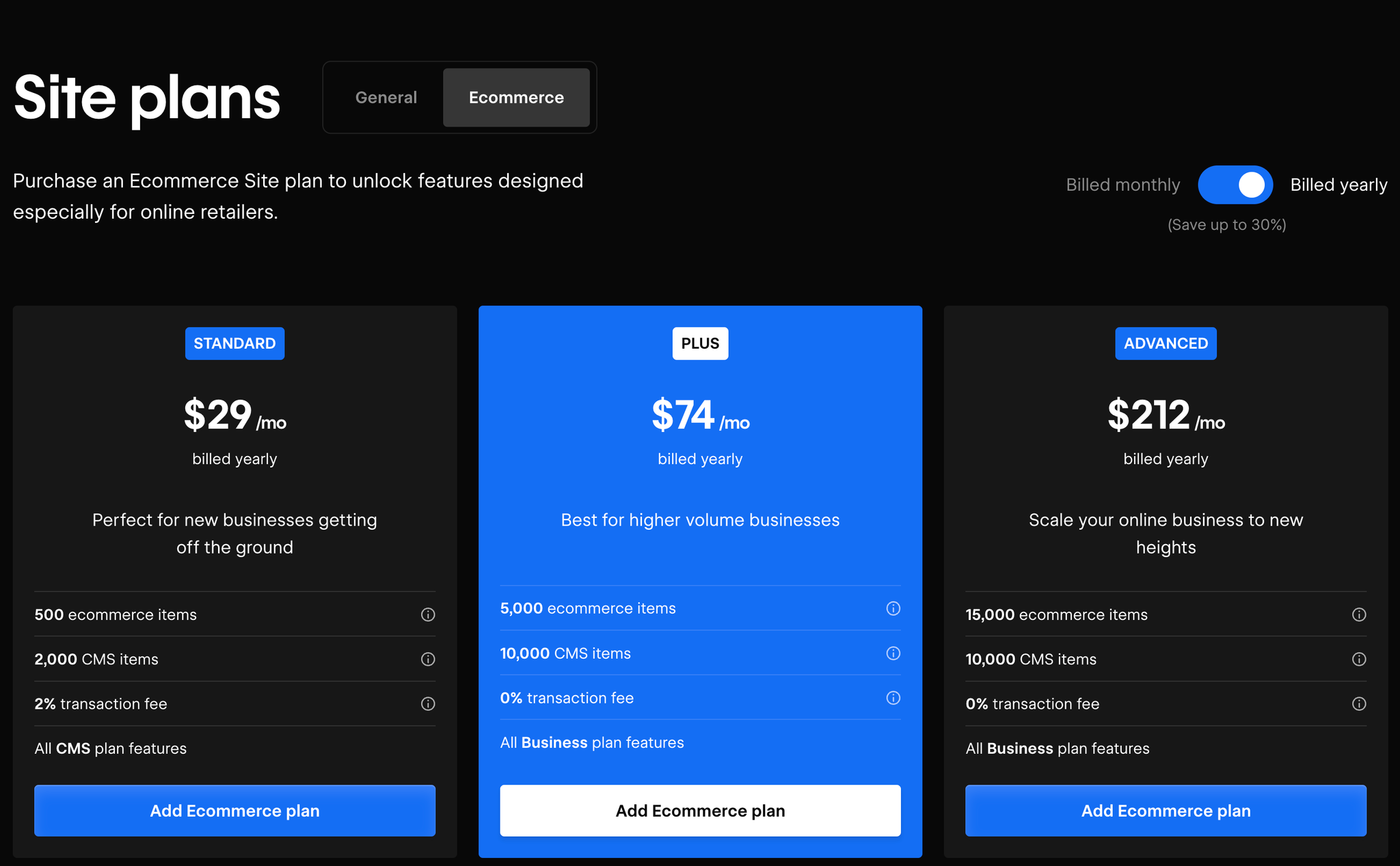
- Integrate secure payments (Stripe, PayPal, Apple Pay, etc.)
All of this in a visual environment that is easy to pick up.
And above all, without sacrificing design.
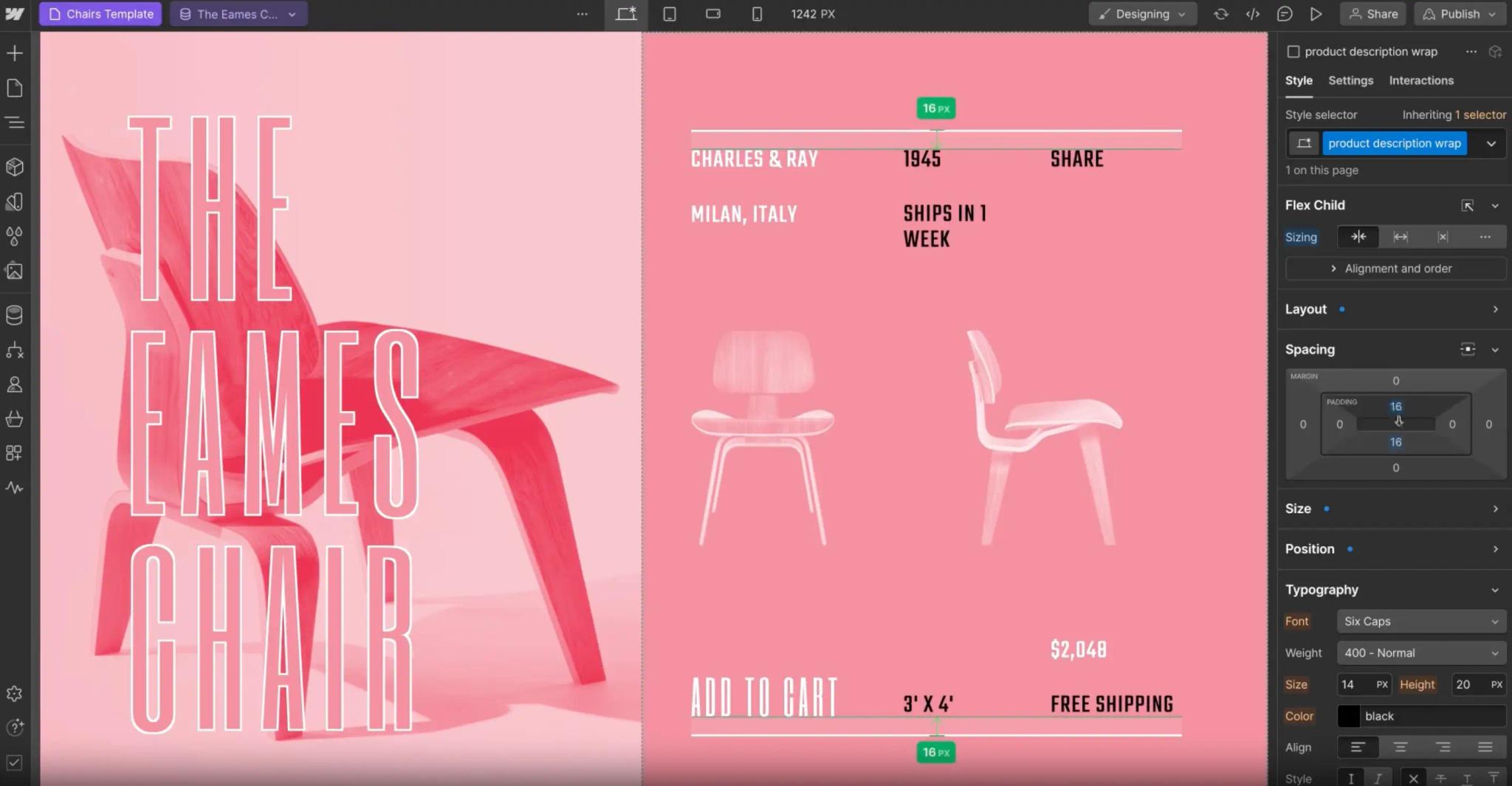
A store that reflects your brand, down to the last detail
With Webflow, you have full control.
Home page, categories, product pages, cart, checkout...
Every step of the customer experience can be designed according to your own codes, not those of a generic template.
That is what makes Webflow so powerful for brands that want to make a difference.
How much does it cost?
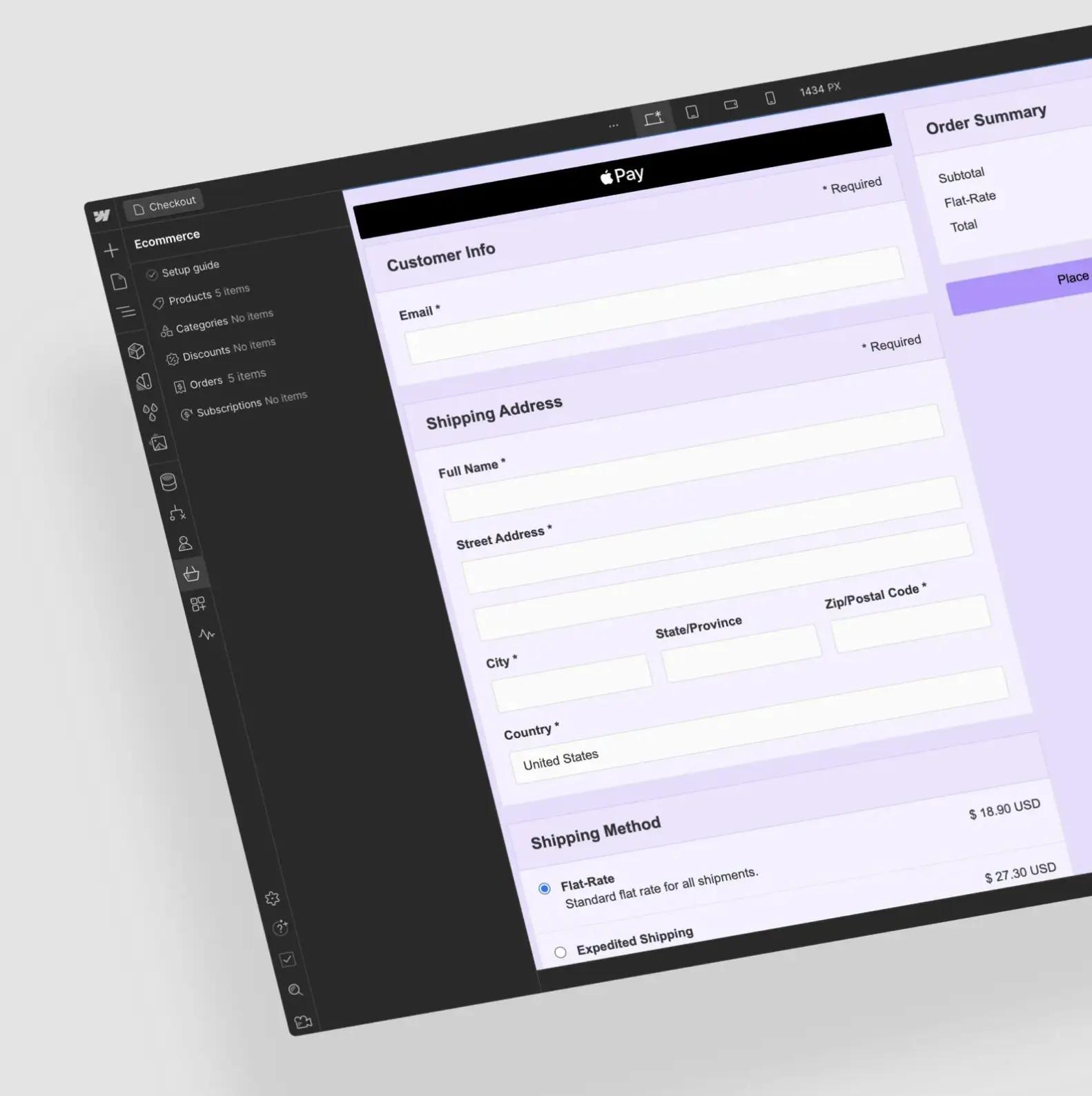
Webflow offers three e-commerce plans, depending on the size of your store and your goals.
🟡 Standard – $29 / month
- Up to 500 products
- $50,000 in annual sales
- 2% transaction fee
Perfect for small stores or projects that are just starting.
🟠 Plus – $74 / month
- Up to 1,000 products
- $200,000 in annual sales
- 0% transaction fee
Ideal if you are starting to scale and want to maximize your margin.
🔵 Advanced – $212 / month
- Up to 3,000 products
- No sales limit
- 0% transaction fee
A plan built for brands that are taking off and need total flexibility.
So who is Webflow E-commerce for?
✔️ Brands that want a highly designed site
✔️ Entrepreneurs who want to stay in control without depending on developers
✔️ Online sellers who want to break out of the usual mold
But...
❌ If you have an XXL catalog with thousands of SKUs
❌ Or if you need highly specific e-commerce features (complex logistics, multi-warehouse management, B2B...)
→ A solution such as Shopify may better meet your needs.
Our view at Synqro
Webflow E-commerce is a highly effective tool for building online stores that are beautiful, fast and custom.
But like any tool, it has to be used well.
That is where we come in.
At Synqro, we support you in building your e-commerce site on Webflow.
From design to advanced features (payments, custom code, automation, etc.), we build a custom store with you, ready to perform.
Need an e-commerce site that looks like you?
Let's talk.
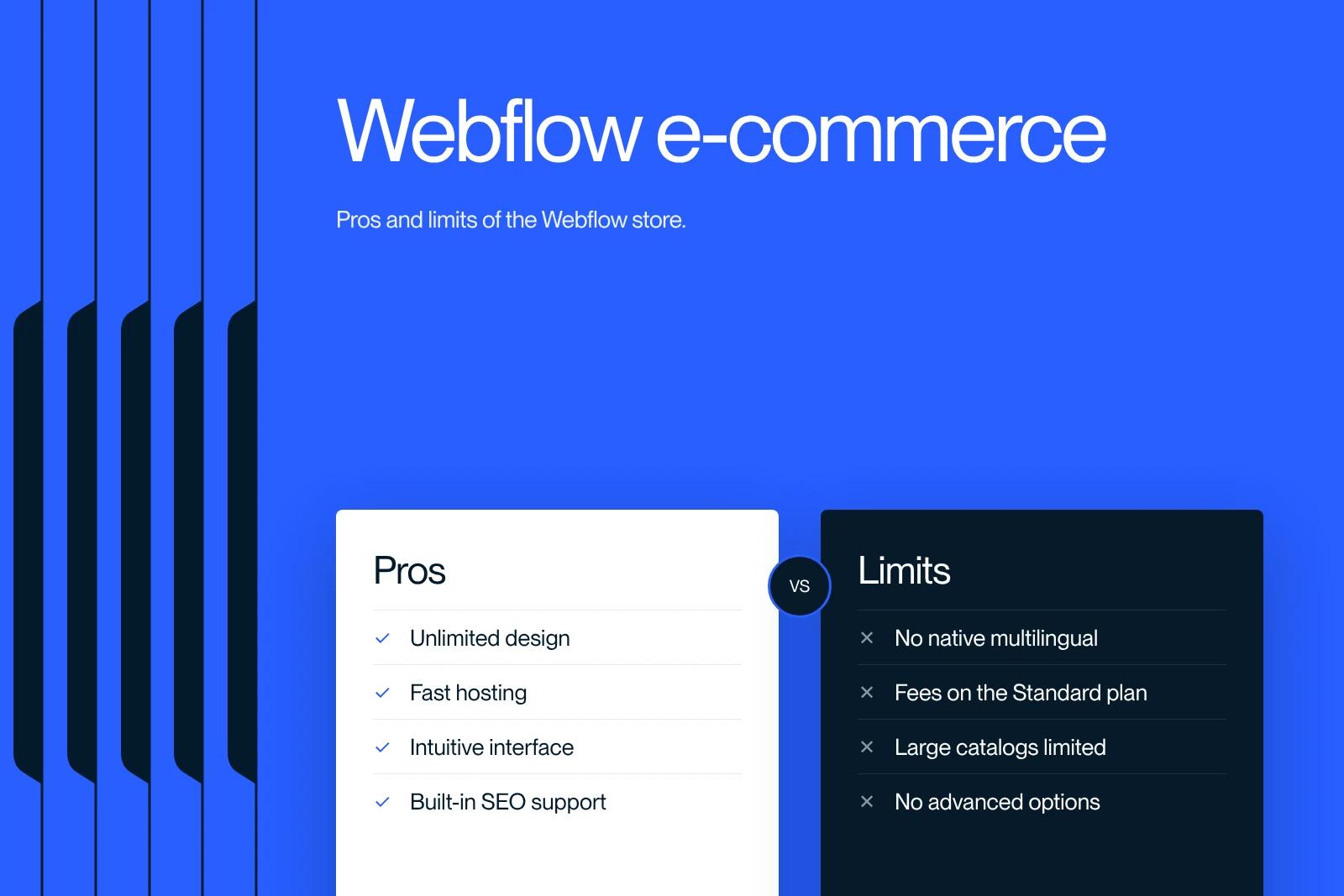
The 5 strengths and limits of Webflow E-commerce
Webflow E-commerce is winning over more and more companies with its promise of creative freedom and ease of use.
But like any solution, it also has its limits.
Here is an overview of the 5 main strengths and the 5 points to watch before launching your online store with Webflow.
✅ The strengths of Webflow E-commerce
1. Unlimited design customization
Webflow E-commerce is all about creative freedom.
Unlike rigid platforms such as Shopify or WooCommerce, here you start from a blank page.
With its visual editor, you can:
- Edit every element in real time
- Create unique animations and interactions
- Offer a browsing experience true to your brand image
Real-world example
An interior design company used Webflow to build an immersive store. Result: +35% conversions compared with its former Shopify site.
Key figure
75% of consumers judge a company's credibility on its design (source: Sweor).
2. Fast, secure hosting
Webflow relies on AWS infrastructure to guarantee:
- Excellent load speed
- Optimal security (SSL certificates included)
Why does it matter?
A site that takes more than 3 seconds to load loses up to 40% of visitors.
Example
An artisan store saw its bounce rate drop by 50% thanks to a load time of 1.8 seconds.
Key figure
1 second saved = +7% conversions (source: Akamai)
3. An intuitive, accessible interface
Webflow is designed for people who want to manage their site without depending on a developer.
You can:
- Add your products
- Manage your inventory
- Track your orders, simply
Example
A maker selling handmade accessories built and launched their store in one week, without technical help. Result: €2,000 saved.
Key figure
Companies using intuitive tools cut their management time by 40% (source: McKinsey)
4. Powerful native integrations
Webflow E-commerce connects easily to your business tools:
- Zapier for automation
- MailChimp for your campaigns
- QuickBooks for accounting
Example
A natural cosmetics brand automated the sync between its store and its CRM. Result: 30% time saved on customer management.
Key figure
Automation increases productivity by 14.5% and reduces marketing costs by 12.2% (source: Nucleus Research)
5. Good built-in SEO support
Webflow natively includes many SEO tools:
- Easy management of title tags and descriptions
- Automatic image compression
- Sitemap, redirects, clear page structure
Example
A children's clothing store saw its organic traffic grow by 20% after optimizing its pages with Webflow.
Key figure
53% of e-commerce visits come from organic traffic (source: BrightEdge)
❌ The limits of Webflow E-commerce
1. Limited advanced features
Webflow is powerful on design, but more limited for certain complex functions:
- Product recommendations based on purchase history
- Multi-warehouse management
Example
A sports brand had to invest €5,000 in development to add a personalized recommendation engine.
2. No native multilingual management
Webflow does not yet handle multiple languages natively.
You have to use solutions such as Weglot, which add costs.
Consequence
A European online seller will have to pay around €1,000/year extra to manage its languages through Weglot.
Alternative
Shopify offers native multilingual management on its advanced plans.
3. Transaction fees on the Standard plan
The Standard plan includes a 2% transaction fee on every sale, on top of Stripe/PayPal fees.
Example
A store with €10,000 in monthly sales pays:
- €200 to Webflow
- €300 to Stripe
👉 That is €500 in monthly fees weighing on margins
4. Limits for large catalogs
Webflow E-commerce is limited to 3,000 products.
Not ideal for very large stores.
Example
A company with 10,000 SKUs had to migrate to Shopify Plus after running into technical and performance limits.
5. Missing advanced e-commerce features
Some essential features are not built in natively:
- Installment payments
- Recurring subscriptions
Example
A company selling monthly boxes had to use an external solution, which increased its budget by 15%.
In summary
Webflow E-commerce is a highly effective tool for building a site that reflects your brand: smooth, fast and visually strong.
But you need to assess your needs carefully:
- ✅ Perfect for creative, agile brands
- ❌ Best avoided if you manage a massive catalog or very specific e-commerce features
Wondering whether Webflow is right for your project?
Let's talk. At Synqro, we guide you and build with you an e-commerce site that makes a difference.
Pricing of the Webflow E-commerce plans
Examples of e-commerce success with Webflow
Many companies have built successful online stores with Webflow, showing the platform's potential. For example, the clothing brand "Fathom" uses Webflow to present its products elegantly while offering a smooth user experience. With a minimalist design and intuitive navigation, the company has attracted a loyal customer base and generated significant sales.
Another inspiring example is "The Dog Bakery", which uses Webflow to sell dog food products. Thanks to an attractive design and SEO-optimized content, the company has stood out in the competitive pet products market. Its effective use of social media to promote its products has also contributed to its success.
Finally, "Aesop", a skincare brand, used Webflow to create an immersive online shopping experience. Its site combines sophisticated design elements with a clear product presentation, which draws visitors in and encourages them to explore further. These examples show how Webflow can be used to build e-commerce sites that are not only functional but also visually appealing, increasing the chances of success.
Frequently asked questions
Webflow E-commerce is a turnkey solution to build a sales website that is fully customizable, without needing to code.
Unlike CMSs such as WordPress, Joomla or Drupal, Webflow stands out for its native responsive design and creative flexibility. You design your brochure website or e-commerce site to match your brand, while enjoying an intuitive interface.
Adding products, integrating payment methods (Stripe, PayPal), inventory management, advanced animations: everything is designed for a smooth experience on desktop, tablet or mobile.