Article
What Is a Backlink in SEO? Definition and How to Use Them
SEO20 min read

James BrunettoCo-fondateur & CEO
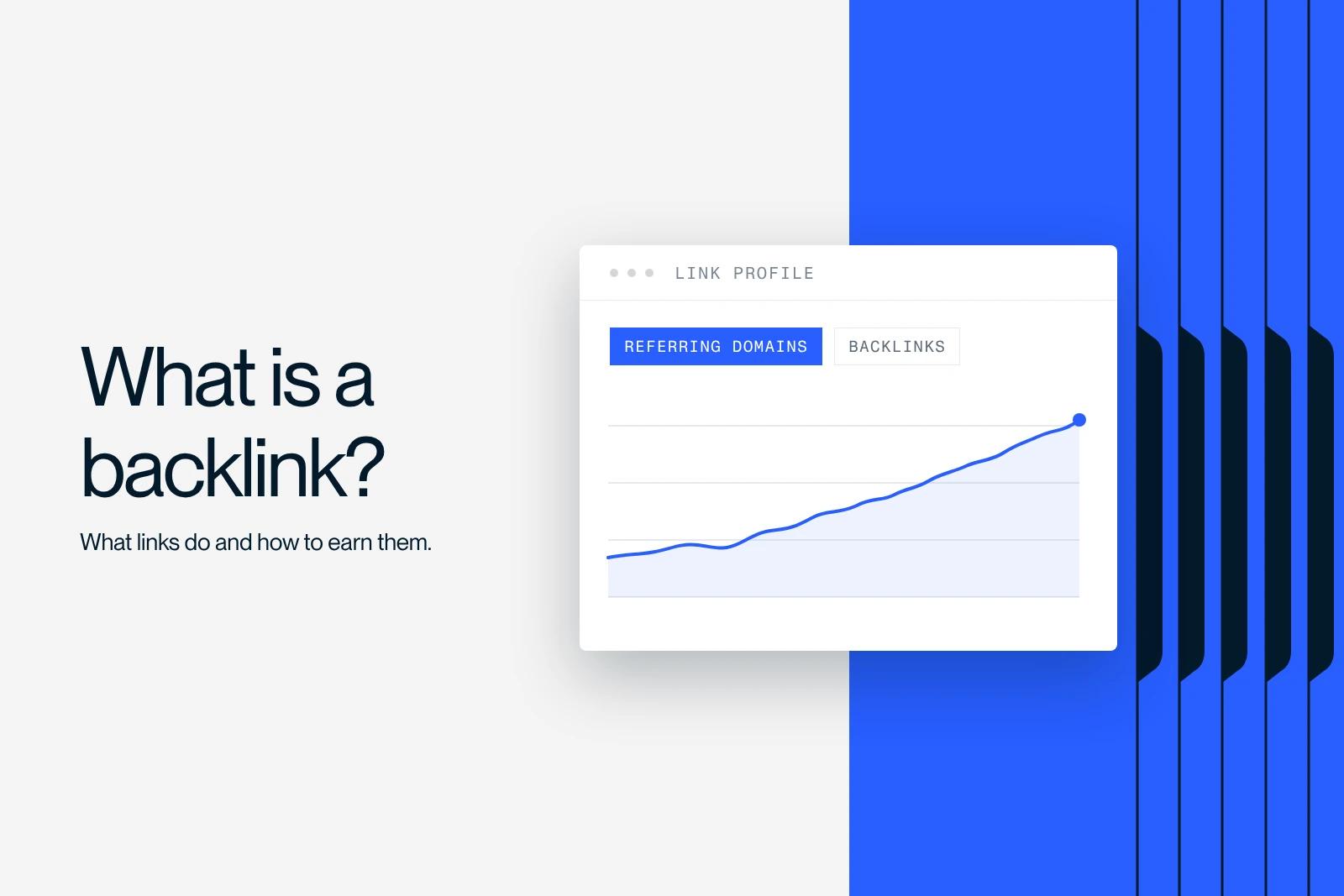
Backlinks are the lifeblood of SEO. Understand what they are, what they do and how to get good ones. We explain it all, straight to the point.
Explore this post with…
If you're interested in SEO (Search Engine Optimization), you've probably come across the term “backlink”. But what is a backlink, and why is it essential to your organic search strategy? A backlink, or inbound link, is a link from an external site that points to yours.
These links matter because they shape how Google and other search engines perceive the popularity and authority of your site. They act as votes of confidence from other sites, showing that your content is valuable and deserves to rank high in search results. Understanding backlinks and how to use them can significantly improve your visibility online and the authority of your domain. An important part of backlink optimization is SEO link building, which means developing a strategic, high-quality network of inbound links.
In the next sections, we cover the definition, the types of backlinks, their role in SEO, and how to earn quality backlinks to transform your online presence.
Understanding backlinks: definition and types
Definition of a backlink
A backlink, also known as an inbound link or incoming link, is a hyperlink on one website that leads to a page on another site. These links are seen as recommendations for the destination pages, and search engines, Google first among them, treat them as votes of confidence. In short, a backlink is a hypertext link that makes it easier to move between web pages, creating a network of references that is essential to online search.
Each backlink is considered a mark of quality and relevance for the content of the target page.
The different types of backlinks
Backlinks vary widely, and this diversity plays a key role in a successful SEO strategy. The main types include:
- Editorial links (Organic Backlinks): Placed naturally by authors who are convinced of the value of your content, they are very safe and recommended by Google.
- Guest post links: Earned by writing guest articles on other sites, they provide quality links in exchange for relevant content.
- Reciprocal links: Links exchanged between two sites. This method should be used in moderation to avoid penalties.
- UGC links (User-Generated Content): Coming from user-generated content such as comments and social media, they strengthen your brand's reputation.
- Business listing links: Created by listing your business in directories, they help improve your local visibility and credibility.
- Links from webinars, videos and podcasts: Earned by taking part in these formats, they position you as an expert in your field.
- Links by attribute: These include dofollow/nofollow, UGC and sponsored links, each with its own benefits for your SEO.
Each type of backlink has specific benefits and should be built into your SEO approach strategically to maximize its impact.

Why backlinks matter for SEO
Improving the credibility and authority of your site
Backlinks are essential to improve the credibility and authority of a website. When recognized sites link to your content, they signal to search engines that your site is reliable and trustworthy. These links validate the quality and relevance of your content, which strengthens your reputation with both users and search algorithms.
Backlink quality is essential, because links from reputable sources have a much greater impact than links from lower-quality sites. For example, a link from a well-known publication or a university site can significantly increase the credibility of your site. These backlinks also strengthen domain authority, a decisive factor for Google's search algorithms.
Domain authority measures the overall trust and credibility of a website, and high-quality backlinks are indispensable for building it. The more quality backlinks a site accumulates, the more it is seen as an authority in its field, which improves its ranking in search results.
Influence on page rankings in search results
Backlinks directly influence how pages rank in search results. Google and other search engines look at the quantity and quality of backlinks to assess the relevance and authority of a page.
A page with many quality backlinks has a better chance of ranking well in search results. Algorithms see these links as votes of confidence, suggesting that the content is relevant and useful. Good internal linking is also essential, because it helps search engines better understand the structure of your site and how your content is organized, which can also have a positive effect on your page rankings.
Studies have shown that pages with the most quality backlinks tend to rank higher. For example, research by Backlinko identified the number of links pointing to a site as the main ranking factor on Google.
More referral traffic
Beyond their impact on rankings, backlinks also generate referral traffic. This traffic happens when users click links on other sites and land on yours, which increases your overall traffic and potentially your engagement and conversions. This type of traffic is especially valuable, because it comes from reliable sources and often consists of qualified users who are ready to engage with your content.
Backlinks also help search engine crawlers discover and index new content, which speeds up indexing and improves your website's visibility in search results.
Effective strategies to earn backlinks
Creating quality content
The creation of high-quality content is essential to attract natural backlinks. If your content is informative, useful and well written, it has a strong chance of being shared and referenced by other sites. Content formats that draw particular attention include infographics, free downloads such as white papers or case studies, and product comparisons. Infographics are especially effective because they present information in a visual, easy-to-digest way, which encourages sharing and embedding in other articles and generates a steady flow of backlinks. In addition, interviews with experts in your industry can increase your site's visibility and attract a wider audience, producing quality backlinks when this content is shared.
Guest blogging and collaborations
Both guest blogging and collaborations with other bloggers or companies are very effective ways to get backlinks. When you write a guest article for another blog, you can often include a link to your site, which lets you reach a new audience and earn a quality backlink. Collaborations can also be a way to exchange backlinks with other companies and influencers. By building strong relationships, you can create content that benefits both parties and get links from recognized sites. It is important to target sites with high domain authority and relevance to your niche, because links from these sites carry more weight and can significantly improve your SEO.
Using backlink checkers and analysis tools
Using backlink checking and analysis tools is essential to refine your link building strategy. Platforms like Semrush, Ahrefs and LinkMiner help you monitor your backlinks, identify low-quality links and analyze your competitors' backlink profiles. Semrush, for example, offers advanced backlink analysis features that let you spot low-quality links and understand the overall impact of your backlinks. LinkMiner lets you filter links by several criteria and track the lost links you want to recover. By using these tools, you can sharpen your analysis, uncover untapped backlink opportunities and optimize your link building strategy for better results.
Common backlink mistakes to avoid
A poorly executed backlink strategy can hurt your site's rankings instead of improving them. Here are the most frequent mistakes to avoid:
1️⃣ Buying low-quality backlinks
Buying cheap links from link farms or irrelevant sites can lead to a Google penalty. Always favor natural, quality links.
2️⃣ Getting too many links in a short time
A massive, sudden gain in backlinks can look suspicious to search engines. Gradual, organic growth is more effective.
3️⃣ Not diversifying your backlink sources
Sticking to a single type of backlink (e.g. only guest blogging links) can look artificial. It is better to have a varied profile that includes editorial links, forums, media and so on.
4️⃣ Ignoring toxic backlinks
Some links from dubious sites or sites penalized by Google can harm your SEO. Use Google Search Console or Ahrefs to detect them and disavow the ones that cause problems.
5️⃣ Not optimizing link anchor text
The anchor text (the clickable text) should be natural and varied to avoid over-optimization. Too many links with identical anchors may be treated as spam by Google.

The future of backlinks in SEO: trends and changes
As Google's algorithms evolve, the way backlinks influence SEO is gradually changing. Here are a few trends to watch in 2025 and beyond:
📌 Quality matters even more than quantity
Google keeps giving more weight to links from authoritative sites. A single link from a recognized site will be worth more than dozens of links from low-quality sites.
📌 Artificial intelligence and the detection of artificial links
With the rise of AI, Google is increasingly good at detecting artificial or unnatural backlinks. Strategies based on link manipulation will therefore become even riskier.
📌 The rise of brand mentions without a link (Linkless Mentions)
Google can associate brand mentions without a direct backlink with a site's authority. A strong presence on the web through citations in articles, forums or social media can therefore play a role similar to traditional backlinks.
📌 The growing role of backlinks from social media
Although links from Facebook, Twitter, LinkedIn or Instagram are often “nofollow”, their indirect impact on a site's visibility and reputation is growing. Sharing attractive content to generate natural backlinks is becoming a must.
📌 Local SEO and geolocated backlinks
As local search grows in importance, backlinks from local sites (regional blogs, specialized directories, local press) are becoming major ranking factors, especially for businesses with a physical presence.
4 essential steps to launch a high-performing backlink strategy
Do you want to boost your SEO and strengthen your site's authority with backlinks? An effective link building strategy cannot be improvised: it relies on a structured, methodical approach. Here are the 4 key steps to get quality backlinks and improve your rankings on search engines.
1. Define your strategic keywords to maximize the impact of backlinks
An effective backlink strategy starts with a rigorous selection of the keywords you want to rank for. The goal is to adapt your approach to the maturity level of your audience:
✅ Discovery stage: target broad keywords to attract a wide audience (e.g. “marketing budget”, “editorial strategy”, “buyer persona”).
✅ Evaluation stage: choose more specific keywords tied to precise solutions (e.g. “marketing automation tool”, “inbound marketing software”).
✅ Purchase stage: go for higher-intent queries, often linked to product comparisons (e.g. “Brand X reviews”, “alternative to Tool Y”).
By defining these priority keywords, you can identify the sites and potential partners that rank on these topics and could generate backlinks to your site.
2. Optimize your content and pages to attract quality backlinks
An effective backlink is a link that points to a relevant, optimized page. Before you even try to earn inbound links, make sure that your pages are technically and semantically sound.
🔹 Technical optimization:
- Clean, readable HTML structure
- Responsive design for smooth navigation
- Optimized loading time
- Well-filled metadata (title tags, meta description, image alt text)
🔹 Content optimization:
- Up-to-date, high-quality content
- Natural use of the keywords you defined
- Heading structure (H1, H2, H3…) for better readability
- Engaging elements (infographics, case studies, videos)
Why does it matter?
A well-structured site and relevant content increase your chances of being cited by other sites. The more useful and engaging your content is, the more it will be shared and the more backlinks it will generate naturally.
3. Identify and prioritize the content to support with backlinks
Not all content has the same SEO potential. To maximize your results, you need to prioritize the pages to strengthen with backlinks. Here are the 4 criteria to consider:
Traffic potential: analyze the search volume of your target keywords with Ahrefs, Semrush or Google Search Console.
Number of backlinks needed: work out how many links you need to outrank your competitors and reach Google's top 3.
Current ranking of your page: track its position to see whether it is getting closer to the top results.
Backlink budget: buying links on high-authority sites can be an option, but make sure you keep an ethical, quality-first approach.
✅ Example of a winning strategy:
If your page sits on page 2 or 3 of Google for a strategic keyword, analyze the competition and set a precise goal. If a competitor has 100 backlinks and you have 80, aim for 40 more backlinks to pass the critical threshold and gain better visibility.
4. Track, analyze and optimize your backlink profile
A backlink strategy does not stop at acquisition. Constant monitoring is essential to measure the impact of your actions and spot opportunities for improvement.
What should you monitor?
✅ The number of backlinks gained or lost
✅ The authority of the sites that mention you
✅ The anchors used (diversity and naturalness)
✅ The presence of toxic links to disavow

How do you track your backlinks effectively?
Tracking and analyzing your backlinks is essential to adjust your link building strategy and maximize your SEO impact. Several specialized tools let you measure, monitor and optimize your inbound link profile. Here is a selection of the best solutions to manage your backlinks effectively:
1. Google Search Console: the free starting point for backlink tracking
Why use it?
Google Search Console is a free tool from Google that gives you a first view of your backlinks. It shows which sites point to yours, which pages receive the most links, and helps you detect possible issues with your link building.
Key features:
- List of the backlinks recorded by Google
- Analysis of the link anchors used
- Detection of indexing errors or broken links
- Identification of the sites that link most to your domain
Best for?
SEO beginners or anyone who wants a free solution to track backlinks without third-party tools.
2. Ahrefs: the reference tool for backlink analysis
Why use it?
Ahrefs is one of the most powerful tools on the market for analyzing backlinks in detail. It has a huge database and offers advanced metrics to measure the quality and impact of each link.
Key features:
- Access to one of the most complete backlink databases
- Domain Rating (DR) score to assess a site's authority
- Identification of lost links and recovery opportunities
- Analysis of your competitors' links to refine your strategy
- Tracking of how your backlink profile evolves
Best for?
SEO professionals or companies that want detailed, advanced tracking of their link building.
3. Semrush: an all-in-one solution for link building and competitive analysis
Why use it?
Semrush is a complete platform that lets you analyze not only your backlinks, but also those of your competitors. It offers insights into the authority of referring domains and helps you identify link opportunities.
Key features:
- Benchmark analysis against your competitors
- Detection of toxic links and suggestions to disavow them
- Identification of recent backlinks and lost links
- In-depth studies of link anchors
Best for?
SEO marketers and digital agencies that want a global approach covering link building, on-page SEO and competitive analysis.
4. Majestic SEO: the tool specialized in backlink authority
Why use it?
Majestic SEO is a platform dedicated to link building that lets you assess backlink quality with its two proprietary metrics: Trust Flow (TF) and Citation Flow (CF).
Key features:
- Measurement of link quality and influence
- Analysis of competitors' link profiles
- Exploration of backlinks by topic
- Link mapping to visualize the structure of your link building
Best for?
SEO experts and anyone who wants to go further in assessing backlink quality.
5. Moz Pro: an SEO tool with a focus on backlinks
Why use it?
Moz Pro offers a powerful link explorer that gives you an overall view of a site's backlink profile. It includes a Domain Authority score that is often used in link building strategies.
Key features:
- Link Explorer: a tool dedicated to backlink analysis
- Domain Authority (DA) score to assess a site's credibility
- Tracking of new backlinks and removed links
- Analysis of anchors and link distribution
Best for?
Companies and SEO professionals who want an accessible tool with precise analysis of link quality.
6. Monitor Backlinks: real-time tracking of links gained and lost
Why use it?
Monitor Backlinks is an intuitive, automated tool that sends alerts when you gain or lose backlinks, so you can react quickly and optimize your link profile.
Key features:
- Automatic alerts on new and lost backlinks
- Detection of toxic links that harm your SEO
- Tracking of dofollow and nofollow backlinks
- Analysis of competitors' backlinks
Best for?
Freelancers and small and medium-sized businesses that want simple, effective tracking of their backlinks.
7. Linkody: a backlink monitoring and management tool
Why use it?
Linkody is a solution specialized in tracking and optimizing backlinks. It lets you receive notifications about changes and run an in-depth link building audit.
Key features:
- Real-time backlink tracking
- Notifications when links are removed or added
- Analysis of the Domain Authority (DA) of referring sites
- Disavow feature for toxic links
Best for?
SEO managers and web agencies looking for an effective tool to manage and optimize their link building strategy.
8. BuzzSumo: identify the content that generates backlinks
Why use it?
BuzzSumo is not a backlink tool strictly speaking, but it lets you analyze the content that generates the most inbound links. That makes it valuable for finding link building opportunities.
Key features:
- Identification of the most shared and linked articles
- Detection of influencers who share similar content
- Research on viral content to generate backlinks
- Analysis of SEO and marketing trends
Best for?
Content marketers and SEO managers who want to produce content with strong backlink potential.
Conclusion
In short, backlinks are essential to any SEO strategy that aims to be effective. They tell search engines how credible, authoritative and reliable your site is, which helps improve your ranking in search results.
It is important to note that the quality of backlinks matters more than their quantity. Links from recognized, relevant sites have a major impact on your domain authority and your visibility online. To get the most out of backlinks, focus on creating quality content, take part in guest blogging and collaborations, and use backlink analysis tools to refine your strategy.
Never forget that the diversity and relevance of your backlinks are key to building a robust backlink profile. It is time to act: implement these strategies now to boost your online presence, increase your organic traffic and improve your positions in search engines. Consider working with a professional Webflow agency if you need to build a site that is optimized for search and designed to generate quality traffic.
Frequently asked questions
There are several types of backlinks, each with its own impact on your site's SEO. Editorial backlinks are organic and appear naturally in quality content. Guest posting backlinks are earned by writing articles for other sites. Image backlinks happen when other sites use your images and credit your site as the source. Dofollow backlinks pass link equity and improve your SEO, while nofollow backlinks do not pass link equity but can still generate traffic. Sponsored backlinks are paid for and often labeled as such, and user-generated content (UGC) backlinks are found in comments, forums and so on. These backlinks can improve the credibility and authority of your site, help new content get indexed quickly, increase referral traffic, and reinforce the relevance and context of your keywords.