Article
Black hat SEO: the techniques you should never use
SEO15 min read

Guillaume SchluppConsultant SEO
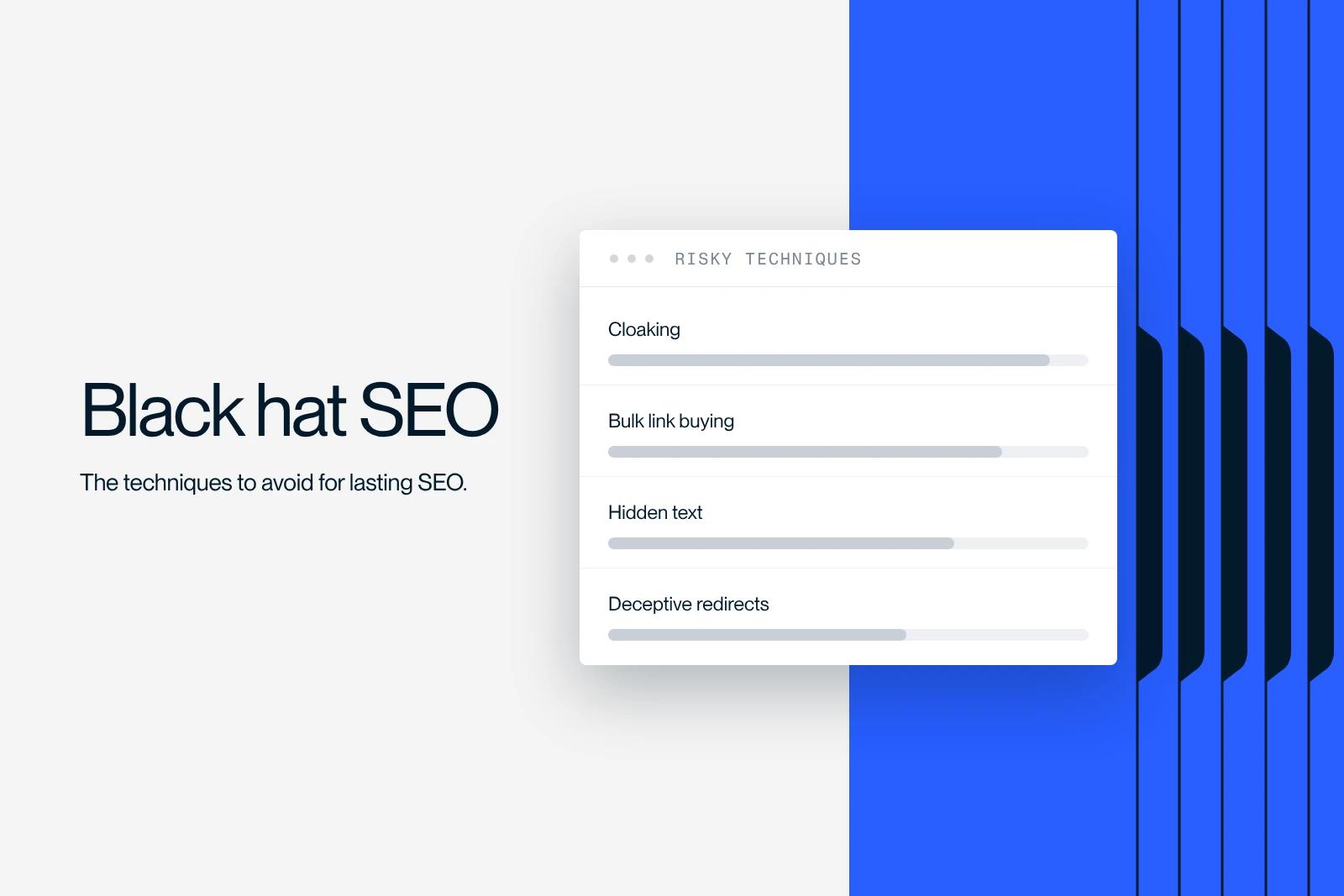
Black hat SEO: the techniques to avoid for lasting organic rankings. Steer clear of unethical practices and the risks that come with black hat SEO.
Explore this post with…
Black hat SEO covers manipulation techniques meant to influence a search engine by getting around its rules. They can produce quick gains, but above all they expose a website to a penalty (demotion, manual action) and a lasting loss of visibility. At Synqro, an acquisition-focused Webflow agency, we favor solid organic SEO: clean structure, useful content and performance, to avoid the "yo-yo" effects that come with algorithm changes.
Black hat SEO defined, and how it differs from white hat
The definition of black hat SEO is simple: practices that artificially improve a site's ranking by deceiving the signals search engines use to rank pages. Unlike white hat, which follows the rules, black hat SEO exploits loopholes: automation, cloaking, over-optimization, link manipulation and so on.
White hat SEO aims to satisfy the user: useful content, fast pages, clear structure, a smooth experience and semantic consistency. It is the safest path, because Google's algorithms tend to reward perceived quality and relevance over cunning.
To tell the approaches apart, look at the intent: white hat improves the site, black hat manipulates the system. Crawlers are not "fooled" for long, because detection models improve with every update.
- Black hat: seeks a quick gain by getting around the rules.
- White hat: improves the real value for users.
- Grey hat: an in-between zone, more ambiguous, but risky.
- Lasting organic SEO: the result of a method and continuous work.
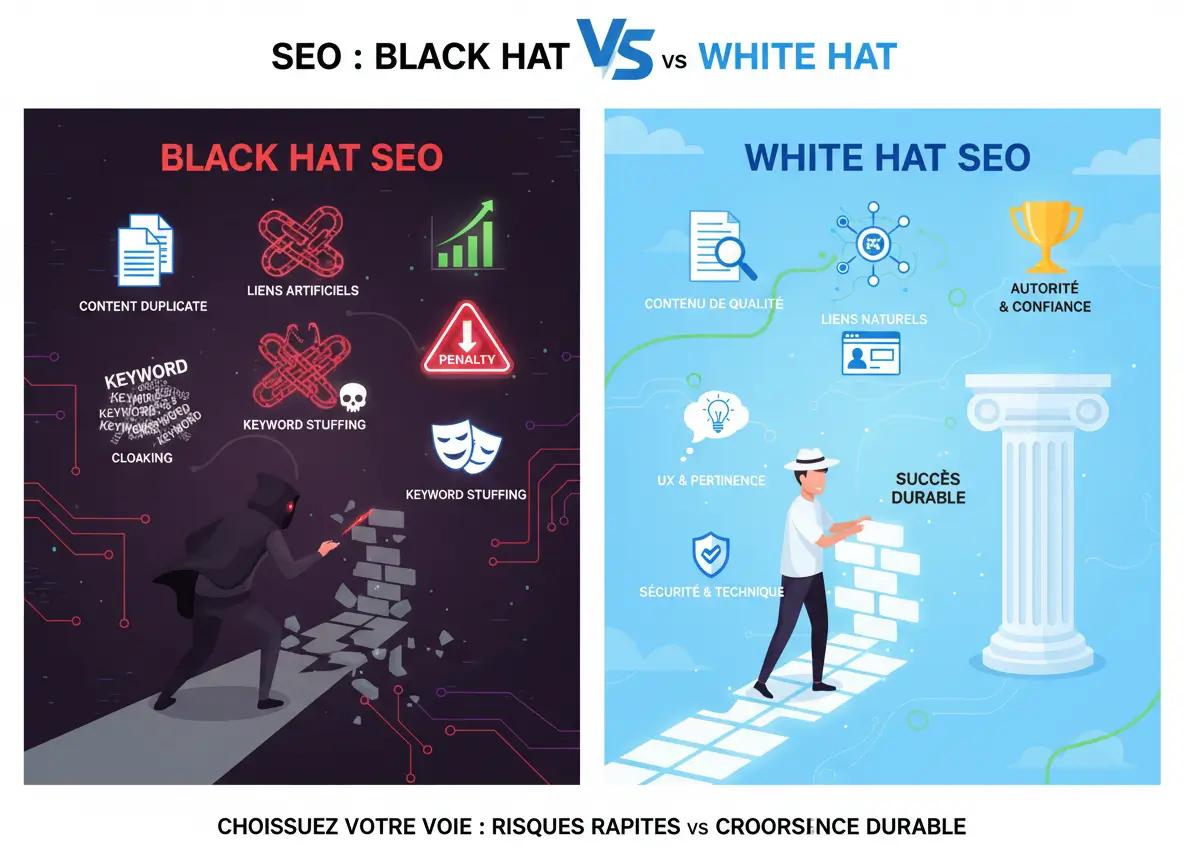
Black hat SEO: how these techniques try to deceive search engines
Black hat SEO techniques rest on a simple logic: deceive search engines to gain rankings without creating real value. Instead of optimizing content, they try to manipulate the signals a search engine interprets (popularity, relevance, consistency, trust) in order to appear higher on a results page. That is exactly why these approaches are considered unethical: they favor workarounds over quality content written for users.
In practice, black hat SEO practices exploit loopholes: mass page production, over-optimized anchors, or technical tricks that show different content depending on the context. The most aggressive ones can send the user to other content than what was promised, or artificially inflate the number of links pointing to a page. The problem is that these tactics go against Google's guidelines, Google's recommendations and its webmaster guidelines. Engines eventually detect the patterns and demote the pages involved, even if they had reached the top positions.
- Black hat techniques: volume, automation and artificial signals
- Goal: influence the results page without adding value
- Risk: gradual detection, loss of trust and demotion
Why some brands risk black hat SEO despite the dangers
Why do some teams still "try" black hat SEO? Because the promise is tempting: win fast, overtake a competitor, force visibility on a high-value query. In highly competitive sectors, business pressure can push teams toward black hat SEO techniques that "seem" to work for a few weeks.
The problem is that these gains are unstable. Search engines compare signals across massive volumes: link profiles, content quality, semantic consistency, user behavior and domain history. As soon as a model detects manipulation, the site can face a sharp drop, or a manual action that wipes out all the work done.
The risk grows when teams stack practices: mass buying of backlinks, doorway pages, duplicated text, over-optimized anchors, or cloaking. The penalty often lands at the worst moment: just as the site starts generating leads, when the loss costs the most.
- Business risk: loss of traffic, leads and credibility.
- Technical risk: a long cleanup, sometimes a migration, sometimes a redesign.
- Reputation risk: a brand associated with spam.
- Lasting risk: weakened authority and reduced algorithmic trust.
The most common black hat SEO techniques in 2026
Black hat SEO techniques evolve, but the principle stays the same: produce artificial signals to influence a search engine. Many players combine automation, volume and concealment. Users do not always see the manipulation, but detection systems are getting better and better at spotting it.
They include keyword stuffing, content generated with no value, link networks, doorway pages and deceptive redirects. Some methods are cruder, others more sophisticated, but the aim is the same: speed up a result without creating real value.
You also need to tell clumsiness apart from fraud. A site can slide into black hat without malicious intent: over-optimizing, multiplying near-identical pages or automating low-quality text can be enough to trigger a drop.
- Keyword stuffing: artificial repetition of keywords.
- Duplicate content: pages that are copied, paraphrased or "spun".
- Link networks: PBNs, link farms, mass link exchanges.
- Doorway pages: pages created only to capture a query.
- Deceptive redirects: sending the user somewhere other than expected.
- Cloaking: showing one page to crawlers and another to users.

Cloaking and spammy content: the practices detected fastest
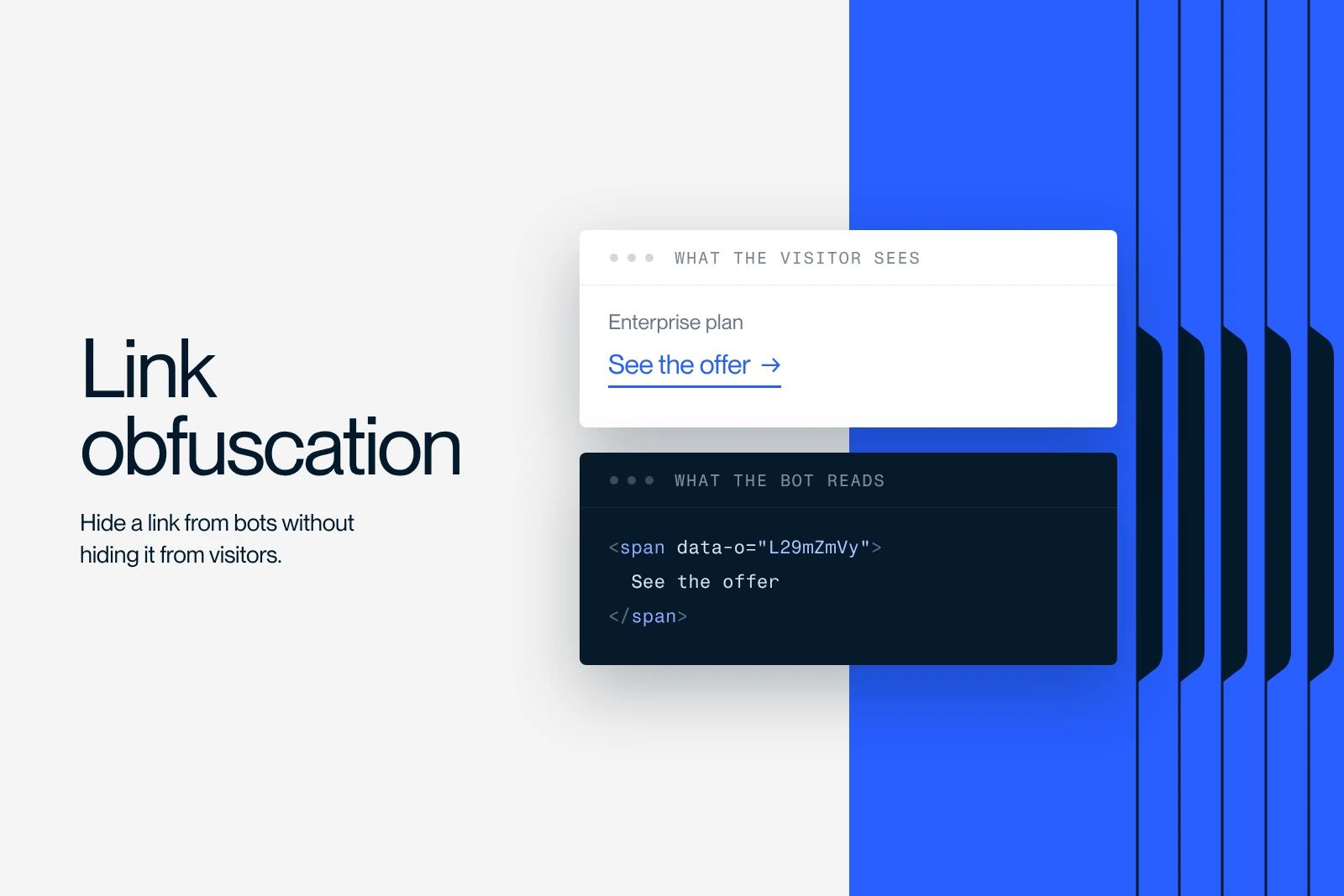
Cloaking (or masking) means showing one version of a page to crawlers and another to users. It is easy to identify, because it creates a gap between what is indexed and what is actually displayed. Engines also penalize content pollution: piles of pages with no value, automated text that nobody reviewed, or repetitive content that adds nothing. Over time, these approaches erode trust, SERP stability and conversion.
- Different display for crawlers and users (cloaking)
- Pages created only to take up space
- Thin, repetitive or unreviewed generated text
- Degraded user experience and dissatisfaction signals
Backlinks: manipulation, networks and risks to authority
Links remain an important signal. That is precisely why backlinks sit at the center of black hat SEO methods. Buying links is not always "forbidden" in a black-and-white way, but manipulating popularity with fake networks, over-optimized anchors and inconsistent volumes clearly exposes you to a penalty.
The classic schemes: PBNs, three-way exchanges, sitewide links, sponsored articles on unrelated domains, or links injected into hacked sites. The problem is not only the apparent "quality" but the pattern: acquisition speed, similar anchors, lack of diversity, inconsistent topics.
When an update or a manual review identifies an abnormal profile, Google can neutralize the links, demote the page or devalue the domain. And cleaning up a link history takes time: identification, removal, disavow, then waiting for a recrawl.
- Link networks: detectable patterns, high volatility.
- Over-optimized anchors: an artificial signal, risk of demotion.
- Irrelevant links: inconsistent topics, reduced trust.
- Lasting strategy: diversity, relevance, consistency, editorial quality.

301s and hijacking: when URL redirects become risky
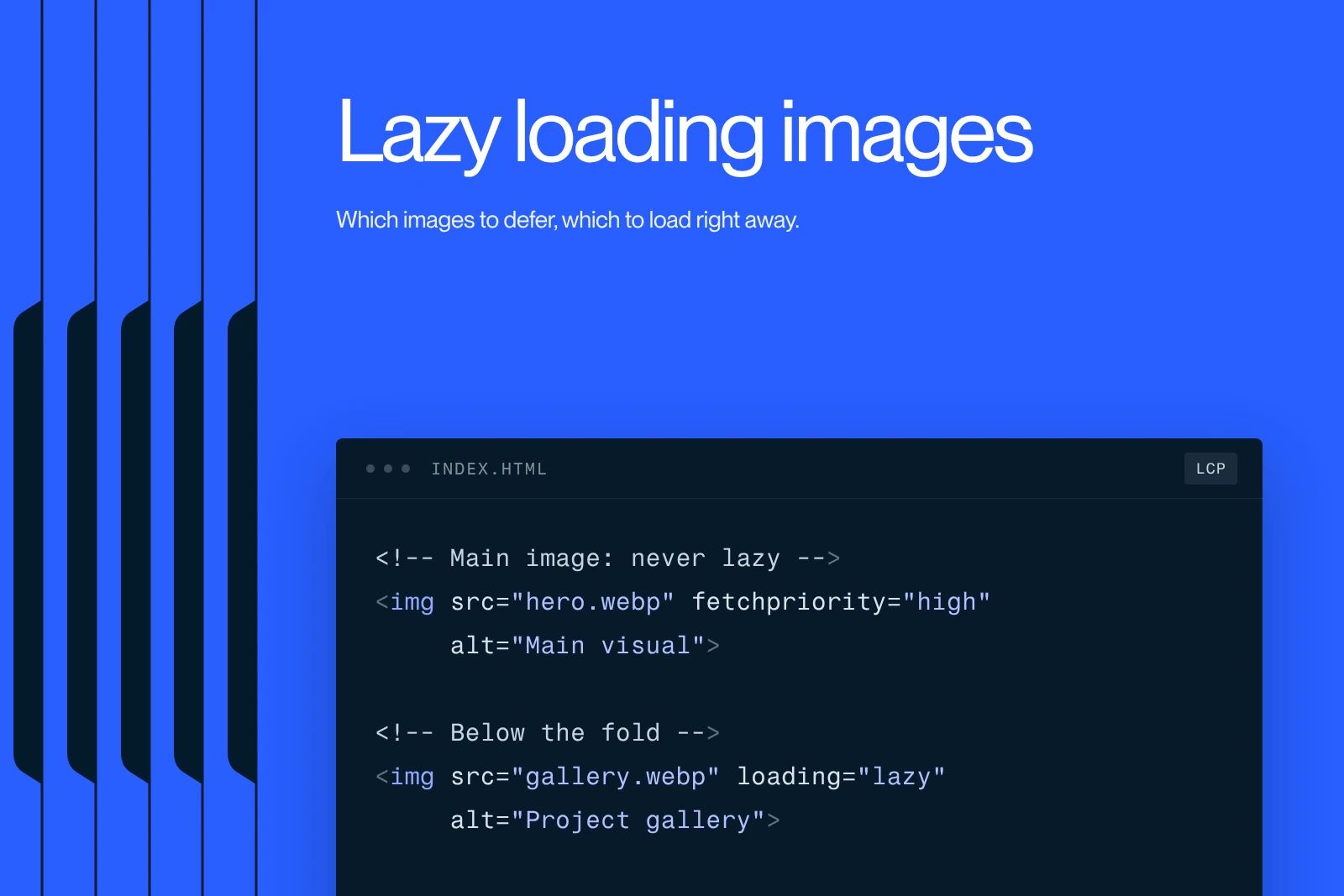
Redirects are legitimate during a migration or a redesign, especially as 301s. The problem arises when they are used to divert the user to a page other than the one expected, or to create "bait" pages whose only purpose is to capture a query. These setups hurt the site's consistency and can lead to demotion. A good practice is to align intent, content and destination, then check crawling and indexing after deployment.
- Use 301s to keep history and authority
- Avoid "bait" pages and deceptive redirects
- Check indexing and errors in Search Console
- Make sure the destination matches the content
The grey zone (grey hat): why it stays unstable
Grey hat refers to borderline practices: not always explicitly forbidden, but often against the spirit of the rules. The main danger is instability: what "works" today may be devalued tomorrow after criteria are adjusted. For a B2B brand, this grey zone adds uncertainty and makes planning harder. The best call remains a strategy built on quality, structure and proof.
- Ambiguous approaches that are hard to defend
- Performance that swings as criteria change
- Risk of pages being gradually devalued
- Alternative: a lasting, user-focused method
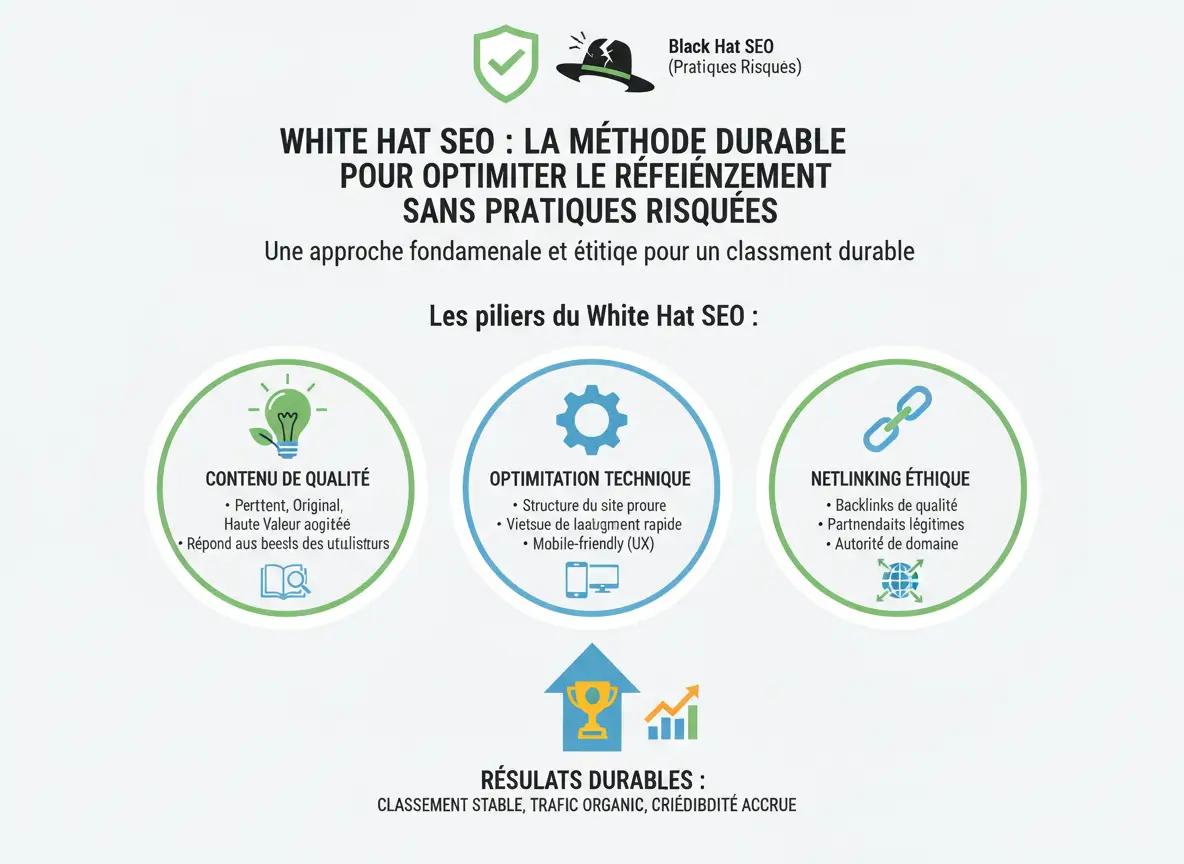
White hat SEO: the lasting way to improve rankings without risky practices
White hat SEO is the opposite of the methods above: follow an approach aligned with the rules, produce quality content, and build stable growth. Where black hat tries to force a result, white hat relies on SEO techniques that genuinely improve a site: structure, performance, clarity, internal linking and relevance. It is the organic SEO technique considered the most reliable, because it follows Google's guidelines and Google's recommendations rather than exploiting loopholes.
In reality, improving your rankings with a lasting strategy means working on understanding needs and intent: what users want, what searchers expect, and how the engine interprets your pages. It is also work on consistency: avoid tricks that are "too good to be true", favor useful, readable pages, and build healthy authority rather than artificially increasing the number of links. In short: instead of stacking SEO techniques that are highly visible but very risky, you strengthen a foundation that holds up over time.
- Lasting approach: useful pages, clear structure, consistent signals
- Goal: be relevant to users and understandable to the engine
- Result: slower progress, but more stable over the long term
- Comparison: white hat SEO = value / black hat = manipulation
Negative SEO: how to respond without panicking
Negative SEO refers to attempts to cause harm: creating toxic links, duplicating content or injecting unwanted pages. In most cases, engines know you do not control every inbound link. The right response is vigilance: alerts, an audit, security and stronger positive signals. The goal is to protect visibility without overreacting.
- Set up regular monitoring
- Audit links when there is an abnormal spike
- Check indexing and suspicious pages
- Strengthen the site's content and structure
How to optimize without black hat: the white hat method that lasts
To optimize for the long term, work on what improves the site's real value: architecture, content, performance, authority and conversion. Search engines increasingly align with experience: useful content, a fast page, an understandable structure and a credible brand.
On Webflow, you have an advantage: a clean technical foundation, fine control over the front end and the ability to iterate quickly. The deciding factor is strategy: which pages to prioritize, what content to produce, how to build internal linking and proof (case studies, expertise, comparisons, demos).
At Synqro, we follow a structured approach: audit, plan, execution, follow-up. We fix what blocks, produce what is missing and strengthen what converts. The goal is not to "win a ranking" but to build an asset that attracts qualified visitors and converts them.
- White hat SEO: useful content, clean structure, performance, trust.
- Effective SEO techniques: internal linking, intent, money pages, proof.
- Iterations: measure, learn, adjust, amplify.
- Result: more stable visibility and more predictable conversions.
Synqro services: securing your SEO on Webflow without risky practices
Synqro supports B2B brands on Webflow with a growth mindset: improve acquisition, reduce dependence on paid channels and build lasting visibility. Our position is clear: no black hat, no tactics that put your domain at risk. We build solid foundations and improve results in measurable ways.
In practice, we work on: technical audits, semantic strategy, on-page optimization, performance, CMS structure, content production and authority building. We also help scope a redesign or a migration, to avoid losses caused by poorly handled redirects or pages removed without a plan.
What sets a lasting approach apart is its ability to hold up after updates. A clean strategy "survives" algorithm changes, because it rests on relevance and value.
- Audit: identify priorities without false shortcuts.
- Optimization: structure, performance, semantic consistency.
- Content: pages that answer intent and convert.
- Authority: popularity built cleanly, with no risky schemes.
Conclusion: avoiding black hat SEO protects your growth
Black hat SEO may seem tempting, but it weakens your site, your brand and your acquisition. Search engines evolve, detection improves, and penalties are costly: lost time, volatile traffic, a damaged reputation. White hat, on the other hand, builds a reliable asset: visibility that holds up through updates, useful content and more predictable conversion.
If you want to improve your SEO on Webflow for the long term, the best strategy is simple: invest in quality, structure and proof, then iterate methodically.
- Avoid: cloaking, spam, link networks, doorway pages, over-optimization.
- Build: clear structure, useful content, performance, healthy authority.
- Measure: Search Console, conversions, business priorities, iteration pace.
- Protect: your brand and your traffic, rather than risking a fall.
Frequently asked questions
Black hat SEO covers practices that try to manipulate a search engine by getting around its rules. The goal is a better ranking in search results without improving the real value of the site for users. These methods can include cloaking, content spam, artificial backlink schemes or doorway pages. They expose a site to algorithmic or manual penalties, with a high risk of lost visibility.