Article
What is SEO? A guide to search engine optimization
SEO13 min read

James BrunettoCo-fondateur & CEO
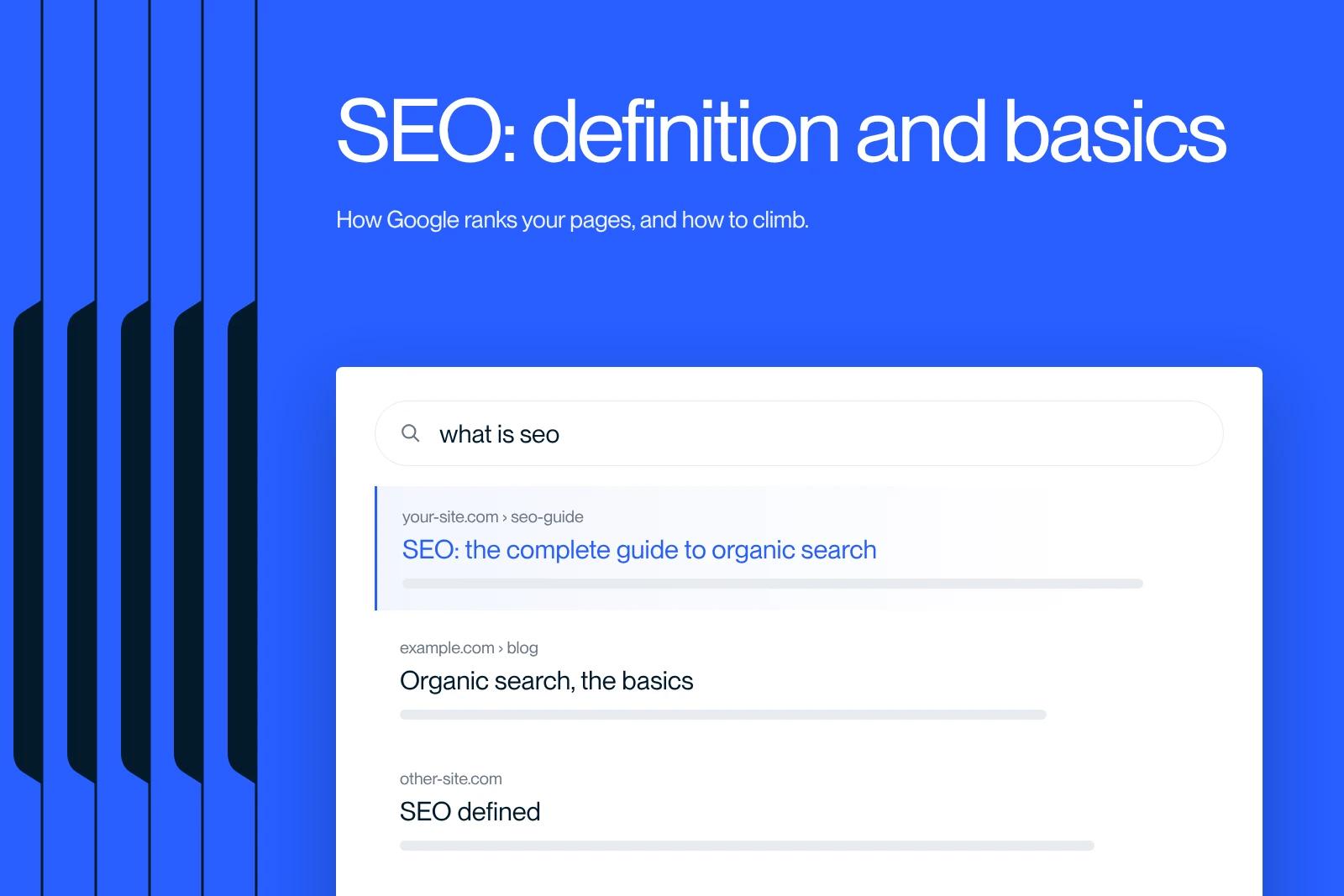
SEO: a guide to organic search. Learn what SEO is and the best practices for optimizing your website for search engines.
Explore this post with…
SEO is the central lever for gaining lasting visibility on search engines. In practice, it is a set of methods aimed at getting your pages to appear in search results without paying for each click. If you are looking for a clear definition, an applicable method and execution priorities, this guide answers that intent directly: understanding SEO and applying it.
At Synqro, a performance-driven Webflow agency, we design and optimize sites that need to be fast, readable and able to generate leads. Our expertise sits at the intersection of web structure, content and measurement: that is exactly where organic search is won or lost. We are not talking about theory, but about actions that improve a site's visibility and conversion.
What is SEO, and why is organic search a strategic asset?
What is SEO: search engine optimization refers to all the actions that increase a page's visibility in the search results of a search engine. Organic search works through a page's relevance, its structure, its content and trust signals. Unlike Google Ads, SEO traffic is not bought click by click: it is built through a coherent SEO strategy.
The main benefit is durability. Good content can generate traffic for months, sometimes years, and feed a lead pipeline without depending on an ad budget. But it takes a method: understanding the intent behind each query, structuring the site, and producing quality content.
What SEO delivers:
- The ability to generate traffic that is steady and qualified
- Stable visibility in the organic results
- A competitive edge on key queries
- An acquisition base that strengthens the brand
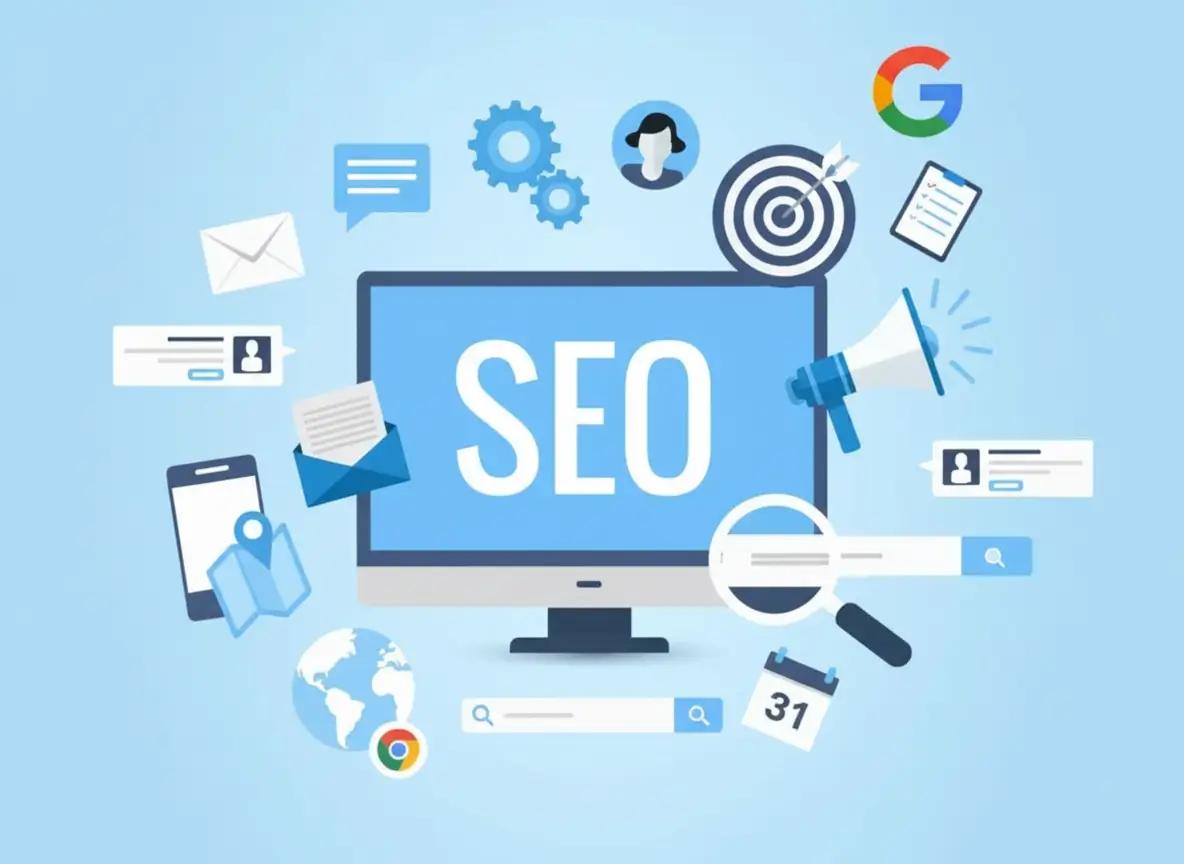
Search engines: how does a search engine rank your pages?
To understand SEO, you need to understand how a search engine works. Search engine crawlers explore the web, analyze pages and store them in an index. Then, when a user types a query, the search engine selects the most relevant pages and shows them in the results pages. The engines' goal is not to favor "optimized" sites, but to satisfy the user.
This ranking depends on many signals: quality, relevance, technical accessibility, speed, clarity. The algorithms of search engines also assess the site's overall reliability and consistency. For search engines like Google, the challenge is to build pages that are useful and easy to interpret.
What to remember:
- Crawlers explore, index and evaluate a web page
- Ranking aims to answer a specific intent
- Structure and performance influence the results
- SEO is about helping the engine understand and recommend your pages
SEO fundamentals: the pillars to master for lasting optimization
The fundamentals of SEO rest on three pillars: technical, content, authority. Without a sound technical base, the engine may crawl or understand the site poorly. Without solid content, you have nothing to rank. Without trust signals, you hit a ceiling. Effective SEO means working on these areas in a balanced way, without over-optimizing any single one.
The notion of optimization does not mean "adding keywords". It means building a system of pages that answers intents, while improving the user experience. It is also a gradual discipline: you prioritize, measure and adjust.
The pillars to audit first:
- Site structure and accessibility (crawling, indexing)
- Content quality and relevance to each intent
- Internal linking, authority, trust signals
- Performance and clarity of the user journey

Optimizing content: keywords, intent and quality content
To optimize content, you first need to understand demand: which query expresses which need, and in what format the answer should be served. Keywords are not an end in themselves, but an indicator of intent. The goal is to produce quality content that answers better than competing pages, while staying readable and structured.
The best SEO writers do not "place" terms at random: they build a logic. A page has to cover a topic, back it up, structure it and guide the reader to act. This strengthens relevance signals, engagement, and the page's ability to climb toward the top positions.
Good content rules:
- Choose one intent and one main query
- Work in secondary keywords without over-optimizing
- Structure the page with clear sections and direct answers
- Strengthen the proof: figures, examples, definitions, cases

Technical optimization: crawlers, indexing and essential tags
Technical SEO aims to make crawling and understanding easier. If Google's crawlers run into obstacles (slow pages, errors, duplication), your content may be poorly indexed or poorly ranked. The goal is therefore to help a search engine move through the site, interpret its structure and consider the page relevant.
Tags are a central element: titles, descriptions, headings, technical data. They do not replace good content, but they guide interpretation. Good optimization for search engines also depends on performance: speed, responsive design, stability.
Technical elements to check:
- Indexing, crawling and accessibility for crawlers
- Managing tags (title, meta, headings) and keeping them consistent
- Performance (load time, stability)
- Hygiene: redirects, errors, duplication, canonicals
User experience: an underrated SEO lever and its impact on results
User experience has become a structural factor, because engines indirectly measure satisfaction: clicks, engagement, returns to the results, reading depth. Modern SEO is no longer just "making a page understood", but making people stay and convert. The concept of search experience optimization illustrates this shift: the content has to be useful, and the experience has to be smooth.
A page can be well optimized on paper and still fail if it is confusing, too slow or poorly organized. Conversely, a very clear page with an obvious path strengthens quality signals. This is where design, content and structure come together.
What improves both UX and SEO:
- A clear hierarchy, easy reading, distinct sections
- Answer-oriented content, without digressions
- Speed, mobile, accessibility
- A consistent conversion path (CTA, proof, steps)

SEO strategy: building an SEO action plan and measuring SEO actions
An SEO strategy is not a to-do list, it is a prioritized plan. It starts with an SEO audit, then a selection of opportunities: pages to create, pages to improve, architecture to fix, topics to cover. The SEO action plan has to be measurable, otherwise you do not know what works.
The key tool for steering is Google Search Console: it shows impressions, clicks and the actual queries. You complement it with a review of pages and conversions. The goal is not to be "first everywhere", but to gain positions on the queries that serve the business.
To structure a strategy:
- An SEO audit: technical, content, structure, competition
- Workstreams planned by impact and effort
- Tracking queries and pages in Google Search Console
- Iteration: improve, consolidate, publish, link
Ranking on Google: how to appear in Google's results
Ranking on Google rests on the same fundamentals as other engines, but execution has to be flawless. You need to let search engines understand your pages: structure, content, performance, consistency. To appear in the results, you also need to avoid negative signals: duplicate pages, thin content, inconsistencies.
The work happens page by page, but also at the site level: architecture, internal linking, proof of expertise. Engines want to understand "who you are" and "why you are credible" on a topic. It is a global logic, not an isolated optimization.
Priorities for Google:
- Expert content aligned with the query's intent
- A site structure and links between pages
- Performance and a good mobile experience
- Position tracking in Search Console, and iteration

Local SEO: optimizing Google My Business and your local presence
Local SEO covers location-based queries: "SEO agency Paris", "restaurant near me", "hairdresser Dubai" and so on. Here, your visibility depends heavily on your Google My Business profile, local signals and consistent information. Local SEO is decisive for service businesses, because engines favor results that are nearby and credible.
You need to work on the profile, the site and external proof at the same time. A well-structured local page, combined with a complete profile and reviews, can capture very profitable demand. The goal is to build trust and make the information easy to verify.
To strengthen your local presence:
- Optimize your Google profile (information, categories, photos, reviews)
- Dedicated local pages on the site with useful content
- Consistent NAP (name, address, phone) across the web
- Content that meets local needs (services, areas, proof)
Synqro: how we make your site optimized for search
At Synqro, we treat SEO as a system: site structure, performance, content and measurement. A site can be elegant and ineffective if its structure prevents indexing, or if its content does not answer intents. So we work at the root: architecture, templates, components and publishing, to make the site durably optimized for search.
Our approach is built for marketing teams: fast iterations, clear governance, conversion pages. We also design content templates to publish quickly without losing consistency. That is precisely what makes high-performing SEO achievable: a sound base and a repeatable process.
What we put in place:
- An audit and prioritized recommendations
- A Webflow structure and technical optimization
- A content plan and SEO content production
- Measurement and steering through Search Console
Conclusion: why SEO remains the most profitable lever
Why SEO remains a major lever: because it builds a lasting asset. Organic search does not replace other channels, but it secures a base of visibility and traffic. To succeed, you need to work on technical setup, content and experience together. SEO is a game of execution, not a game of "tricks".
Key points for taking action:
- Prioritize an audit and fix technical blockers
- Publish useful content aligned with clear intents
- Structure the site for consistency and internal linking
- Measure, iterate, consolidate
Frequently asked questions
SEO is the set of practices that aim to improve a site's visibility in a search engine's organic results. It is used to attract qualified traffic without paying for each click. It works by combining a sound technical structure, useful content and a good user experience. SEO is especially profitable when you want to capture existing demand on queries related to your offer.