Article
SEO, SEM, SEA, SMO, SMA: definitions and differences explained
SEO6 min read

James BrunettoCo-fondateur & CEO
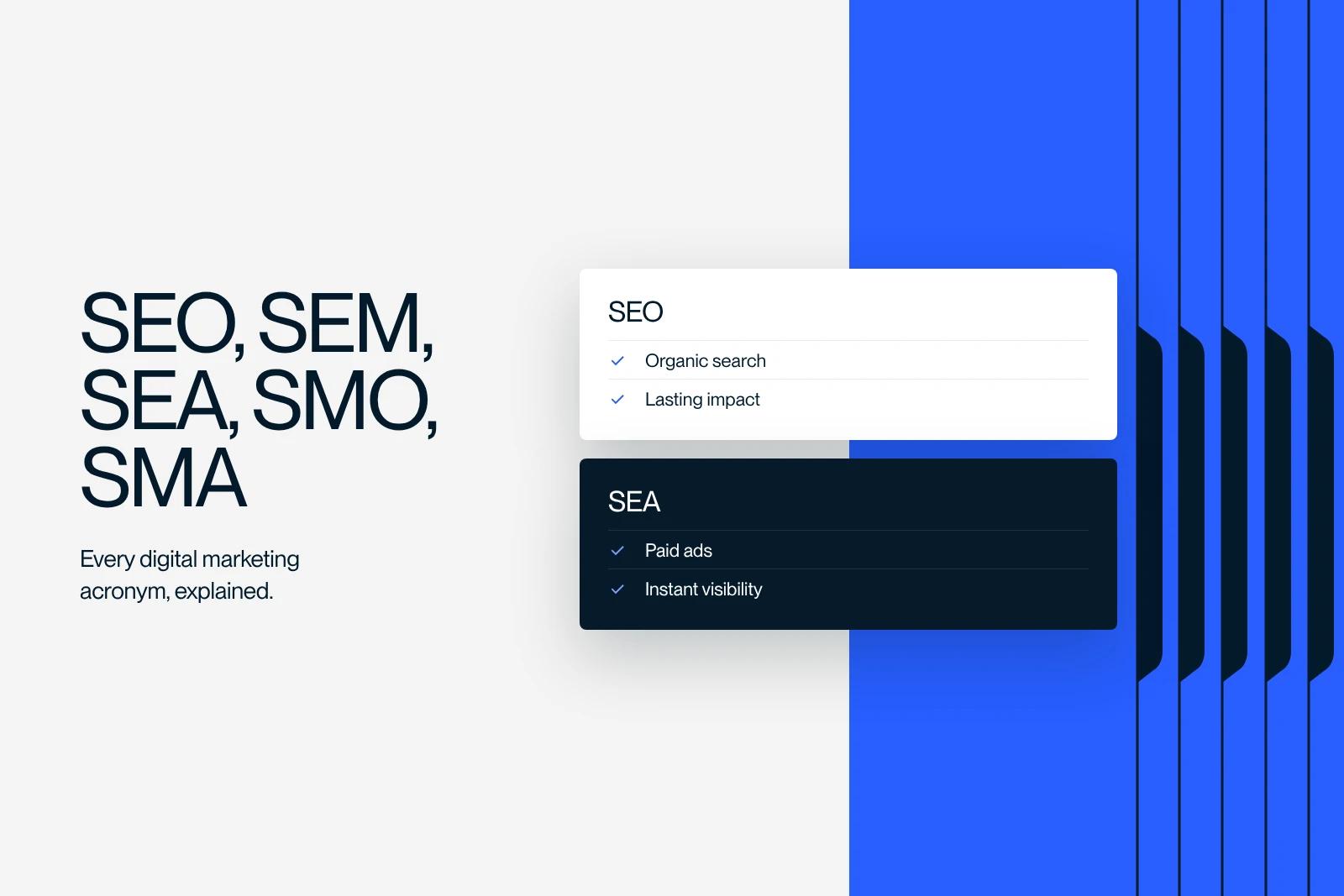
SEO is organic search optimization on search engines, SEA is their pay-per-click advertising, and SEM refers to both together. On social networks, SMO is organic visibility and SMA is paid advertising.
The real difference between these levers comes down to two questions: do you pay for each visit, and are you capturing demand that already exists or creating new demand?
This guide defines each acronym, compares them in a table, adds GEO (visibility in AI answers) and shows which lever to use depending on your goal.
Explore this post with…
SEO, SEM, SEA, SMO, SMA: the comparison table
| Acronym | Meaning | Where | Pay per click? | Time to impact | Main role |
|---|---|---|---|---|---|
| SEO | Search Engine Optimization (organic search) | Organic results on Google, Bing | No | Several months | Capture existing demand over the long term |
| SEA | Search Engine Advertising (paid search) | Ads on search engines (Google Ads, Microsoft Ads) | Yes | Immediate | Capture existing demand quickly |
| SEM | Search Engine Marketing | Search engines | Partly | Varies | Manage SEO and SEA together |
| SMO | Social Media Optimization | Social networks (LinkedIn, Instagram, TikTok) | No | Several months | Build an audience and trust |
| SMA | Social Media Advertising | Advertising on social networks | Yes (click, impression or result) | Immediate | Create demand, target an audience |
Remember one simple rule: "search" levers (SEO, SEA) answer someone who is already looking. "Social" levers (SMO, SMA) reach someone who was not looking yet.
SEO: organic search
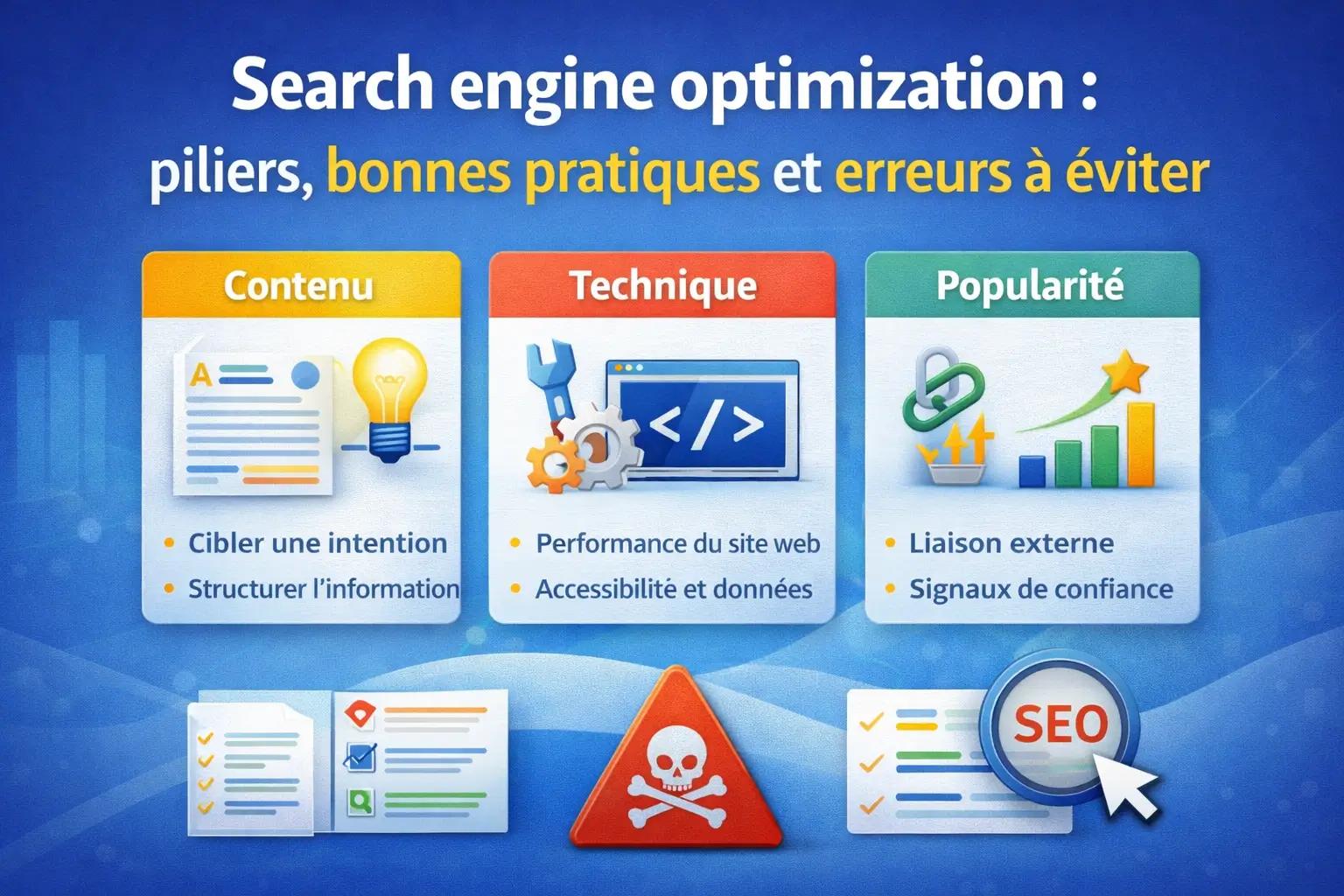
SEO covers the actions that improve a site's position in a search engine's unpaid results. You do not pay Google to appear there: you invest in content, technical work and authority. Our guide to organic search details each pillar.
- Content: pages that precisely answer a search intent.
- Technical: a site that is crawlable, indexable, fast and readable on mobile.
- Authority: links and mentions from trusted sites.
Example: an accounting firm publishes a clear page on "setting up an SASU" (a French single-shareholder company) and links it to its offer. Once it ranks, the page keeps attracting visits at no cost per click. Google Search Central's SEO Starter Guide is still the best official foundation for getting started.
Limitation: SEO is slow and comes with no guarantee. It takes several months for a new page to stabilize, and no position is ever permanently secured.
SEA: paid search on search engines
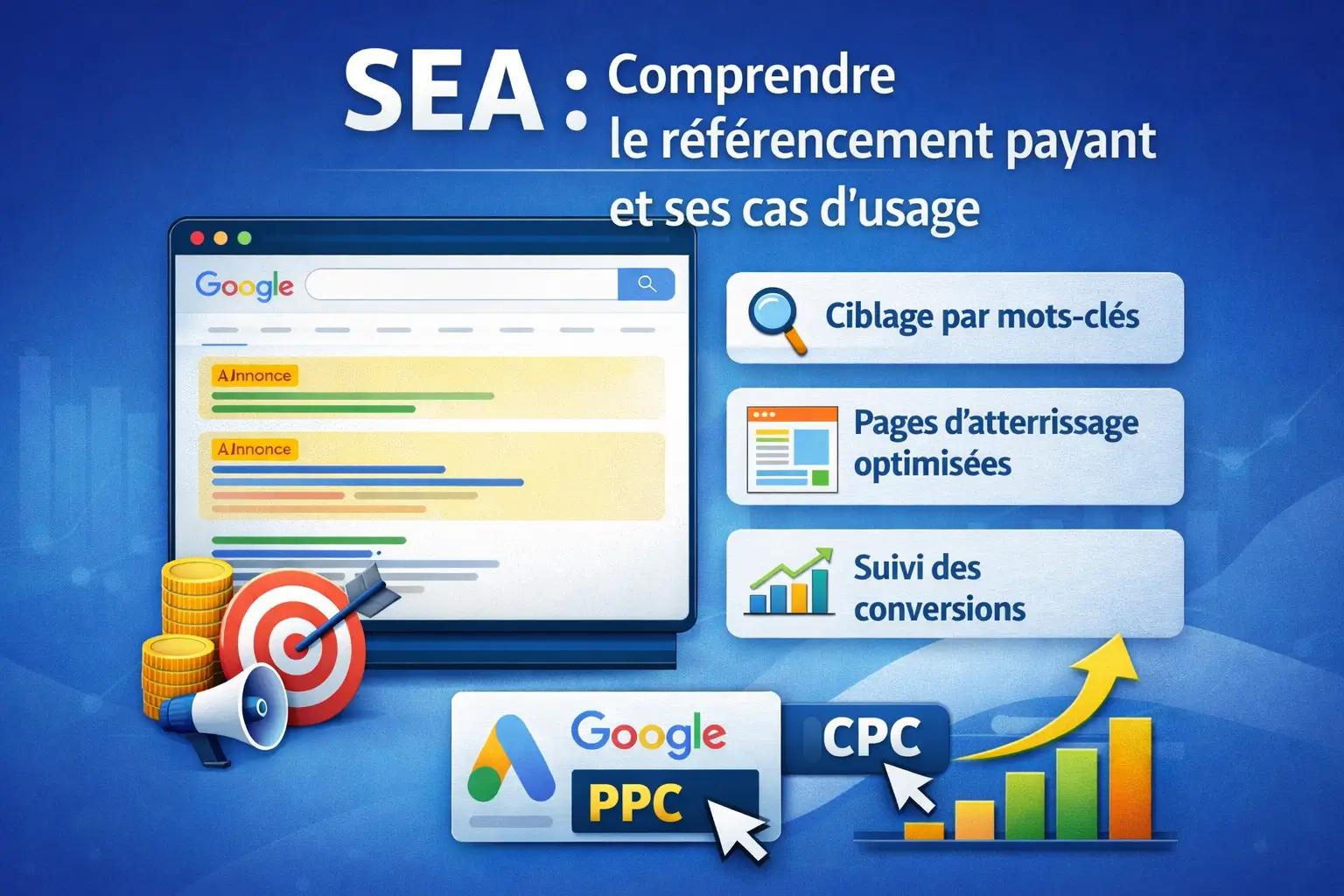
SEA means buying ad placements on results pages, usually through Google Ads or Microsoft Advertising. The advertiser chooses keywords, writes ads, sets a budget and most often pays per click (CPC).
Paying more does not guarantee the top spot. According to Google Ads Help on Ad Rank, position depends on the bid, but also on the quality of the ad and the landing page, minimum thresholds, competition, the search context and the expected impact of assets. The actual cost per click is often lower than the maximum bid.
The quality of the landing page therefore directly affects the price. A dedicated landing page, aligned with the ad's promise, converts better than sending people to the home page.
Limitation: visibility stops when the budget stops. SEA is ideal for testing a market, launching an offer or capturing highly commercial queries, less so for building a lasting asset.
SEM: where is the line with SEO and SEA?
SEM (Search Engine Marketing) refers to marketing on search engines. The term has two uses, which is the source of the confusion:
- In France, it most often means SEO and SEA together: SEM = SEO + SEA.
- In much English-language content, SEM is used as a synonym for paid search, so close to SEA.
When a provider talks to you about SEM, ask what is included. The benefit of an SEM approach in the broad sense: sharing data between the two levers. The queries that convert in SEA show which pages to strengthen in SEO, and pages that rank well in SEO let you lower certain bids.
SMO and SMA: the same logic on social networks

SMO (Social Media Optimization) covers organic actions on social networks: an optimized profile, regular posts, executives speaking up, content that is easy to share from the site. Example: a founder who posts lessons learned on LinkedIn every week.
SMA (Social Media Advertising) is paid advertising on those same platforms. Its strength is targeting: on LinkedIn, you can target a job function, an industry or a company size. Unlike SEA, SMA reaches people who were not looking for your offer: it creates demand rather than capturing it.
SMO has no direct effect on Google rankings. It works indirectly: brand awareness, searches for the brand name, content picked up and cited by other sites.
What about GEO? The new acronym to know
GEO (Generative Engine Optimization) aims to get cited in AI-generated answers: AI Overviews and AI Mode on Google, ChatGPT, Perplexity or Gemini. It is an extension of SEO, not a separate lever.
Google says so in its documentation on AI features: there are no additional requirements to appear in AI Overviews or AI Mode, and SEO best practices apply. Traffic from these features is counted in the Search Console Performance report, under the Web search type.
Which lever should you use for your goal?
| Goal | Priority lever | In addition |
|---|---|---|
| Quote requests this month | SEA on commercial queries | Dedicated landing page and conversion tracking |
| Lower acquisition cost over 12 months | SEO | SEA to fill the gap while rankings build |
| Launch an offer no one is searching for yet | SMA | SMO to establish credibility |
| Earn the trust of B2B buyers | SMO (LinkedIn) and SEO | SMA for retargeting |
| Get recommended by AI assistants | SEO + GEO | Brand mentions on third-party sites |
Whatever the mix, measure conversions, not just clicks. Our article on SEO KPIs explains which indicators to track on the organic side.
How we combine these levers at Synqro
At Synqro, we always start from the pages that convert, before choosing channels. A site that explains the offer poorly loses money in SEA as well as in SMA. For SEO and GEO, we first collect the client's real data (brochures, figures, concrete cases) to produce content that does not look like the competitors'. A quarterly review then lets us shift effort toward what pays off.
If your goal is to appear both in Google and in AI answers, take a look at our GEO support.
Frequently asked questions
SEO works on the organic results: no cost per click, but months of effort. SEA buys ads in the results: visibility is immediate but stops with the budget.