Article
SEO trends: what AI changes and how to adapt
SEO8 min read

James BrunettoCo-fondateur & CEO
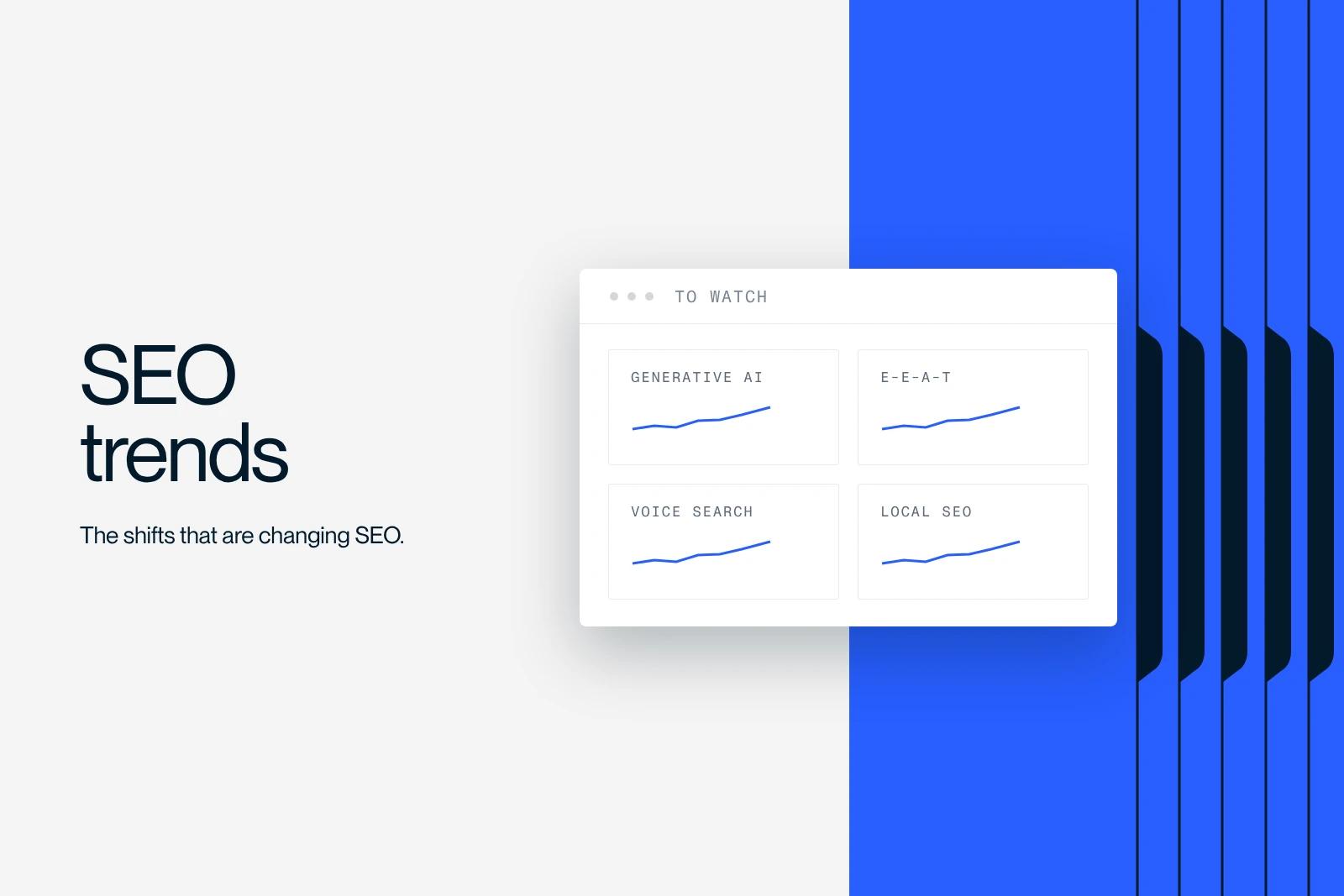
The biggest SEO trend right now is generative AI arriving in the results: since July 22, 2026, Google's AI Overviews and AI Mode have been rolled out in France. SEO no longer aims only for a click, but also for a citation in a generated answer.
The rest follows: visibility in ChatGPT and Perplexity (GEO), tougher rules against mass-produced content, frequent algorithm updates, new ways of measuring. The fundamentals, on the other hand, do not change.
Here are the 8 SEO trends that matter, each one sourced, and what they mean in practice for your site.
Explore this post with…
The 8 SEO trends at a glance
| Trend | What changes | Priority action |
|---|---|---|
| 1. AI Overviews and AI Mode in France | Generated answers at the top of the results | Direct answers and pages that are easy to cite |
| 2. GEO and answer engines | ChatGPT, Perplexity, Gemini cite sources | Allow the right bots, work on mentions |
| 3. Control over AI use | New settings from Google and OpenAI | Decide what you allow, with full knowledge |
| 4. Frequent updates | Two core updates and several spam updates in 2026 | Follow Google's dashboard, avoid hasty reactions |
| 5. End of assembly-line content | Scaled content abuse is penalized | Fewer pages, more original value |
| 6. Experience and original data | E-E-A-T as a quality grid | Named authors, real cases, sources |
| 7. Multimodal search | Questions by voice, image, files | Well-described real images, videos, structured content |
| 8. New measurement | Fewer clicks per impression, more citations | Track impressions, conversions and presence in AI |
1. AI Overviews and AI Mode have arrived in France
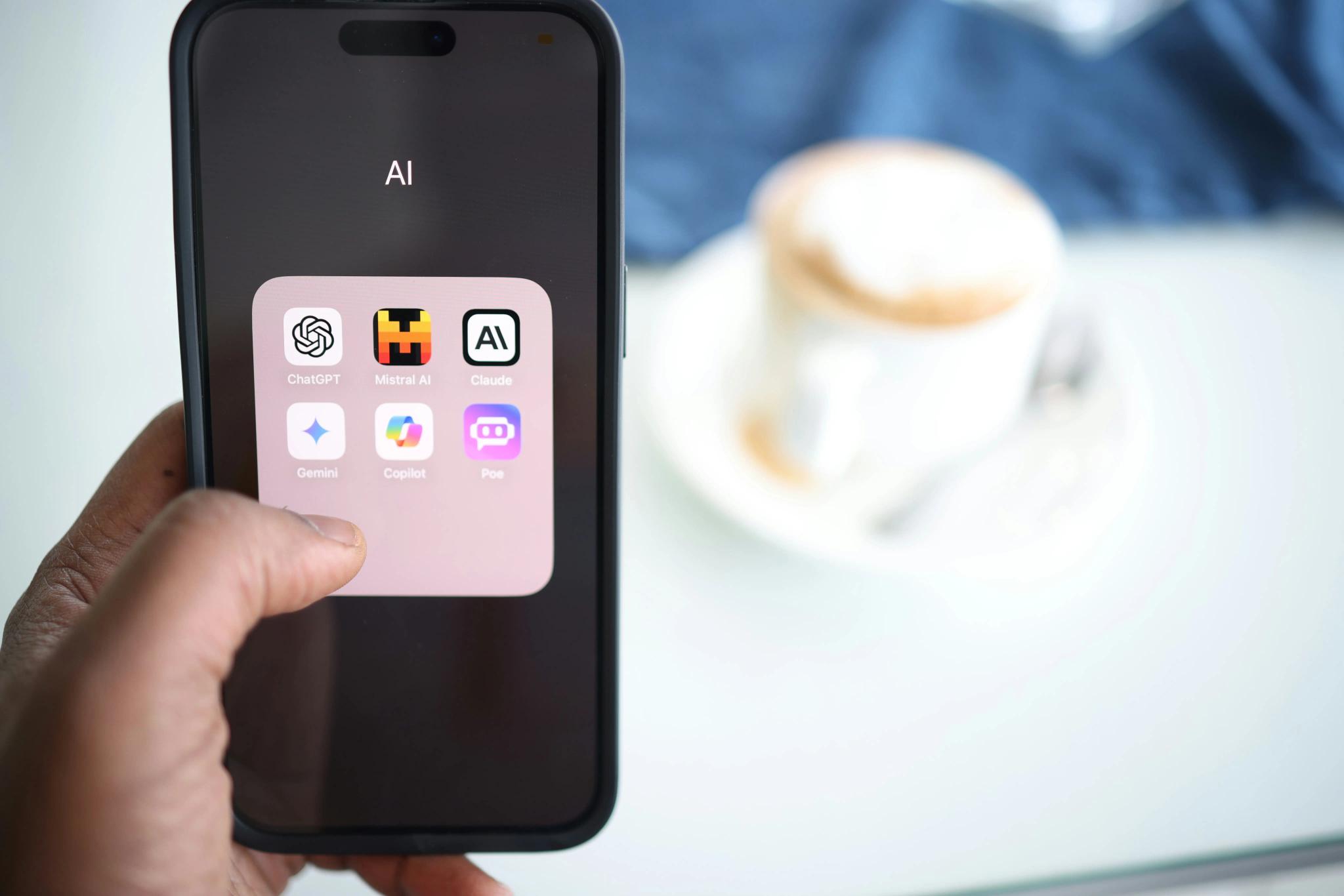
Google launched AI Overviews and AI Mode in France on July 22, 2026, according to Google France's official announcement, on mobile, desktop and in the Google app. AI Overviews summarize a topic at the top of the page with links, only when Google's systems judge that answer useful. AI Mode is a conversational tab where you ask questions by text, voice or image, then follow-up questions.
The technical point to remember is "query fan-out": the AI breaks the question into subtopics and runs several searches in parallel. A page can therefore be cited because it answers a sub-question very well, even if it does not rank for the main query. According to Google's documentation on AI features, there is no additional requirement to appear: the page has to be indexed and eligible for a snippet.
What to do: answer the question in the first lines, split pages into self-contained sections (one question, one answer), define terms in one sentence, add tables when you compare.
2. GEO: getting cited by ChatGPT, Perplexity and Gemini
GEO (generative engine optimization) covers the actions that increase your chances of being cited in AI assistants' answers. It rests on the same foundations as SEO, with three specifics:
- Let the right bots in. According to OpenAI's documentation on its bots, a site that blocks OAI-SearchBot does not appear in ChatGPT Search answers. Blocking GPTBot, on the other hand, only affects model training.
- Exist beyond your own site. Assistants cross-check several sources. A brand cited in comparisons, press articles or specialized directories is more likely to be picked up.
- Verifiable information. Prices, lead times, figures, methods: what is precise and consistent from one page to another gets cited more than vague messaging. See our guide to ranking in ChatGPT.
3. New settings to control how AI uses your content
Publishers have tools to choose what they allow:
- A new Search Console setting, available in France since the launch, lets you decide whether the site appears in generative AI features. Google states that it is not used as a ranking signal for classic results.
- The nosnippet, data-nosnippet and max-snippet tags limit what Google can reuse from a page.
- Google-Extended, in robots.txt, limits the use of content for training and grounding some other Google systems, without affecting search.
For a company that sells services, the question rarely comes up: being absent from AI answers means leaving the space to competitors. For a media outlet whose content is the product, the trade-off is different.
4. More frequent Google updates
According to Google Search's official status dashboard for updates, 2026 has already seen two core updates (March and May), four spam updates (March, June, August, September) and one Discover update (February). In 2025, there were three core updates (March, June, December).
What to do: note rollout dates in your reports, wait for an update to finish before analyzing, and compare the pages that rise with those that drop rather than reacting to an overall curve.
5. The end of assembly-line content
Google's spam policies (updated in August 2026) target "scaled content abuse": generating many pages with the main purpose of manipulating rankings. One of the examples given is using generative AI tools to create many pages without added value. Site reputation abuse and expired domain abuse are also listed.
Programmatic SEO (hundreds of pages generated from a database) is still possible, as long as each page provides real, distinct information. A hundred "service + city" pages with identical text do not qualify.
6. Experience and original data make the difference
When anyone can produce decent text in seconds, what sets a page apart is what it contains that cannot be found elsewhere. Google's guide to helpful, reliable content offers a self-assessment grid based on E-E-A-T (experience, expertise, authoritativeness, trustworthiness) and stresses the "who, how, why" question: who wrote it, how the content was produced, and for what purpose.
In practice: named authors, examples from real projects, internal figures, real photos, cited sources and an honest update date.
7. Search is becoming multimodal
With AI Mode, you can search with text, your voice, a photo or a file, and Search Live allows a voice conversation using the phone's camera. For a website, this strengthens the case for well-described real images (see our image SEO guide), videos with transcripts, and complete product pages (dimensions, materials, prices).
8. SEO is no longer measured quite the same way

Google states that traffic from AI features is counted in the Search Console Performance report, under the Web search type, without being broken out. When an AI answer satisfies the searcher, a page can gain impressions without gaining clicks. So track impressions, clicks and above all conversions per page, and add tracking of your brand's presence in assistants' answers. Our article on SEO KPIs details the useful metrics.
What does not change
Trends do not replace the basics. A site still has to be crawlable and indexable, fast (the Core Web Vitals measure LCP, INP and CLS), complete on mobile since Google indexes the mobile version, well linked internally and cited by other sites. A page missing from the index cannot be cited in an AI answer either.
How we are adapting our services at Synqro
At Synqro, we now treat SEO and GEO as a single workstream. We start by collecting the client's real data (brochures, figures, concrete cases), because that is the material no competitor or tool can reproduce, and that answer engines have reasons to cite. Every quarter, a review lets us redirect the effort based on results in Google and in AI assistants. To go further, see our GEO services.
Frequently asked questions
The arrival of AI Overviews and AI Mode in France, visibility in AI assistants (GEO), the crackdown on mass-produced content, frequent Google updates and changes in measurement. Technical fundamentals and content quality remain the foundation.