Article
Title tag and meta description: SEO, HTML and optimization
SEO13 min read

Guillaume SchluppConsultant SEO
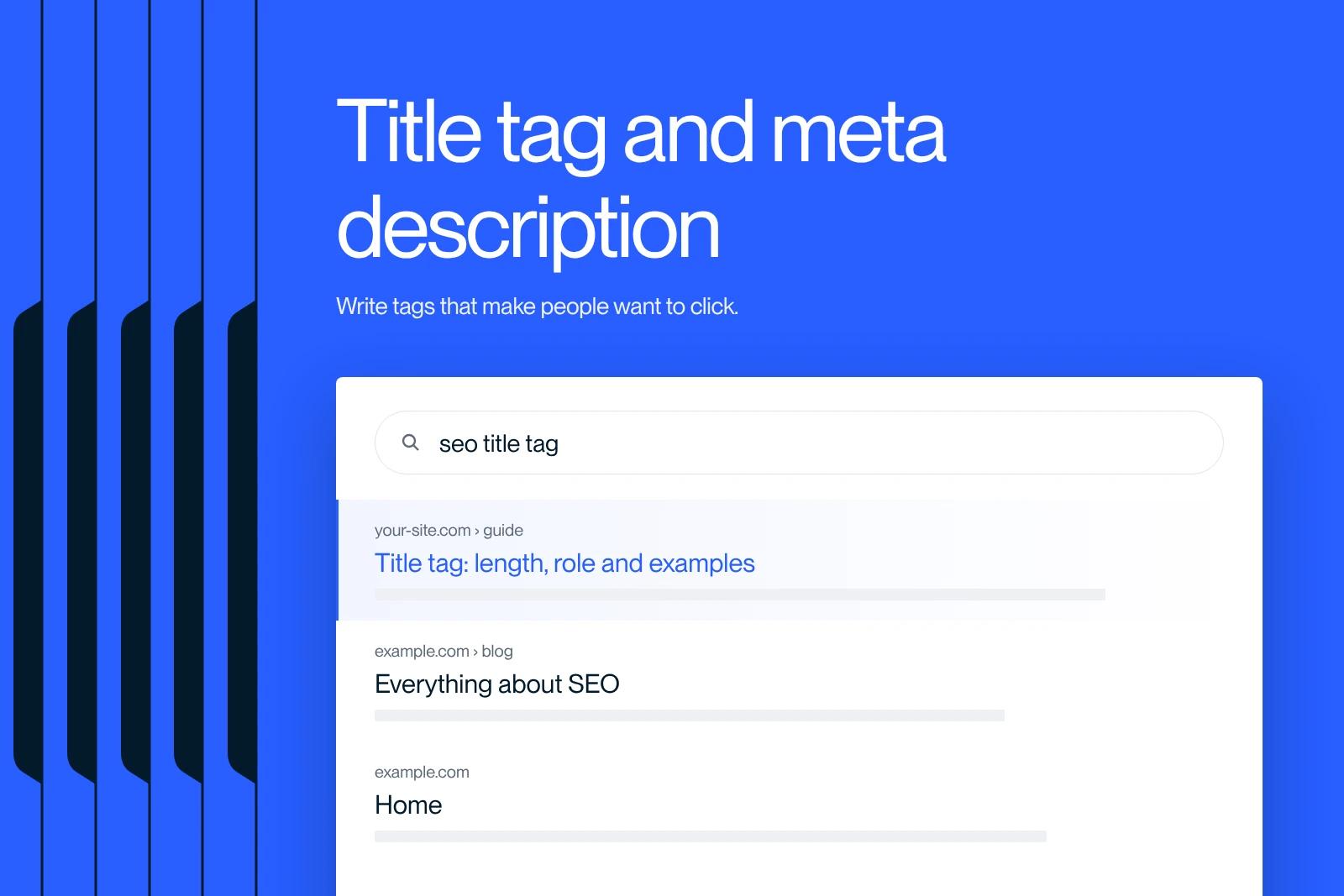
Title tag and meta description: SEO, HTML and optimization. How to optimize title tags and meta descriptions for search engine optimization (SEO).
Explore this post with…
The title tag is one of the most influential on-page SEO signals. It defines the title shown in the tab of the browser and serves as the main cue for the search engine when it needs to understand the topic of a web page. The meta description, for its part, is not a direct ranking factor, but it plays a decisive role in click-through rate and perceived relevance in the SERP.
At Synqro, a performance-focused Webflow agency, we optimize sites with a simple method: structure, speed, content and clean semantic signals. On a site, the title tag and meta description are frequent friction points: duplicate titles, titles that are too long, out of step with the content, or inconsistent with the H1. This guide gives you a clear method for writing and optimization, in line with current SEO requirements.
Title tag: definition and role in SEO
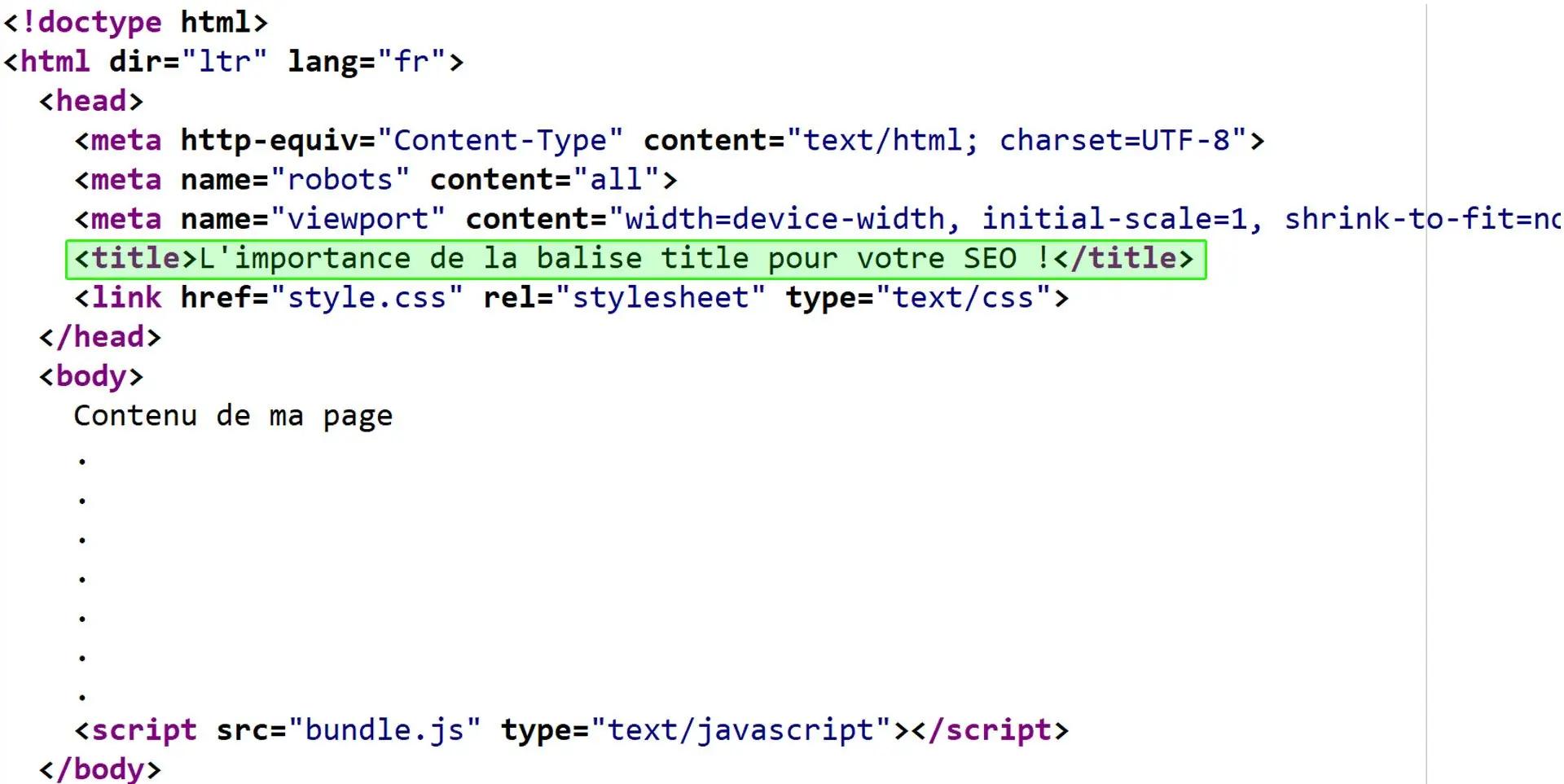
The title tag is an HTML tag placed in the HTML code of a page's head. It tells the browser and search engines the page title. In practice, it is used to display a label in the browser tab, and it is often reused as the title in the SERP. That is why the title tag is central to on-page SEO: it shapes how the topic is understood and how likely people are to click.
You need to distinguish the headings visible to the user from the technical logic. The title is not just a "name": it sums up the page's promise. On a page, the title should match the user's search intent, without over-optimizing. Even other search engines rely on this signal to interpret context.
What this tag provides:
- A clear SEO signal about the page's topic
- A reading cue in the search results
- A lever to display an appealing title in the SERP
- A basis for consistency between page, content and intent
Title tags and meta descriptions: differences and how they work together
Title tags and meta descriptions do not play the same role. The title is a signal for understanding and potential ranking, while the meta description mainly affects how well you convince the user to click. On a results page, the "title + description" pair forms the snippet. The snippet is your organic ad: you do not buy the space, but you have to earn it.
The meta tag should clearly describe the page's value, without any gap with the page content. If the description promises something other than what the page delivers, clicks may rise in the short term, then fall off through poor engagement. It is a matter of alignment: intent, promise, content and conversion.
Practical differences to remember:
- The title tag is used to define the main title in the snippet
- The meta description is used to improve click-through rate with a clear message
- Both must stay consistent with the topic of the page
- Both influence how appealing you look in the SERP and across results pages
H1 and title tag: how to avoid confusion
The H1 is the visible heading in the content. The H1 tag structures the reading and clarifies the topic for the user. The title tag is a "technical" title, visible mainly in the tab and in the SERP. The two can be close, but they do not have to be identical. The key point is consistency: the title expresses the headline of the promise, while the H1 can add detail, context and make reading easier.
A common mistake is to duplicate exactly the same sentence everywhere, or to create contradictory titles. The title and the H1 should stay aligned: same topic, same intent, same language. If you change the promise between title and H1, you increase the risk of confusion for the user and for the search engine.
Consistency best practices:
- The title should sum up the intent and value in one line
- The H1 heading should clarify the topic and guide the reading
- Both should stay consistent with the content of the page
- Both should be unique and logical for a web page
Writing the title tag: structure, length and words to favor
Writing the title tag comes with a constraint: be clear, precise and short. In practice, the title should usually stay between 45 and 65 characters to avoid truncation. The 65-character rule is not absolute, but it helps keep the message readable in the snippet. The wording should put the topic first, because the start of the tag is more visible and easier to interpret.
A good title combines intent, precision and differentiation. It should include the terms users expect, without stuffing. The priority keyword should appear naturally, but above all the title should be a good title that makes people want to click. The main risk is over-optimization: a title that is too aggressive or repetitive may be rewritten by Google.
Writing rules to apply:
- The title should be clear, specific and intent-driven
- The title should ideally stay between 45 and 65 characters
- The keyword should appear naturally at the start or in the middle
- The title should stay consistent with the page's actual promise
Every title tag must be unique: duplication across your pages and SEO risks
One non-negotiable rule: the title tag must be unique for every page. When several pages share the same title, the engine no longer knows which one to favor, and you create internal competition. This duplication is common across the pages of your site when a template is poorly configured, or when content is published without governance.
The opposite mistake also happens: the title tag is too long or too vague. In that case, the page loses semantic precision. Worse, the tag may be rewritten by Google, which makes your efforts inconsistent. To stay in control, write specific titles that precisely reflect the title of a page and its intent.
What you need to check:
- Titles must be unique for each page
- Titles must reflect the specific topic of the page
- Titles must not be duplicated across similar pages
- Titles must stay consistent with the content and structure
Meta description: how to optimize without overpromising in the SERP
The meta description is a meta tag meant to summarize the value of a page. It is not always displayed as written, but it serves as the basis for the snippet. Its role is therefore strategic: convince the user that your page answers exactly what they searched for. An effective meta description presents a benefit, a differentiator and an implicit call to action, without slipping into empty marketing.
You also need strict consistency between description and content. The description of your page must match what the user will actually find. If you promise a complete guide and the page is superficial, clicks may rise, but engagement will drop. This dynamic can hurt overall performance by attracting a disappointed audience.
Best practices for optimizing the meta description:
- The description should summarize the real value, without exaggeration
- The description should include the topic and a concrete benefit
- The description should stay consistent with the content delivered
- The description should improve click-through rate in the results

HTML code: where the tags live and how to check them
To check your titles, you need to know where to look. The title HTML tag sits in the head section, in the page source code. The meta description also sits in the head, in a meta tag. Even without being a developer, you can check these elements by viewing the source code, using SEO extensions, or with audit tools.
On WordPress, plugins such as Yoast SEO make management easier, and Yoast SEO for WordPress lets you control the title and description without editing code. On Webflow, control happens through page settings and CMS templates. In every case, you need to check what is actually rendered in the final HTML, because systems can override your settings.
Simple ways to check:
- Open the source code and find the title and meta description
- Check what appears in the browser tab
- Check how it renders in the results and in Search Console
- Audit key pages to detect duplication or inconsistencies
SEO optimization: title examples and mistakes to avoid
Title optimization is not a magic formula. It is a discipline of consistency. The title should sum up the main point of the page and stay aligned with intent. A common mistake is a title that is too generic, or a title that is too promotional, to the point of losing precision. Another mistake is piling up keywords: it reads as artificial, and Google may decide to replace it.
A good title follows a logic: topic + detail + context. The title of a web page must also be readable out of context, because in the SERP it is in direct competition. Finally, watch for conflict between title and H1: the title expresses the headline of the SEO promise, while the H1 clarifies the topic and guides the reading.
Common mistakes to avoid:
- A title so long it gets truncated in the SERP
- A title duplicated across several pages of the site
- A title that does not match the page's actual content
- An over-optimized title that triggers a rewrite by Google
Synqro: optimizing title tags and meta descriptions on Webflow
At Synqro, we treat these tags as part of editorial performance. Our method aligns search intent, page structure and the snippet's promise. On Webflow, we set up CMS rules to produce consistent titles at scale, with clear governance. That is essential when you have many pages and need to keep titles unique without constant manual effort.
We build the tags into an SEO strategy: priority pages, templates, quality control and wording tests. The goal is to improve click-through rate and topic understanding while keeping title, H1 and content consistent. That rigor is what turns tags that are merely "filled in" into tags that actually perform.
What we do in practice:
- Define a title structure by page type and intent
- Roll out CMS templates to automate titles and descriptions
- Check uniqueness and consistency across the whole site
- Test the impact on clicks and rankings in Search Console
Conclusion: a well-written title tag is a lasting optimization
The title tag is a central element of on-page SEO. It shapes how the engine understands the topic and how appealing the snippet is. The meta description strengthens your ability to convince. Together, they structure your presence in the SERP. Good optimization is not a trick: it is consistency between intent, content and promise.
To manage it over time:
- The title tag should stay clear, unique and intent-driven
- The meta description should describe the real value, without overpromising
- The title and H1 should stay consistent and complementary
- Tags should be checked in the rendered code and in the SERP
- A clear, unique title tag strengthens understanding and clicks
- A consistent meta description makes the result more appealing without overpromising
- The title and H1 should stay complementary, not contradictory
- Tags should be checked in the rendered HTML and in the SERP
Frequently asked questions
The title tag defines the title shown in the browser tab and often in the SERP. The meta description summarizes the page's value and mainly affects click-through rate. The first helps the engine understand the topic, the second helps the user choose. Both should stay consistent with the content and intent.