Article
SEO mistakes: the 10 most common and how to fix them
SEO6 min read

James BrunettoCo-fondateur & CEO
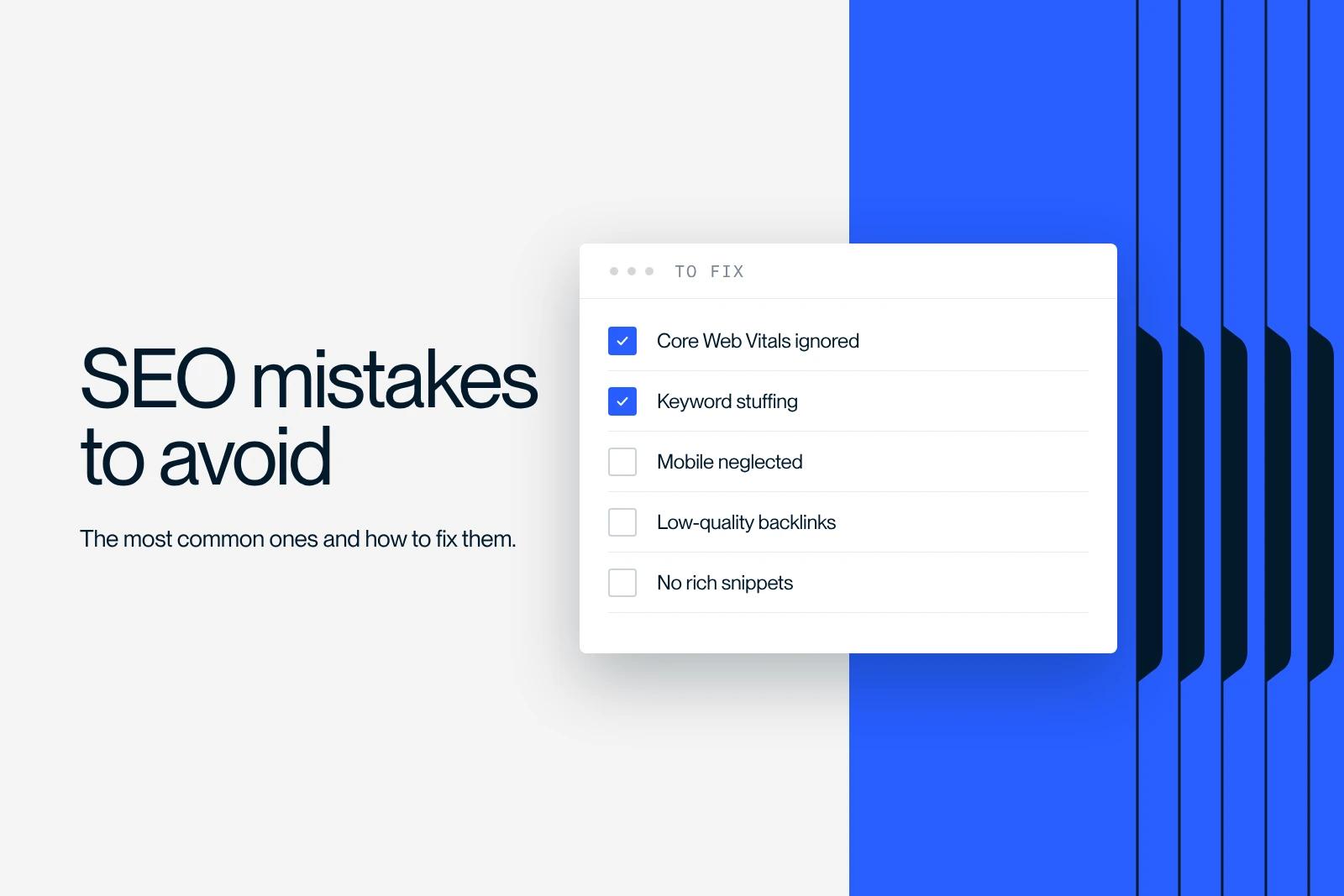
The most costly SEO mistakes are rarely subtle: a page blocked by a forgotten noindex, a redesign without 301 redirects, two pages targeting the same query, content mass-produced with no added value, or purchased links. They quietly cost you traffic, and they can often be fixed in a few hours.
Some are even spelled out in black and white in Google's spam policies, updated in August 2026.
Here are the 10 mistakes we run into most often, how to spot them and how to fix them.
Explore this post with…
The 10 SEO mistakes at a glance
| Mistake | How to spot it | Severity |
|---|---|---|
| 1. Indexing blocked | Search Console, Pages report | Critical |
| 2. URLs changed without a 301 | 404 errors in Search Console, crawl | Critical |
| 3. Cannibalization | Several URLs for one query in Search Console | High |
| 4. Keyword stuffing | Read the text aloud | High |
| 5. Mass-produced generic content | Pages with no impressions, interchangeable texts | High |
| 6. Bought or exchanged links | Link profile in a backlink tool | High |
| 7. Neglected Core Web Vitals | Core Web Vitals report, PageSpeed Insights | Medium |
| 8. Content hidden on mobile | Compare mobile and desktop versions | Medium |
| 9. No direct answer and no sources | Read the first paragraph of each page | Medium |
| 10. Managing without reliable data | No Search Console or conversion tracking | Medium |
1. Blocking indexing without knowing it
This is the most brutal mistake: a noindex tag left in place after launch, a robots.txt inherited from the staging site, a "hide from search engines" option checked in the CMS. The site exists, but Google does not show it.
The fix: in Search Console, open the Pages report and look at the reasons "Excluded by 'noindex' tag" and "Blocked by robots.txt". Also remember that robots.txt blocks crawling, not indexing: to remove a page from Google, you need a noindex, on a page Google can crawl.
2. Changing URLs without a 301 redirect
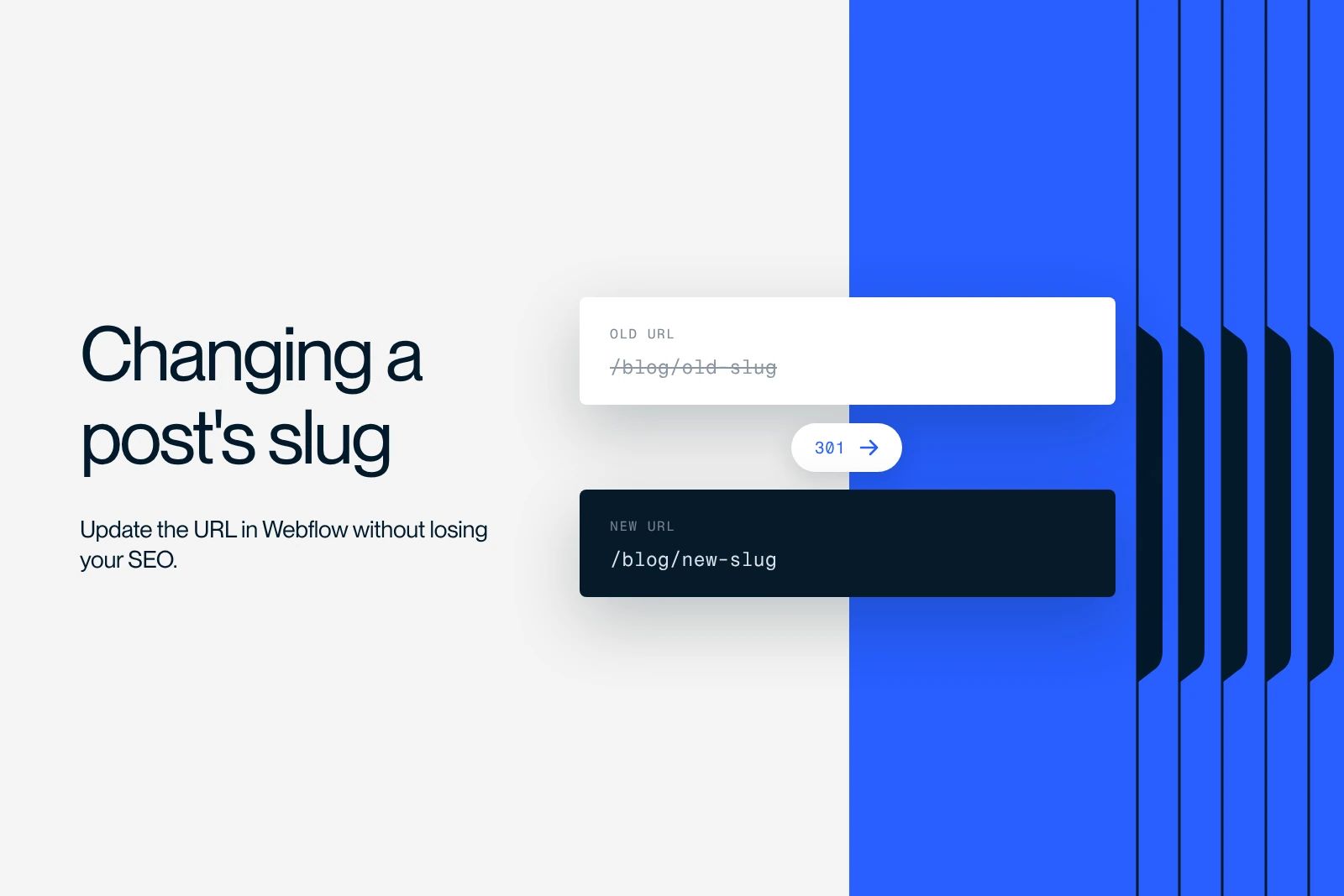
Redesign, new CMS, "cleaned-up" slugs: every URL that changes without a redirect returns a 404, and the rankings you earned disappear. The fix: a line-by-line redirect plan, drawn up before launch, then checked with a crawl. Our guide to 301 redirects on Webflow details the method.
3. Letting several pages target the same query
Two articles on the same topic, a service page and an article that overlap: Google alternates between the URLs and none of them settles in. In Search Console, filter on a query and look at how many pages receive impressions. The fix: merge, differentiate the intents or redirect. The full method is in our guide to keyword cannibalization.
4. Stuffing your copy with keywords

Repeating the same phrase in every sentence, stacking city names at the bottom of the page: keyword stuffing is listed in Google's spam policies. There is no "right keyword density" to aim for. The fix: place the main query in the title, the H1 and the first paragraph, then write naturally, using the vocabulary of the topic. Reading the text aloud is test enough.
5. Publishing generic content at scale
Google penalizes "scaled content abuse": producing many pages with the main purpose of manipulating rankings. Among the examples given in its policies: using generative AI or similar tools to create many pages that add no value.
AI is not banned: the lack of value is the problem. An article that any competitor could publish word for word has no reason to rank. The fix: every page must contain something only you can say (data, examples, method, prices, field experience).
6. Buying links or exchanging them at scale
Google's policies classify as link spam the buying or selling of links meant to influence rankings, and excessive link exchanges ("link to me and I'll link to you"). The fix: earn links through content worth citing, real partnerships and press relations, and mark sponsored links with rel="sponsored". See also the black hat techniques to avoid.
7. Neglecting Core Web Vitals

Core Web Vitals measure the real experience of visitors. According to Google's web.dev reference, a page is "good" when, for 75% of page loads:
- LCP (loading of the main element): 2.5 seconds or less;
- INP (responsiveness to interactions): 200 milliseconds or less. It replaced FID in 2024;
- CLS (visual stability): 0.1 or less.
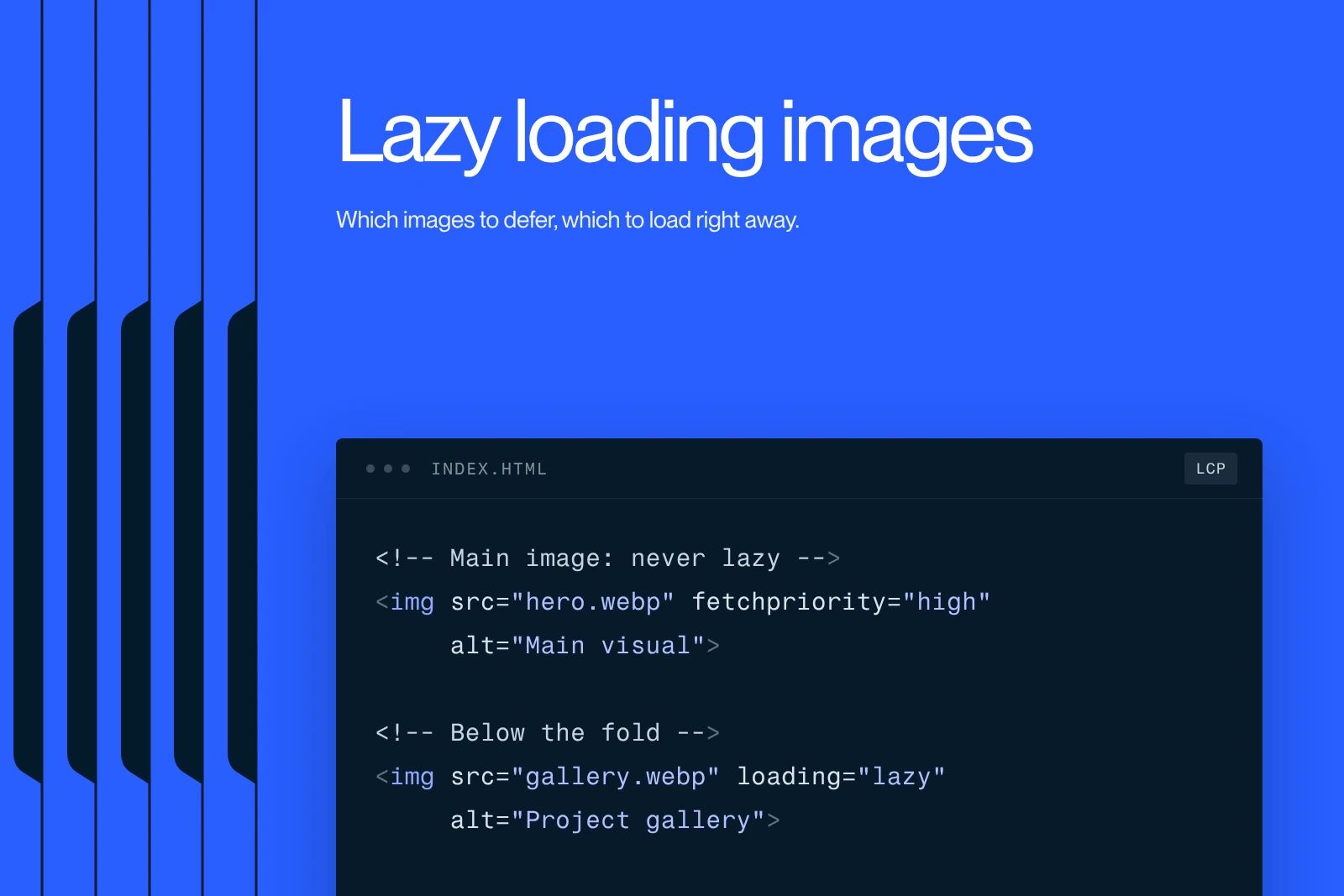
It is not the top ranking criterion, but with equivalent content, a slow page loses visitors before they even start reading. Common fixes: a main image that is too heavy or lazy-loaded, too many third-party scripts, undeclared image dimensions. See our guide to Core Web Vitals.
8. Hiding content on the mobile version

Google indexes the mobile version of pages (mobile-first indexing). A block of text, a table or links hidden on mobile to "lighten" the page therefore carry less weight, or none at all. The fix: the same content, the same headings and the same structured data on mobile and desktop. Adapt the layout, not the content.
9. Forgetting direct answers and sources
A page that takes three paragraphs to get to the point loses the reader, and it is hard for AI Overviews, AI Mode or ChatGPT to cite. Google states that no special optimization is required for these features: standard SEO best practices apply. The fix: answer the question in the first lines, define terms in one sentence, cite your sources and add tables when you compare. This is the foundation of GEO.
10. Managing SEO without reliable data

Judging SEO on a single ranking or on total traffic, without looking at pages, queries or conversions, leads to bad decisions. The fix: Search Console connected and verified, conversions tracked in GA4, and a few SEO KPIs reviewed on a fixed schedule, comparing like-for-like periods.
What we check first at Synqro
At Synqro, when a site comes to us, we start with mistakes 1, 2 and 3: indexing, redirects, cannibalization. They are quick to fix and often unlock traffic that was already "earned". For mistake 5, our answer is methodical: we collect the client's real data (brochures, figures, cases) before writing, to avoid generic content. Then a quarterly review reprioritizes the work. For an outside look at your site, discover our SEO support.
Frequently asked questions
Blocking indexing by mistake, with a noindex or a robots.txt forgotten after launch. The pages disappear from Google. The Pages report in Search Console lets you detect it in a few minutes.